
Frustrated with flakes on your shoulders, you might have considered just shaving it all off and starting fresh. It is an easy way to shave a few steps out of the process and, on the surface, makes sense. After all, no hair, no flakes. Unfortunately, there is not quite the logic behind it. We reached out to an expert who explained how shaving your head doesn't cure dandruff. It isn't a head of hair issue to start with. Here's why the flakes tend to come right back once your hair grows out, and what genuinely helps instead.
Is Shaving Your Head for Dandruff A Solution?
Dr Karuna Malhotra, Cosmetic Skin Clinic, New Delhi, is direct about this common misconception. "Not really, and this is a really common misconception. Dandruff isn't caused by the hair itself. It's a scalp condition, most commonly linked to a yeast called Malassezia that lives on everyone's scalp but overgrows in some people, along with excess oil production and skin cell turnover."
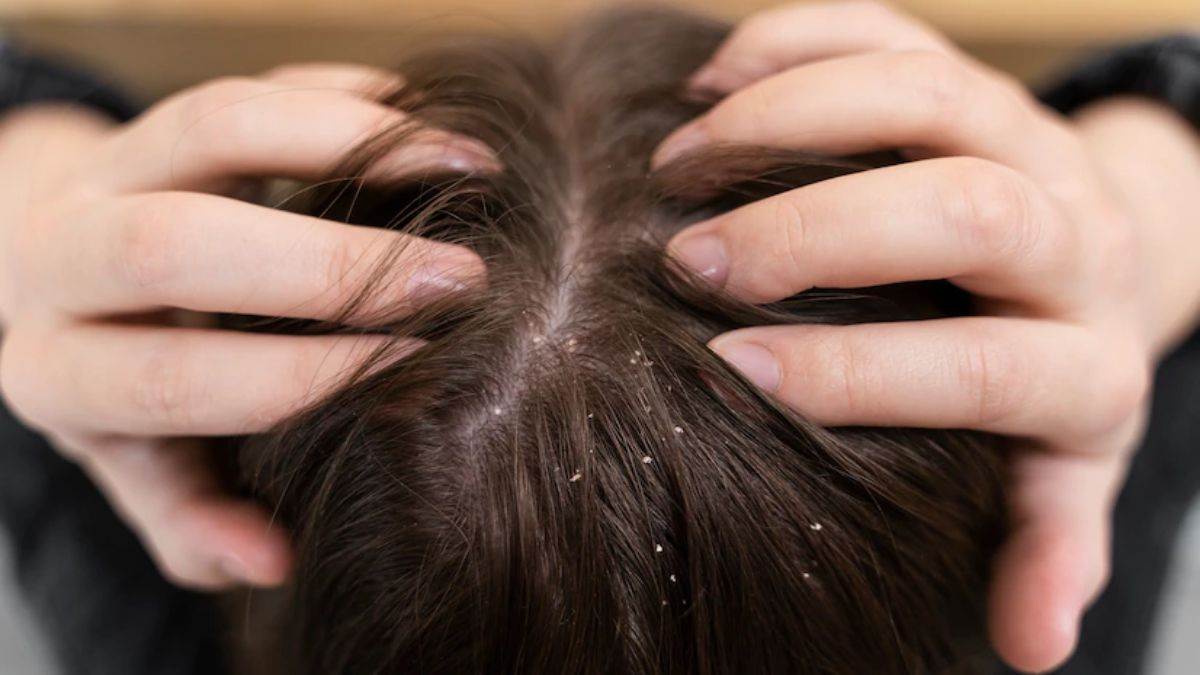
Shaving removes hair, but the underlying scalp remains unchanged. While this may reduce visible flakes by eliminating hair that traps them, it is a cosmetic effect, not a cure.
Why Do People Think Shaving Helps With Dandruff?
According to Dr Malhotra, the confusion makes sense once you break it down:
- Without hair, flakes fall away more visibly instead of getting caught in strands, giving an impression of improvement.
- Shampoo and treatments can reach the scalp more directly on a shaved head, which can genuinely help with application, even if the underlying cause isn't addressed by shaving itself.
- Reduced oil buildup on hair strands can make the scalp feel cleaner day to day, even though oil production from the scalp itself hasn't changed.
- Some people confuse temporary relief from a good scalp cleaning, which often happens right before or after a head shave, with the shave itself being responsible.
 shaving head dandruff
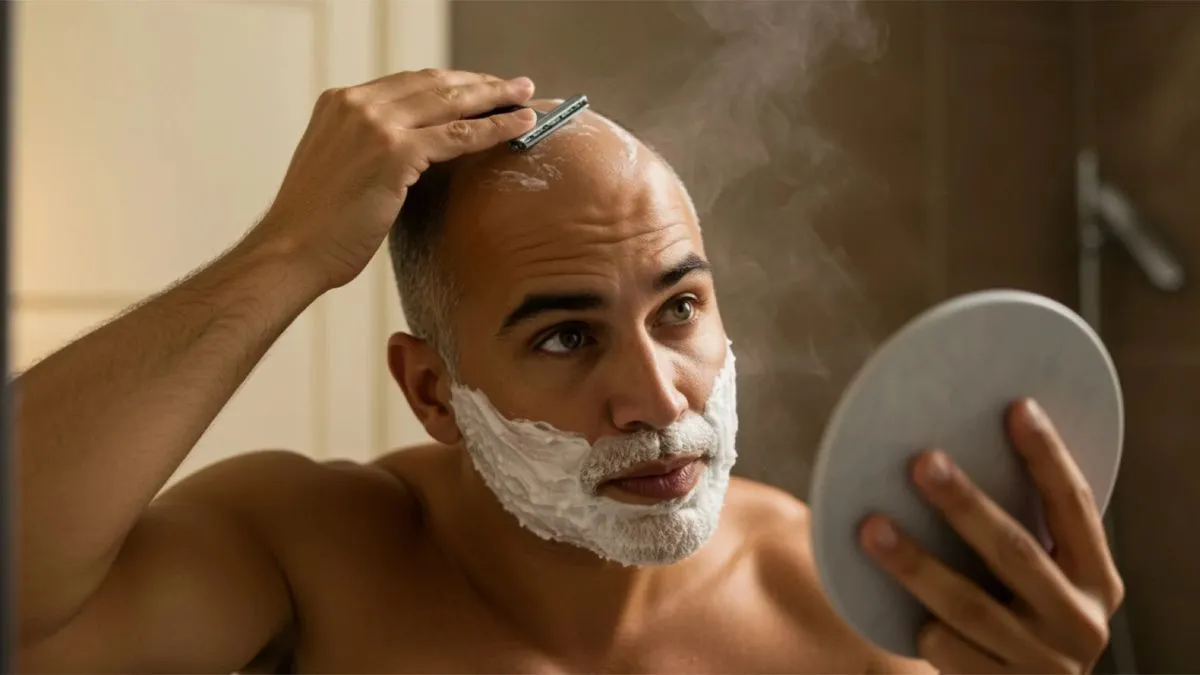
According to the American Academy of Dermatology (AAD), many people mistakenly believe that shaving their head will cure dandruff. Dandruff is actually a scalp skin issue, not a problem with the hair itself.
When a person shaves their head, flakes no longer get trapped in hair strands. Instead, the dead skin falls away immediately, making the problem seem gone. Shaving also removes the first layer of dead skin and makes it much easier to apply medicated shampoo directly to the scalp.
What Actually Causes Dandruff?
Dr Malhotra outlines the real drivers behind flaking:
- An overgrowth of Malassezia yeast, a type of yeast that feeds on scalp oils and causes irritation and flaking for susceptible people.
- It is related to seborrheic dermatitis, which is a more inflammatory dermatitis of the same process that may be accompanied by redness and itching.
- Less oil-related than water-related, Dry scalp causes flaking all on its own, and by a completely different mechanism.
- An allergic reaction to some hair or scalp products resulting in contact dermatitis and a dandruff-like condition.
- Oil accumulation resulting from infrequent washing, and scalp dehydration and irritation due to over-washing.
- Other skin disorders such as psoriasis, which may also lead to flaking scalp that may be confused with dandruff.
This lines up closely with recent clinical research. A 2025 study published in the Journal of Drugs in Dermatology evaluated scalp barrier function, ceramide levels, and the scalp microbiome across an ethnically diverse group of dandruff patients.
The researchers found that dandruff-affected scalps had significantly lower hydration, higher water loss through the skin barrier, and a distinct shift in microbiome composition, including a higher abundance of Malassezia yeast, compared to healthy scalps.
In other words, the problem sits in the scalp's barrier and microbial balance, structures that have nothing to do with how much hair is sitting on top of them.
What Actually Helps Treat Dandruff?
Instead of shaving your head, treat the scalp directly. Dr. Malhotra suggests the following:
- Use medicated shampoos with ingredients like ketoconazole, selenium sulfide, zinc pyrithione, or coal tar regularly, not just occasionally.
- Leave the shampoo on your scalp for a few minutes before rinsing so it has time to work.
- Switch between two different medicated shampoos if one stops working over time.
- Manage stress, as it can trigger flare-ups.
- Avoid harsh hair products that dry out your scalp.
- If over-the-counter products do not help after a few weeks, see a dermatologist for prescription-strength treatment.
Is There Any Real Benefit to Shaving Your Head for a Dandruff-Prone Scalp?
There's a small silver lining, according to Dr Malhotra. "It can play a small supporting role, mainly by making it easier to apply treatment directly to the scalp and monitor flaking."
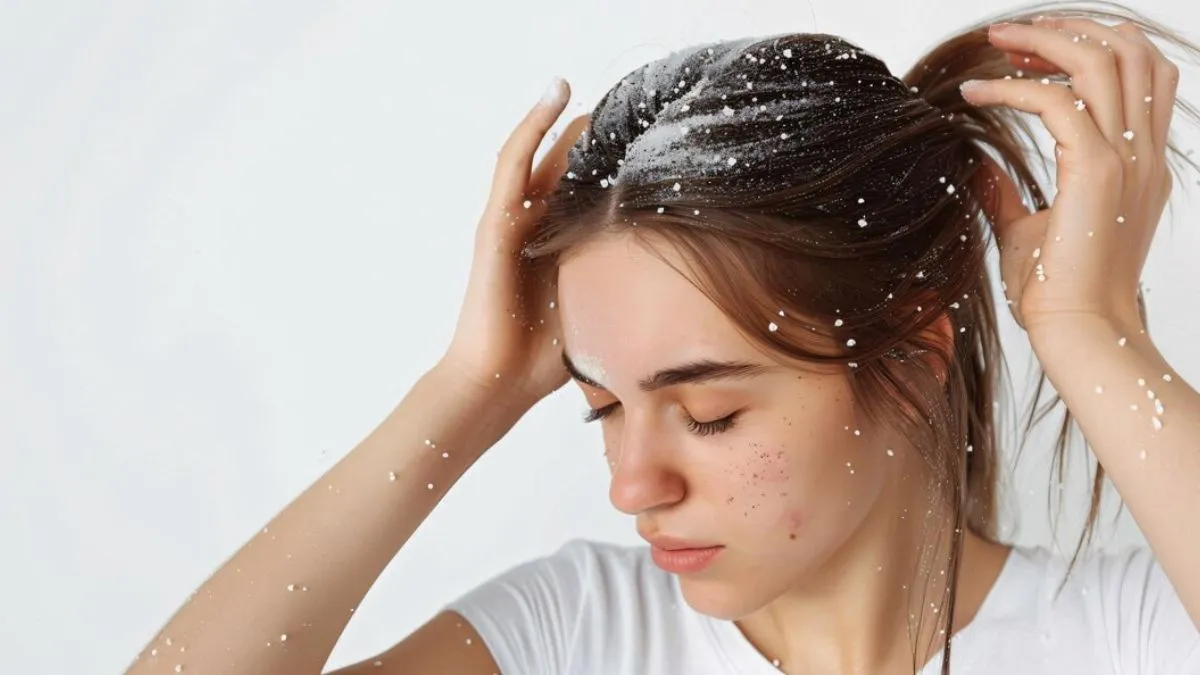
But she's clear that it should be seen as a convenience, not a treatment. Shaving without also addressing the underlying cause usually means the dandruff returns as soon as hair grows back, since nothing about the scalp itself has changed.
When Should You See a Dermatologist About Persistent Dandruff?
Dr Malhotra recommends booking an appointment if:
- After using a medicated shampoo for weeks, dandruff continues to occur.
- The flaking is accompanied by a significant amount of redness, swelling or pain.
- The flaking extends beyond the scalp to the eyebrows, sides of the nose or chest, suggesting that the seborrhoeic dermatitis is more widespread and requires targeted treatment.
- The dandruff is accompanied by hair loss, which at times indicates a different underlying scalp disease.
ALSO READ- Does Washing Your Hair Every Day Cause Hair Fall? A Dermatologist Explains
Conclusion
Although a shaved head may help to minimise the appearance of dandruff for a time, it doesn't change the underlying condition that lurks in your scalp's skin barrier and microbiome. The scalp needs to be treated directly with the correct shampoo, used correctly and consistently, which is what makes a difference.
FAQ
1. Can diet affect dandruff, separate from scalp treatment?
While some research suggests diets high in sugar and processed foods may worsen inflammatory skin conditions, they are not a primary cause of dandruff.2. Does wearing hats or helmets regularly make dandruff worse?
Yes, wearing hats or helmets can worsen dandruff by trapping heat and sweat, which encourages yeast growth.
All possible measures have been taken to ensure accuracy, reliability, timeliness and authenticity of the information; however Onlymyhealth.com does not take any liability for the same. Using any information provided by the website is solely at the viewers’ discretion. In case of any medical exigencies/ persistent health issues, we advise you to seek a qualified medical practitioner before putting to use any advice/tips given by our team or any third party in form of answers/comments on the above mentioned website.
How we keep this article up to date:
We work with experts and keep a close eye on the latest in health and wellness. Whenever there is a new research or helpful information, we update our articles with accurate and useful advice.
-
Current Version
Aug 24, 2026 18:13 IST
Published By : Vivek Kumar
Reviewed By : Dr Karuna Malhotra