
Minoxidil is one of the most trusted names in hair loss treatment, but it doesn't come in just one form. Topical and oral versions are often talked about interchangeably, leading many people to assume they're basically the same thing. The short answer: no, they're not identical, even though they contain the same active drug. So, what actually separates the two, and does it matter which one you use? Here's what a dermatologist has to say about the real differences.
Is Oral Minoxidil the Same as Topical Minoxidil?
Dr Chandani Jain Gupta, Dermatologist and Aesthetic Physician at Elantis Healthcare, New Delhi, is clear on this: "No. Both contain the same active drug, but the form, dose, and how they act on the body are different."
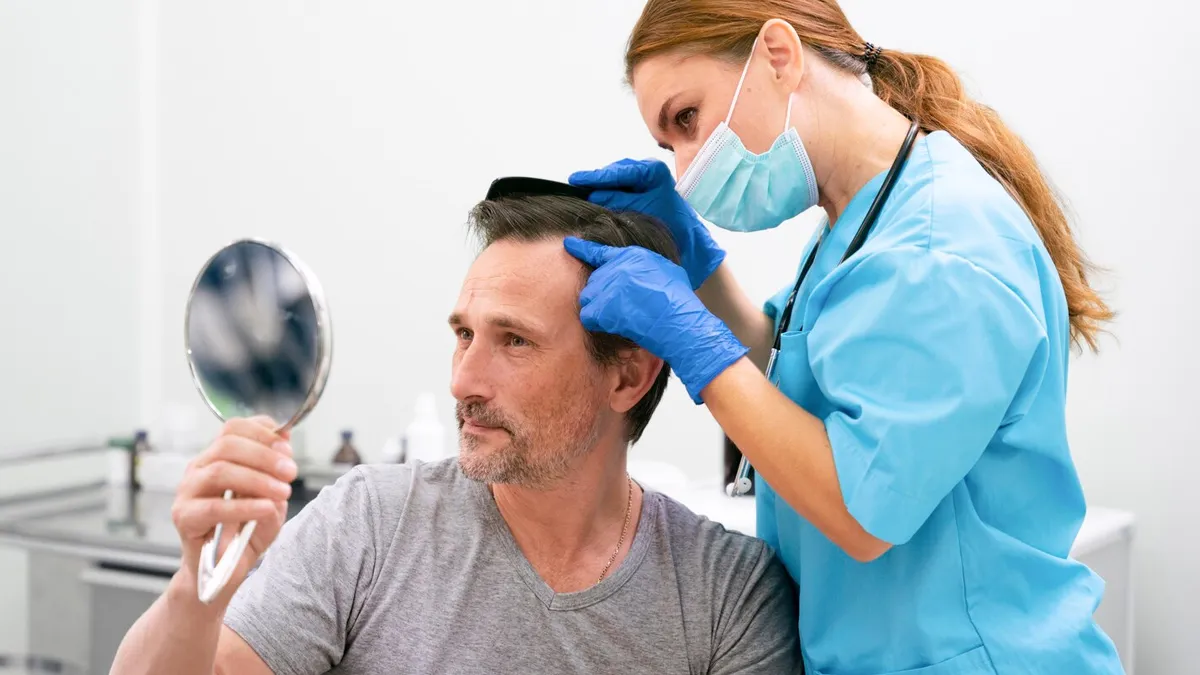
However, according to a 2026 study in the International Journal of Medical and Pharmaceutical Research, 80 patients with pattern hair loss were split into two groups. One used topical 5% minoxidil, the other took 2.5mg oral minoxidil daily, for six months. Both groups showed similar, meaningful improvements in hair growth, with no real difference between them. Side effects were mild in both, like dandruff or scalp dryness with topical, and hypertrichosis or rash with oral, and none were serious.
What Are the Key Differences Between Oral and Topical Minoxidil?

According to Dr Gupta, the two forms differ in several important ways:
- Approval status – Topical minoxidil, at 2 to 5 percent strength, is FDA-approved for hair loss and available over the counter. Oral minoxidil for hair loss is used off-label, since its approved use is for high blood pressure at much higher doses, and it needs a prescription
- Dose – Topical is applied once or twice daily to the scalp. Oral is taken at a low dose, roughly 0.25 to 5 mg daily, for hair loss, far lower than the 5 to 40 mg used for blood pressure
- Absorption – Topical minoxidil has poor scalp penetration, with less than 2 percent reaching the follicle, and results vary depending on scalp condition and application technique. Oral bypasses this issue entirely, since it works through the bloodstream
- Convenience – Oral means one daily pill, while topical involves applying a liquid or foam twice daily, along with dealing with greasy hair, styling issues, and product residue
According to the American Hair Loss Association, a JAMA Dermatology study found that daily oral minoxidil wasn't significantly better overall than twice-daily topical minoxidil over 24 weeks. Though it showed a slight edge in the crown area.
The key difference showed up in side effects: unwanted hair growth was nearly twice as common with oral minoxidil, along with more headaches, while topical use caused more scalp eczema.
How Do Oral and Topical Minoxidil Actually Work?
Despite their differences, Dr Gupta explains that both forms work the same way at a cellular level, prolonging the hair growth, or anagen, phase and improving blood flow to the follicles. The mechanism is identical. The difference lies purely in delivery: topical acts locally at the scalp, while oral acts systemically through the bloodstream, reaching follicles from within.
Will You Lose Hair If You Switch From Topical to Oral?
Some temporary shedding can happen during any switch or gap in treatment, since the follicles briefly adjust. However, Dr Gupta notes that studies show oral and topical are broadly comparable in effectiveness, with one large trial even finding oral slightly better in the vertex, or crown, area. Switching itself isn't inherently a step backwards, as long as there isn't a prolonged gap with no minoxidil at all.
Can You Use Both Oral and Topical Minoxidil Together?
Yes, but only under medical supervision. Dr Gupta explains that some dermatologists combine oral and topical minoxidil for stubborn or widespread hair loss, aiming to maximise regrowth. This isn't something to try as a DIY combination, though, since using both raises the risk of compounded side effects.

According to a 2024 study in JAAD International, researchers looked at whether keeping topical minoxidil going while starting low-dose oral minoxidil helps prevent "dread shed," a temporary hair-shedding phase some people notice.
Out of 115 patients studied, only 6 experienced this shedding, and continuing topical minoxidil alongside oral didn't meaningfully lower that risk. So combining both may be common practice, but it doesn't clearly prevent early shedding on its own.
Who Should Avoid Oral or Topical Minoxidil?
Not everyone is a good candidate for either form, and Dr Gupta outlines who should be particularly cautious:
- Oral minoxidil – Those with heart conditions, low blood pressure, fluid retention issues, or who are on other blood pressure medications, since it can cause dizziness, a rapid heartbeat, or fluid retention
- Topical minoxidil – Those with scalp irritation, contact dermatitis, or sensitivity to propylene glycol or alcohol in the formula
- Both forms – Pregnant or breastfeeding women, without medical clearance
- Anyone starting either – A medical consultation is recommended first, particularly for oral minoxidil, given its systemic side-effect profile
Conclusion
Oral and topical minoxidil aren't simply two versions of the same product; they differ in dose, absorption, convenience, and approval status, even though the underlying mechanism is the same. Choosing between them, or using both, is a decision worth making with a dermatologist rather than on your own, especially given how differently each form interacts with the body.
FAQ
1. Does oral minoxidil work faster than topical minoxidil?
Both forms typically require several months of consistent use before visible results appear, and neither is considered dramatically faster than the other. Since oral minoxidil bypasses the scalp absorption barrier, some people may notice more consistent results sooner, but individual response still varies widely.2. Can you stop topical minoxidil immediately after starting oral minoxidil?
This isn't something to decide without medical guidance, since abruptly stopping one form while starting another could affect how smoothly the follicles adjust. A dermatologist can advise on the safest way to transition between forms based on your specific hair loss pattern and treatment history.
All possible measures have been taken to ensure accuracy, reliability, timeliness and authenticity of the information; however Onlymyhealth.com does not take any liability for the same. Using any information provided by the website is solely at the viewers’ discretion. In case of any medical exigencies/ persistent health issues, we advise you to seek a qualified medical practitioner before putting to use any advice/tips given by our team or any third party in form of answers/comments on the above mentioned website.
How we keep this article up to date:
We work with experts and keep a close eye on the latest in health and wellness. Whenever there is a new research or helpful information, we update our articles with accurate and useful advice.
-
Current Version
Jul 20, 2026 18:39 IST
Modified By : Vivek Kumar Jul 20, 2026 18:39 IST
Published By : Vivek Kumar