-1790146848853_m.webp)
Flat feet, also called pes planus, are common and do not always mean there is a problem. Some people have low or flattened arches from childhood and never experience pain or difficulty walking. In others, the arch might slowly fall apart due to tendon, ligament or joint issues. So, is it possible to correct a flat foot? This will depend on the flexibility, pain, and if it's progressing or not.
Not all flat feet require correction or all footwear or exercises can correct a flat foot permanently, explains Dr Akhilesh Rathi. Many people have flexible flat feet which do not cause pain and do not need any treatment.
Can Flat Feet Actually Be Corrected?
According to Dr Akhilesh Rathi, Director of Robotic Joint Replacement, Sports Injury & Orthopaedics, Sri Balaji Action Medical Institute, New Delhi, the treatment does not always mean physically rebuilding the arch.
Treatment may not be necessary if you have a flat-foot that is painless and flexible. The goal of treatment is generally to relieve pain, to improve how the foot functions and to keep it from causing further issues.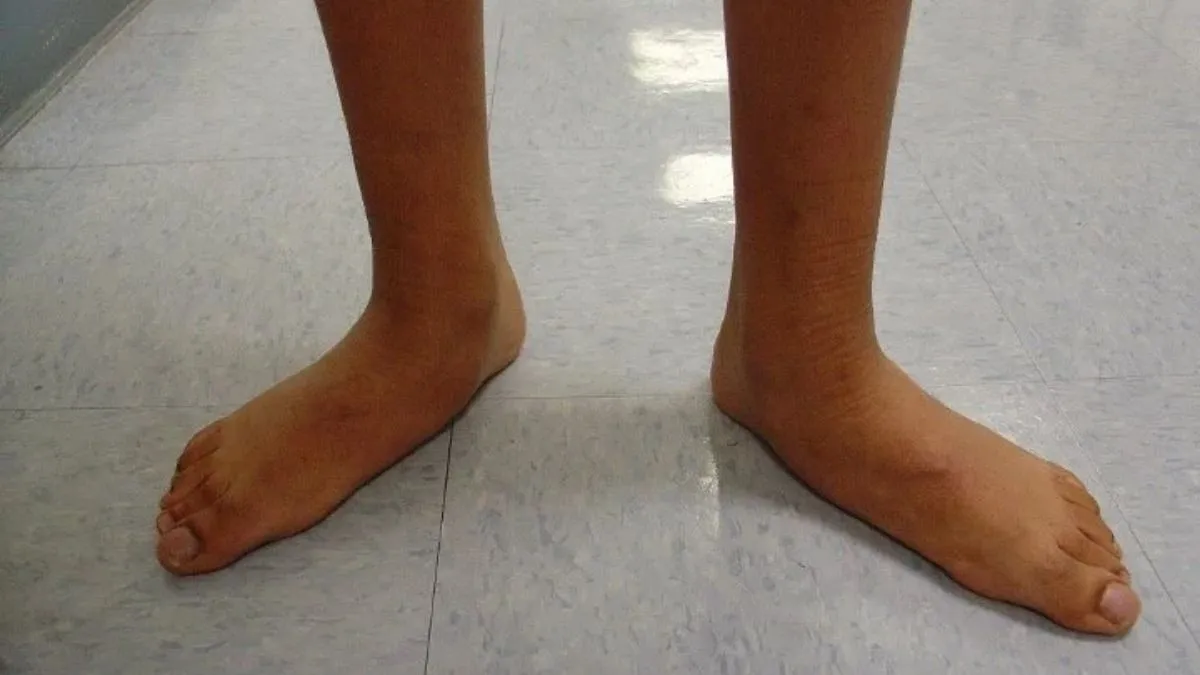 flat feet
“If the flat foot is causing pain, fatigue, difficulty walking or progressive deformity, treatment is aimed at improving foot function, controlling symptoms and preventing further problems. In adults who have a structural deformity, non-surgical care can help alleviate symptoms, but may not reverse the deformity itself.”
This is crucial as exercise and insoles are frequently marketed as the solution for permanently correcting flat feet online.
What's the Difference Between Flexible and Rigid Flat Feet?
This distinction shapes everything about treatment, according to Dr Rathi:
Flexible Flat Feet |
Rigid Flat Feet |
|
Arch behaviour |
Appears when sitting or on tiptoes, flattens on normal standing |
Stays flat even when not bearing weight |
Typical cause |
Normal variation in foot structure |
May involve the bones, joints, or tendons |
Pain |
Often painless |
More often painful or functionally limiting |
Treatment need |
May not need treatment at all |
Should be evaluated, especially if painful |
A new flat foot in adulthood should be considered more seriously, especially if the foot is painful and swollen on the inside of the ankle. This usually indicates a posterior tibial tendon problem, not a lifelong, painless, flexible flat foot.
Can Exercises Actually Correct Flat Feet?
Not the underlying bone structure, but they still matter. "Exercises cannot necessarily change the underlying bone structure of a flat foot, but they can strengthen the muscles and tendons that support the foot and ankle," Dr Rathi explains. A physiotherapist or orthopaedic specialist may recommend:
- Calf stretching
- Heel raises
- Foot and ankle strengthening
- Resistance-band exercises
- Balance exercises
- Exercises targeting the posterior tibial muscle and tendon
Do Orthopaedic Shoes or Insoles Help?
They can genuinely help with pain and support, particularly when symptoms relate to prolonged standing or walking. Orthotic insoles may redistribute pressure and support the arch, but Dr Rathi is clear they "should not be presented as a guaranteed way to permanently rebuild an arch." The right insert depends on foot structure, symptoms, and activity level, sometimes a simple over-the-counter insert is enough, other times a customised orthotic works better.
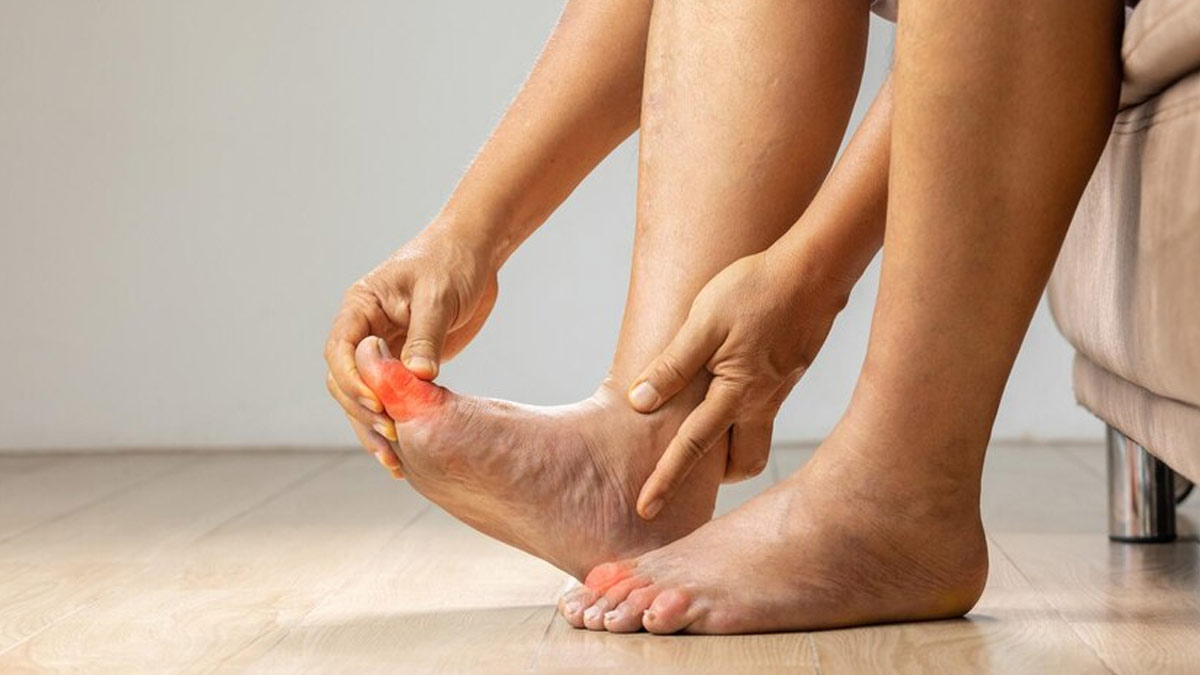
A review published in the Iranian Journal of Public Health found that non-surgical treatment, such as targeted corrective exercises with supportive orthotics or medical insoles, is effective in treating flexible flatfoot.
The study shows that not only do custom insoles provide the foot with structural support and correct foot alignment, but they can also be combined with specific exercises to strengthen the muscles around the foot, balance and reduce foot and lower body pain.
Can Flat Feet Cause Knee, Hip, or Back Pain?
Sometimes, yes. A flat foot could alter the way in which the foot rolls as the person walks, and this could impact the alignment further up the leg. However, Dr Rathi adds, “Not all people with flat feet will suffer from knee, hip or back pain” and so flat feet do not necessarily indicate pain elsewhere.

The Iranian Journal of Public Health further notes that flat feet greatly disrupt the normal mechanics of walking and change the alignment of the lower body. As the arch flattens, the feet roll in (pronate) more and more, the ankle angles change, and additional bending stress is placed on the knees. This imbalance in the kinetic chain of the body will over time affect the balance, and lead to secondary pain or strain at related joints such as knees, hips and lower back.
When Is Surgery Needed for Flat Feet?
Surgery is usually recommended if the foot has become rigid or is very deforming, if there is significant tendon/dorsal ligament dysfunction, if the deformity is progressive or if appropriate non-surgical treatment has not provided pain relief.
The modern orthopaedic concept also acknowledges that progressive collapsing foot deformity is a disease with various structural elements and treatment should be individualized rather than one operation for all flat feet.
When Should You See an Orthopaedic Doctor?
Dr Rathi recommends evaluation if there's:
- New or worsening foot pain
- Swelling around the inner ankle
- Difficulty standing on tiptoes
- Increasing difficulty walking or exercising
- A foot that appears to be becoming flatter over time
- Significant stiffness or a rigid flat arch
- A noticeable difference between the two feet
- A flat foot that develops for the first time during adulthood
ALSO READ- High Heels Affect More Than Your Feet: Here's What They Can Do to Your Hips And Spine
Conclusion
A flat foot doesn't automatically need correcting. If it's painless and flexible, treatment may not be necessary at all. When symptoms are present, physiotherapy, strengthening, supportive footwear, and orthotics can often help. If the deformity is progressive, rigid, or associated with tendon problems and persistent pain, an orthopaedic assessment matters, since surgical correction may sometimes be appropriate.
FAQ
1. Do children with flat feet usually need treatment, or do most grow out of it?
Most children have flexible flat feet that are a normal part of development, and many don't require treatment unless there's pain, stiffness, or functional difficulty. A paediatric orthopaedic evaluation is worthwhile if flat feet in a child are painful, rigid, or affecting activity.2. Can certain sports or activities make flat feet worse over time?
High-impact activities involving repetitive pounding, like long-distance running on hard surfaces, can sometimes aggravate symptoms in people with flat feet, particularly if footwear and support aren't appropriate. This doesn't mean avoiding sport entirely, but supportive footwear and gradual training loads are worth considering.
All possible measures have been taken to ensure accuracy, reliability, timeliness and authenticity of the information; however Onlymyhealth.com does not take any liability for the same. Using any information provided by the website is solely at the viewers’ discretion. In case of any medical exigencies/ persistent health issues, we advise you to seek a qualified medical practitioner before putting to use any advice/tips given by our team or any third party in form of answers/comments on the above mentioned website.

How we keep this article up to date:
We work with experts and keep a close eye on the latest in health and wellness. Whenever there is a new research or helpful information, we update our articles with accurate and useful advice.
-
Current Version
Sep 23, 2026 12:31 IST
Modified By : Vivek Kumar Sep 23, 2026 12:31 IST
Published By : Vivek Kumar
Reviewed By : Dr Akhilesh Rathi