
You must have heard that kidney stones pass on their own within a few weeks. But this is just half-truth. While small stones may pass through urine easily, larger ones require more attention. If more serious complications arise or you have some pre-existing conditions, then surgery comes to the rescue. Surgical procedures to remove kidney stones are generally safe, minimally invasive, and effective. If you want to know more about kidney stone surgery, then this article is for you.
To get a better understanding of this, we reached out to Dr Vineet Malhotra, Principal Consultant, Urology, Sexology, Andrology, and Infertility Treatment, SCM Healthcare, Gurgaon, and Dr Onkar Singh, Consultant Urologist and Kidney Transplant Surgeon, Fortis Jalandhar.
What Are the Surgical Options for Kidney Stones?
As per the National Kidney Foundation, if a kidney stone is too large to pass through urine or is causing harm by blocking urine, then you might need surgery. If the stone is infected or stuck, then it likely has to be surgically removed. The report mentions that lithotripsy with or without ureteroscopy, and percutaneous nephrolithotomy are the most common procedures to remove kidney stones.
Dr Singh explains, "The surgical options for treating kidney stones depend on the size, position and symptoms of the stones. These include shockwave lithotripsy, where shock waves are used to break up stones; ureteroscopy, where a laser is used and open surgery in some cases, depending on the size of the stones."
Regarding kidney stones surgery, Dr Malhotra shares, “The treatment of kidney stones offers several surgical options, mainly in cases where the stones are large, painful, or unlikely to pass on their own.” He lists them for us:
- Extracorporeal Shock Wave Lithotripsy (ESWL): It is one of the most common procedures that uses shock waves to break the stones into smaller pieces, so they can pass through the urine.
- Ureteroscopy (URS): Another common technique is Ureteroscopy (URS), in which a thin scope is passed through the urinary tract and the stone is located, and broken or fragmented with the help of laser energy.
- Percutaneous Nephrolithotomy (PCNL): In larger stones, especially those larger than 2 cm, Percutaneous Nephrolithotomy (PCNL) is frequently suggested, where a small incision is made in the back to remove the stone directly from the kidney.
- Laparoscopic or Open Surgery: In rare or complicated cases, laparoscopic or open surgery may be required. The selected type of surgery depends on the size, number, and location of the stones, the severity of symptoms, the patient’s anatomy, overall health condition, and the presence of infection.
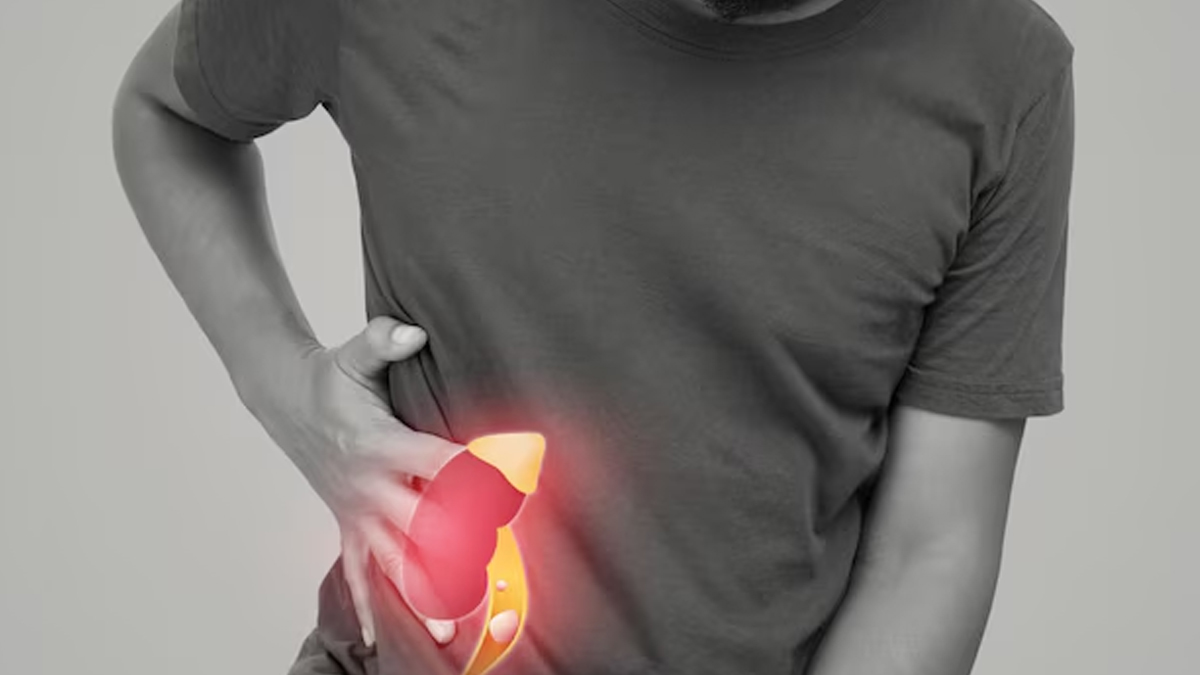 kidney surgery 1
Signs You Need Surgery for Kidney Stones
Is there any way to understand that you need to go through a surgical procedure to remove your stones? Dr Malhotra shares some key signs for the same:
- Kidney stone surgery is normally advised in cases where conservative treatments such as hydration and medication do not relieve the symptoms or when the stones are unlikely to pass on their own.
- Severe pain in the lower back, abdomen, or groin that does not respond to medication can indicate the need for surgical treatment.
- The stones may also lead to repeated urinary tract infections, which may require removal through surgery.
- Another indicator is the blockage of urine flow, which may result in swelling of the kidney and possible kidney damage, if the condition is not addressed.
- Large stones, usually over 6–7 mm, are often difficult to pass through the urinary tract and may therefore require surgical removal.
- Blood in the urine, frequent nausea and vomiting, or worsening kidney function may indicate a condition that requires procedural treatment in order to safely remove the stone.
 kidney surgery 2
Who Should Avoid Kidney Stone Surgery?
Kidney stone surgery is not appropriate for every patient and is often avoided or delayed in certain conditions. Explaining this further, Dr Malhotra says, “Patients with uncontrolled bleeding disorders or those taking strong blood-thinning medications may have a higher risk of bleeding during the procedure and require careful evaluation.”
He adds, “Active urinary tract infections may also need to be treated first before surgery is considered. Patients with serious medical conditions affecting the heart, lungs, or overall stability may require additional medical clearance before any procedure is performed. In some cases, very small stones that are likely to pass naturally may not require surgery.”
 kidney surgery 3
So can kidney stones be removed without surgery? As per the Cleveland Clinic, around 80% of kidney stones pass on their own. It mentions that the time kidney stones take to pass depends on their size and location: stones that are smaller than 4 mm (millimeters) may pass within one to two weeks; while larger stones may take about two to three weeks to completely pass. Once the stone reaches the bladder, it usually passes in a few days. A doctor should evaluate to check for blockages or other complications.
Explaining further, Dr Singh says, "Certain patients who suffer from infections that cannot be controlled, bleeding disorders and heart problems should be taken care of before undergoing surgery. Pregnant women and patients who have high-risk factors for surgery should also be taken care of. In such cases, alternative treatments can be given instead of surgery."
ALSO READ - Expert Guide: Daily Habits That Reduce Kidney Stone Risk
Kidney Stone Removal Procedure Postoperative Care
According to the National Institutes of Health (NIH), after a kidney surgery, doctors may leave a thin flexible tube, called a ureteral stent, in your urinary tract. This can help urine flow or a stone to pass. The report further mentions that once the stone is removed, a doctor sends it or its pieces to a lab to find out its type. A professional may ask you to collect your urine for 24 hours after the kidney stone has passed or been removed. This can help measure how much urine you produce in a day, along with mineral levels in your urine. You are more likely to form stones if you do not make enough urine daily or have any issue with high mineral levels.
 kidney surgery 4
Last but not least, can kidney stones recur after surgeries? “Kidney stones can recur even after successful removal because surgery eliminates the existing stones but does not always address the underlying causes such as dehydration, dietary factors, metabolic disorders, or genetic predisposition. Long-term prevention usually involves lifestyle changes, adequate fluid intake, dietary modifications, and regular medical evaluation to reduce the risk of future stone formation,” concludes Dr Malhotra. Regarding this, Dr Singh says, "Yes, surgery removes existing stones but does not always prevent new ones from forming. Moreover, recurrence is quite possible without lifestyle or dietary changes."
ALSO READ - Which Medications Are Used For Kidney Stones?
Conclusion
Kidney stones may require surgery in cases where the stones are large, painful, or unlikely to pass on their own. The type of surgery varies for each person. A medical professional and proper tests can help understand which surgery is suitable for you.
FAQ
How serious is kidney stone surgery?
Kidney stones are generally considered safe, and major complications are relatively uncommon.Is removal of kidney stones a major operation?
No, it is a minimally invasive and generally safe surgical procedure.What is the recovery time after kidney stone surgery?
The recovery time after kidney stone surgery varies for each procedure, but most patients are fully recovered within six weeks and can resume their normal activities.Is kidney stone surgery painful?
Kidney stone surgery itself is not painful because it is done under anaesthesia, but you can expect postoperative discomfort.What size kidney stone requires surgery?
Stones larger than 10 mm generally need surgical removal, as natural passage becomes highly unlikely. This may vary depending on different factors.
All possible measures have been taken to ensure accuracy, reliability, timeliness and authenticity of the information; however Onlymyhealth.com does not take any liability for the same. Using any information provided by the website is solely at the viewers’ discretion. In case of any medical exigencies/ persistent health issues, we advise you to seek a qualified medical practitioner before putting to use any advice/tips given by our team or any third party in form of answers/comments on the above mentioned website.
How we keep this article up to date:
We work with experts and keep a close eye on the latest in health and wellness. Whenever there is a new research or helpful information, we update our articles with accurate and useful advice.
-
Current Version
Apr 14, 2026 19:16 IST
Modified By : Shruti Das Apr 14, 2026 19:16 IST
Modified By : Shruti DasApr 14, 2026 19:16 IST
Modified By : Shruti DasApr 14, 2026 19:16 IST
Published By : Shruti Das
Reviewed By : Dr Arpit Srivastava