First 5 Minutes After a Deep Cut: How to Control the Bleeding

A deep cut can happen in seconds. A slip of the razor. A sharp tool at work. A broken glass in the kitchen. The sight of blood makes many people panic. But what you do first matters most. This article is part of our First 5 Minutes of a Medical Emergency series. It shows how to control bleeding from a deep cut, step by step. It also covers when to call for help and what mistakes to avoid. Read it once now, so you can act fast when it counts.
How to Control Bleeding From a Deep Cut?
Prof Dr SM Fayaz, Lead and Senior Consultant, Internal Medicine, KIMS Hospitals, Mahadevapura says, "Press firmly on the wound with a clean cloth and do not let go. Keep the injured part raised, and keep pressing for 10 minutes without peeking."
Deep Cut Bleeding First Aid: A Minute-by-Minute Guide
"Keep pressing without a break. Stopping and starting breaks up the forming clot," explains Prof Fayaz.
- Minute 1: Sit down so you do not faint. Grab a clean, non-fluffy cloth, gauze or towel. Do not waste time washing the wound.
- Minute 2: Press firmly on the wound with your palm or fingers. If blood soaks through, add more cloth on top. Do not remove the first one.
- Minute 3: Raise the hand, arm or leg above heart level, if you can. Sit or lie down.
- Minute 4: Keep the pressure steady. Use a firm bandage to free your hands. It should be snug, not so tight that fingers turn pale or numb. If an object is stuck in the wound, do not pull it out. Pad around it.
- Minute 5: If bleeding has slowed or stopped, keep pressing for about 10 minutes in total. If it is still heavy, call 112 or 108 and keep pressing.
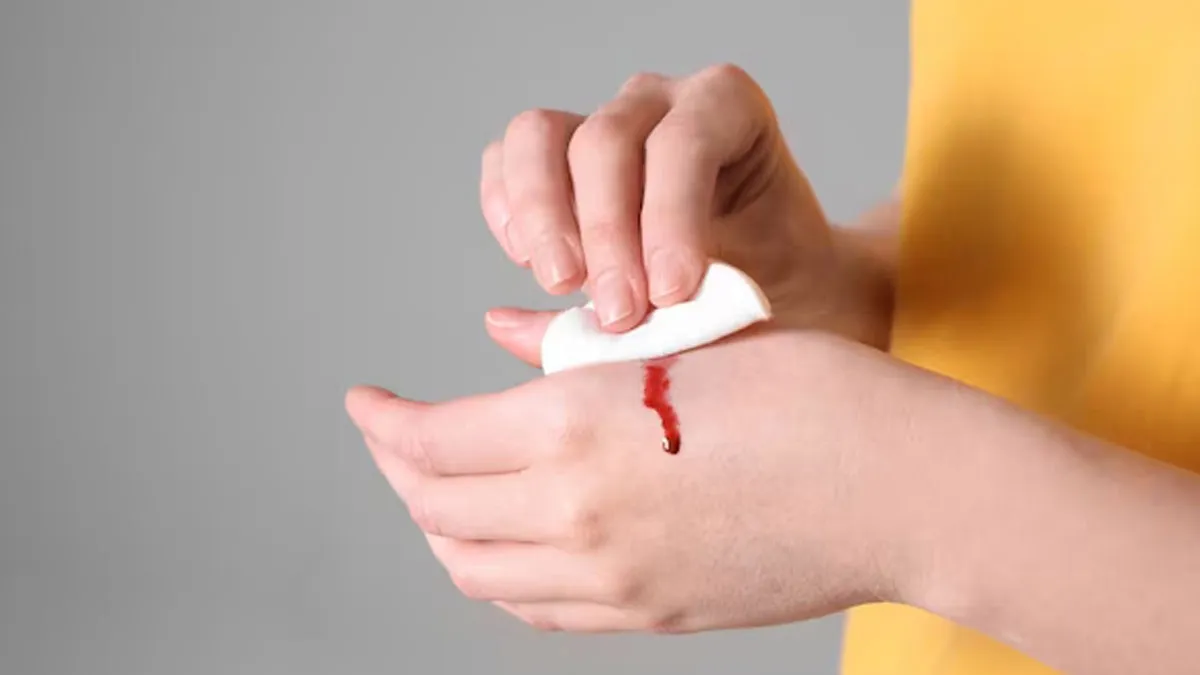
Why Does Pressure Stop Bleeding From a Deep Cut?
Prof Fayaz notes, "Firm pressure squeezes the vessel and slows blood flow, which gives the clot time to form."
When a vessel is cut, tiny cells called platelets stick together to plug the hole. Proteins then form a mesh to hold the plug in place. Lifting the cloth to check can tear this plug away.
The International Liaison Committee on Resuscitation (ILCOR) reviewed severe bleeding care in a 2021 study in Prehospital Emergency Care. It included 107 studies and 22,798 patients. Direct manual pressure stopped bleeding faster than pressure dressings or devices. The authors also admit that "certainty of evidence was very low." This study looked at severe bleeding, not minor nicks. Still, it supports pressing by hand first.
ALSO READ- First 5 Minutes After A Stroke: Doctor Explains What Should You Do First?
Why Do Shaving Cuts Bleed So Much?
"The face and scalp have a rich blood supply, so even a small cut can bleed heavily," says Prof Fayaz. These cuts usually stop within a few minutes with pressure. A cold, clean cloth or a styptic pencil can help. (A styptic pencil is a small stick that seals tiny cuts.)
When Is Bleeding From a Cut an Emergency?
Prof Fayaz advises, "Call for help if the bleeding is heavy, spurting or does not stop."
Call 112 or 108 if:
- Blood spurts or soaks through the cloth quickly
- Bleeding continues after 10 minutes of firm pressure
- The wound is on the neck, chest or belly, or is very deep
- The person feels faint, dizzy, pale, cold, clammy or confused
- A body part is cut off, or an object is stuck in the wound
Should You Use a Tourniquet for a Deep Cut?
"Use one only for life-threatening bleeding from an arm or leg that will not stop with firm pressure," Prof Fayaz says.
If you must use one:
- Place it 2 to 3 inches above the wound, not over a joint.
- Tighten until the bleeding slows or stops.
- Note the time and tell the responders.
- Never use string or thin cord.
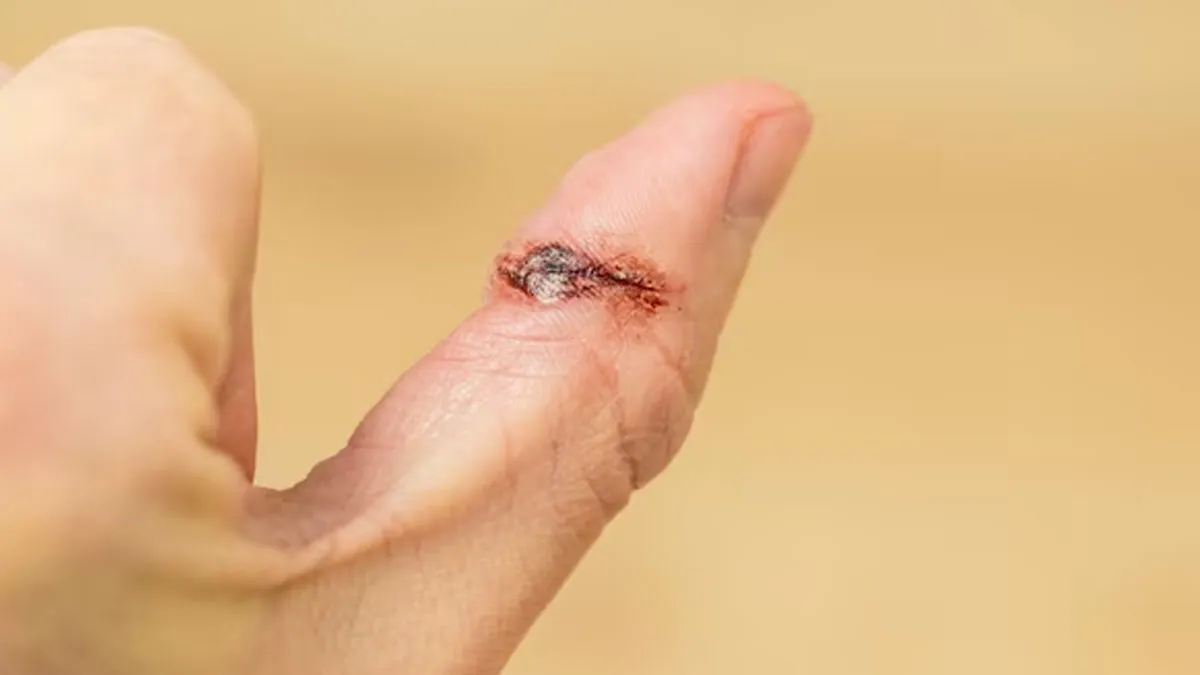
A 2025 review in Medicina pooled data on tourniquets used before hospital. The authors found "no significant reduction in mortality or blood product use." Yet guidelines still advise a tourniquet when life-threatening limb bleeding cannot be controlled with direct pressure. So the evidence is mixed. This is why Prof Fayaz says to use one rarely.
What Not to Do When a Deep Cut Is Bleeding
"Do not apply turmeric, ghee, coffee powder, toothpaste, powder or cobwebs. They do not stop bleeding and can cause infection," warns Prof Fayaz.
- Do not use fluffy cotton wool. Fibres stick in the wound.
- Do not remove a soaked cloth.
- Do not tie a tight band around a limb for a minor bleed.
- Do not clean the wound until bleeding is controlled.
After the Bleeding Stops: Aftercare and When to Go to Hospital
Prof Fayaz says, "Do not use hydrogen peroxide or strong antiseptics on the wound."
Rinse the cut under clean running water. Wash around it with mild soap. Cover it with a clean, non-stick dressing. Change it daily. Check your tetanus status. A booster is usually advised if your last dose was over 5 years ago for a dirty wound, or 10 years ago for a clean one.
Go to hospital if:
- The cut is deep or gaping. It may need stitches, ideally within a few hours.
- It is on the face, hand, genitals or over a joint.
- You cannot move a finger or limb, or feel numbness.
- It was caused by a rusty object or a bite.
- You take blood thinners or aspirin.
- Signs of infection appear, such as redness, pus or fever.
ALSO READ- First 5 Minutes After Someone Has A Severe Panic-Like Episode: How To Tell If It's An Emergency
Prof Fayaz concludes, "Press firmly with a clean cloth, raise the injured part and do not lift the cloth. Keep pressing for 10 minutes."
FAQ
1. Can I take aspirin for the pain of a deep cut?
It is best to avoid it. Aspirin thins the blood and may make bleeding last longer. Paracetamol is usually the safer choice. Check with a doctor or pharmacist first.2. What should I keep at home for sudden cuts?
Keep sterile gauze, non-stick dressings, a firm bandage and disposable gloves in one box. Store it where everyone can find it. Skip cotton wool.
All possible measures have been taken to ensure accuracy, reliability, timeliness and authenticity of the information; however Onlymyhealth.com does not take any liability for the same. Using any information provided by the website is solely at the viewers’ discretion. In case of any medical exigencies/ persistent health issues, we advise you to seek a qualified medical practitioner before putting to use any advice/tips given by our team or any third party in form of answers/comments on the above mentioned website.
How we keep this article up to date:
We work with experts and keep a close eye on the latest in health and wellness. Whenever there is a new research or helpful information, we update our articles with accurate and useful advice.
-
Current Version
Nov 27, 2026 17:20 IST
Modified By : Vivek Kumar
Reviewed By : Prof Dr S M Fayaz Nov 27, 2026 17:20 IST
Modified By : Vivek KumarNov 27, 2026 17:20 IST
Published By : Vivek Kumar