
The first visuals of Captain Smit Machchhar’s injury have emerged, and stitches can be seen on his head. The flydubai pilot was seriously injured on 30 September, when his co-pilot attacked him on flight FZ1073.
The recent images have left many people asking how doctors close wounds. Both stitches and staples hold a wound together while it heals. Stitches use thread and are more precise, while staples are metal clips and faster. An expert explains how doctors choose.
What Is the Difference Between Staples and Stitches?
Prof Dr SM Fayaz, Lead and Senior Consultant, Internal Medicine, KIMS Hospitals, Mahadevapura explains, “Both close a wound so the edges can heal together. Stitches (sutures) use a needle and thread. Staples are small metal clips placed with a special device.”
He adds, “The surgeon picks based on the wound, not the patient’s preference alone.”
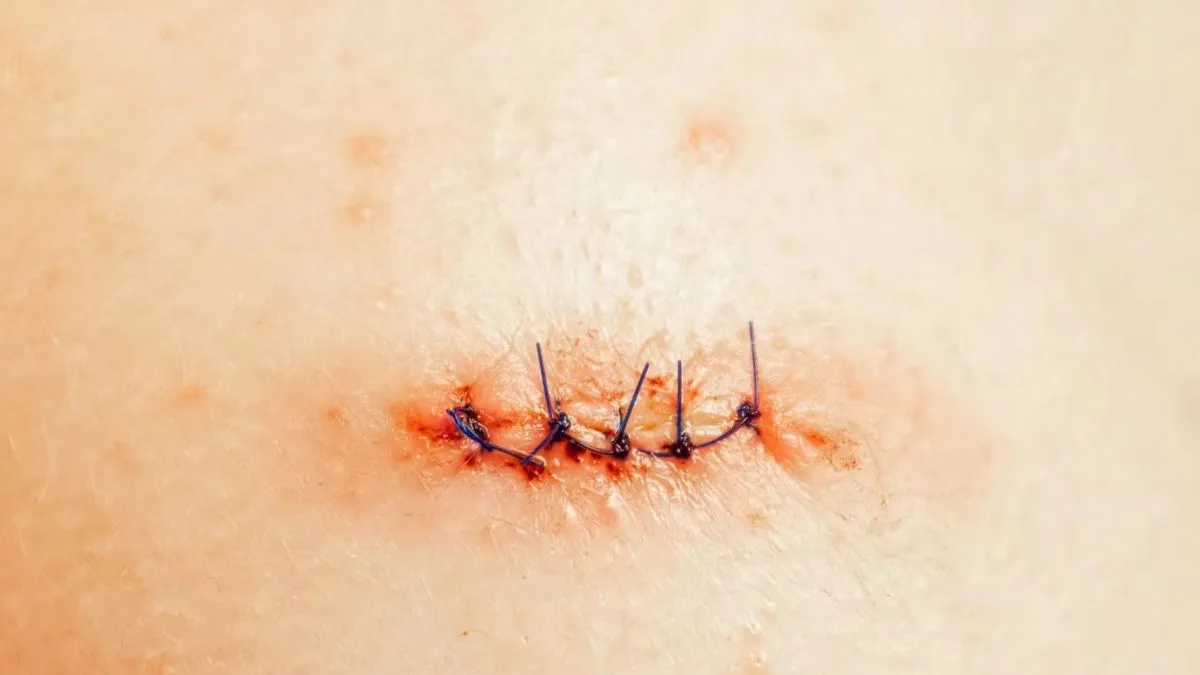
What Are Stitches?
 stitches
- A needle and thread pull the edges of the wound together.
- Dissolvable (absorbable) stitches break down on their own. They are often used inside the body or under the skin.
- Non-absorbable stitches need to be removed, usually after about 5 to 14 days.
- They can be placed very exactly. This helps with curved, uneven or delicate wounds.
What Are Staples?
- Skin staples are small clips, usually stainless steel or titanium.
- They go in quickly with a stapling device.
- They always need removal with a special tool, usually after about 7 to 14 days.
- They are mostly used on long, straight wounds, such as surgical cuts on the scalp, trunk, arms and legs.
Staples vs Stitches: Key Differences
Stitches |
Staples |
|
Material |
Thread |
Metal clips |
Speed |
Slower |
Much faster |
Precision |
Very precise |
Less precise |
Best for |
Face, hands, joints, curved or delicate wounds |
Long, straight wounds on the scalp, trunk and limbs |
Removal |
Dissolve, or removed with scissors |
Always removed with a special tool |
Scar |
Often finer on delicate areas |
Depends on site and wound care |
A 2021 review in PLoS ONE pooled seven randomised trials with 3,705 patients. A meta-analysis combines results from many studies. There was no significant difference in infection rates between staples and stitches. Staples shortened surgery time. The authors noted that “sutures appeared to provide better cosmesis and patient satisfaction.” Cosmesis means how the scar looks.
Which Is Better: Staples or Stitches?
Dr Fayaz says neither is better for everyone. The right one depends on:
- Where the wound is
- How long, deep and straight it is
- How much tension the skin is under
- How quickly the surgeon needs to close it
The patient’s health. Diabetes, smoking, some medicines and poor nutrition can slow healing.
Do Staples Leave Worse Scars? Is Removal Painful?
Not necessarily. Scarring depends more on the body area, skin tension, infection, genes and wound care. For wounds on the face, surgeons usually prefer stitches for a finer result.
Removal causes a pinch or slight tug. It is quick.
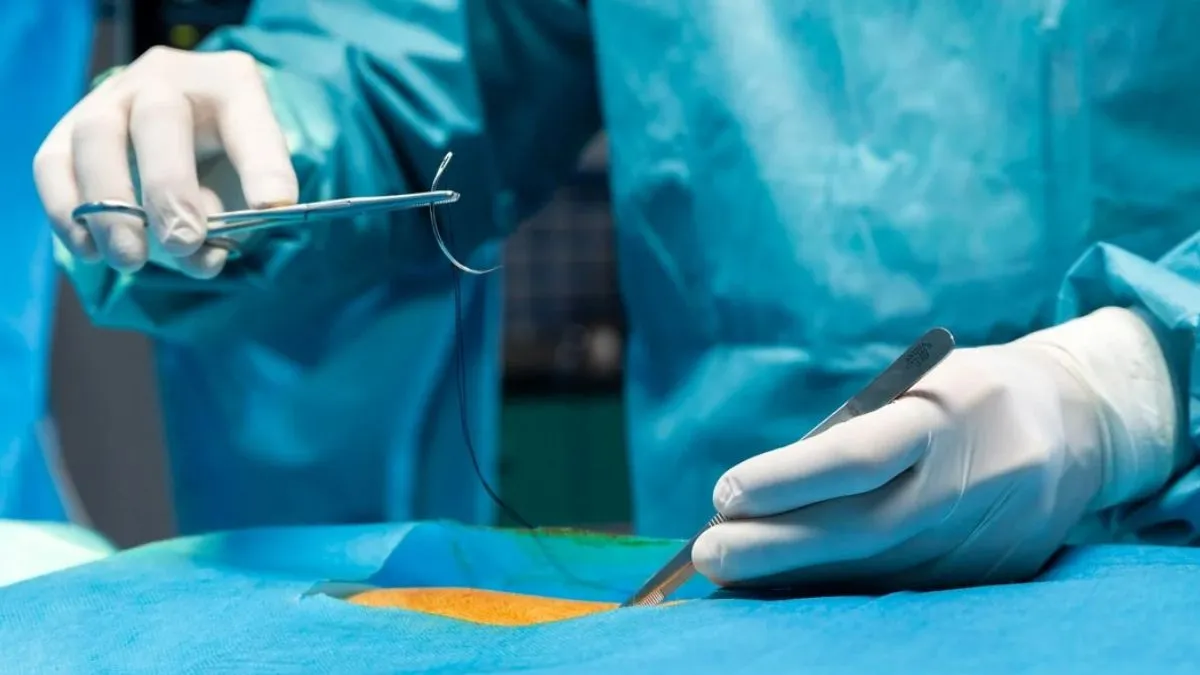
How to Care for Stitches and Staples
 stitches staples
- Follow your surgeon’s instructions on keeping the wound dry and covered.
- Wash your hands before touching it.
- Do not pick, scratch or pull at stitches or staples.
- Avoid baths and pools until told it is safe.
- Avoid heavy lifting or stretching near the wound.
- Never remove them yourself. Return on the date given.
- Tell the radiographer about staples before an MRI scan.
Signs of a Problem: When to See a Doctor
- Redness that spreads, or increasing pain
- Swelling, heat, pus or a bad smell
- Fever
- The wound opening, or staples or stitches coming loose
- Bleeding that does not stop with gentle pressure
- A missed removal date
Heavy bleeding or a very deep wound needs urgent care. So does diabetes with any wound change.
ALSO READ- Can Jumping Make You Taller? Here Is The Truth About Height and Exercise
Conclusion
Staples are fast and suit long, straight wounds. Stitches are precise and suit delicate or curved areas. Both heal wounds well with proper care. Follow your surgeon’s advice, keep the wound clean and dry, and watch for infection.
FAQ
1. Why Do Head Wounds Bleed So Much?
The scalp has a rich blood supply, so even small cuts can bleed heavily. Heavy bleeding looks alarming. It does not always mean the injury is deep. Press firmly with a clean cloth and get medical help.2. Can a Head Injury Be Serious Even If the Wound Looks Small?
Yes. A blow can injure the skull or brain without much outward damage. Get emergency help for vomiting, drowsiness, confusion, severe headache, fits, weakness or clear fluid from the nose or ears.
All possible measures have been taken to ensure accuracy, reliability, timeliness and authenticity of the information; however Onlymyhealth.com does not take any liability for the same. Using any information provided by the website is solely at the viewers’ discretion. In case of any medical exigencies/ persistent health issues, we advise you to seek a qualified medical practitioner before putting to use any advice/tips given by our team or any third party in form of answers/comments on the above mentioned website.
How we keep this article up to date:
We work with experts and keep a close eye on the latest in health and wellness. Whenever there is a new research or helpful information, we update our articles with accurate and useful advice.
-
Current Version
Oct 29, 2026 17:17 IST
Modified By : Vivek Kumar Oct 29, 2026 17:17 IST
Published By : Vivek Kumar
Reviewed By : Prof Dr S M Fayaz