
Electric shocks happen in homes, kitchens, bathrooms and on the roads, often in seconds. The first few minutes can decide how serious the outcome is. Most people want to rush to help. But touching a person who is still connected to a live current can shock you too. So, what should you do first? Switch off the power, or move the person away using something dry, before you touch them. Then call for help, check breathing and treat burns. Here is the full plan from an expert, plus what research shows.
What Should You Do First After an Electric Shock? The Short Answer
Prof Dr SM Fayaz, Lead and Senior Consultant, Internal Medicine, KIMS Hospitals, Mahadevapura says, “Make the scene safe before you touch the person. If the current is still flowing, touching them can shock you too. Then call for help, check breathing and start CPR if needed. Treat burns after that.” electric shock
Minute 1: Make the Scene Safe
Dr Fayaz advises, “Do not touch the person if they are still in contact with the electricity.”
- Switch off the power at the main switch, circuit breaker or plug. Keep your hands dry and do not stand in water.
- If you cannot switch it off quickly, push the person away using something dry that does not conduct electricity, such as a wooden stick or broom handle. Stand on a dry surface.
- Fallen power lines: Stay well back and keep others away. Call the electricity authority and emergency services. Wait until the power is confirmed off.
Minute 2: Call 112 or 108 and Check the Person
- “Call 112 or 108 in India, or ask someone nearby to call. Put the phone on speaker,” says Dr Fayaz.
- Check if the person responds. Tap their shoulders and call out loudly.
- Check breathing. Look at the chest for up to 10 seconds. Do not spend longer than this.
Minutes 3 to 5: Act on What You Find
Dr Fayaz says, “If the person is not breathing or not breathing normally, start CPR straight away.”
- Not breathing: Place the heel of your hand on the centre of the chest. Push hard and fast, about 100 to 120 compressions a minute. If an AED (automated external defibrillator) is nearby, switch it on and follow its voice instructions. Continue until help arrives.
- Breathing and awake: Lay them down, keep them calm, check for burns and do not let them walk around.
- Breathing but unresponsive: Place them on their side in the recovery position, unless you suspect a neck or back injury. Keep checking their breathing.
How to Treat Electrical Burns![electric burn]() electric burn
 electric burn
“Cool the burn with cool running water for at least 10 to 20 minutes, if the person is stable,” says Dr Fayaz.
- Avoid ice or very cold water.
- Cover loosely with a clean, non-fluffy, non-stick dressing or a clean cloth.
- Do not burst blisters, or apply butter, oil, toothpaste or ointments.
- Remove rings, watches and tight clothing near the burn before swelling starts. Do not pull off clothes stuck to the skin.
- Look for an exit burn. Electricity often leaves through a second point, such as a foot.
Research on cooling is about heat burns, but it guides first aid. A 2022 review in Australasian Emergency Care found that 20 minutes of cool running water within three hours “significantly decreased the odds” of needing skin grafts or surgery.
Yet a 2022 review in Burns found no clear extra benefit beyond 20 minutes, and said the optimal duration “remains unknown.” So start cooling early. Electrical burns can be deeper than they look, so they still need a doctor.
What You Should Never Do After an Electric Shock
Dr Fayaz warns, “Never touch the person while they are still connected to the current.”
- Never use a wet object, metal rod or bare hands to move them.
- Never pour water on the person or the device while it is live.
- Never give food or drink.
- Never move them unnecessarily if they fell or were thrown, since there may be a head, neck or spine injury.
- Never let someone refuse help just because they “feel fine.”
ALSO READ- First 5 Minutes After an Electric Shock: Doctor Explains What Should You Do First?
Why Do You Need a Doctor Even If the Person Looks Fine?
Dr Fayaz explains, “Electricity can disturb the heart’s rhythm. This can happen minutes to hours later.”
Other hidden problems include deep burns, kidney strain from muscle breakdown, fractures and nerve damage.
A 2023 study in Clinical Research in Cardiology reviewed 333 electrical injury cases. Most were low voltage, under 1,000 volts. Arrhythmias (heart rhythm problems) occurred in 11.7 per cent. The authors concluded that symptom-free patients with a normal first ECG “do not need continuous ECG monitoring.”
Another 2023 review in the British Paramedic Journal found no “delayed arrhythmia” in the studies reviewed. It said such delayed problems may not justify long monitoring, but added that data are limited.
So an ECG at a hospital is the key check. Anyone who loses consciousness, has burns, chest pain, a racing heartbeat, breathlessness, seizures or numbness needs urgent care.
Who Needs to Go to Hospital Without Delay?
“A person who was in contact with current for more than a moment needs to be seen,” says Dr Fayaz. The list includes:
- Anyone who passed out, or whose breathing or heartbeat was affected
- Anyone with burns, even small ones
- High voltage shocks, including power lines, or lightning
- Children, pregnant women and people with heart conditions
- Confusion, severe headache, vision problems or muscle pain
What About a Mild Shock From a Household Switch, or Lightning?
Dr Fayaz says, “A brief tingle with no symptoms, no burns and no loss of consciousness is often harmless.” Still, see a doctor if symptoms appear later or you are unsure.
For lightning, “a person struck by lightning does not carry a charge.” It is safe to touch them once the area is safe. They often need CPR.
How to Prevent Electric Shocks at Home![electric shock]() electric shock
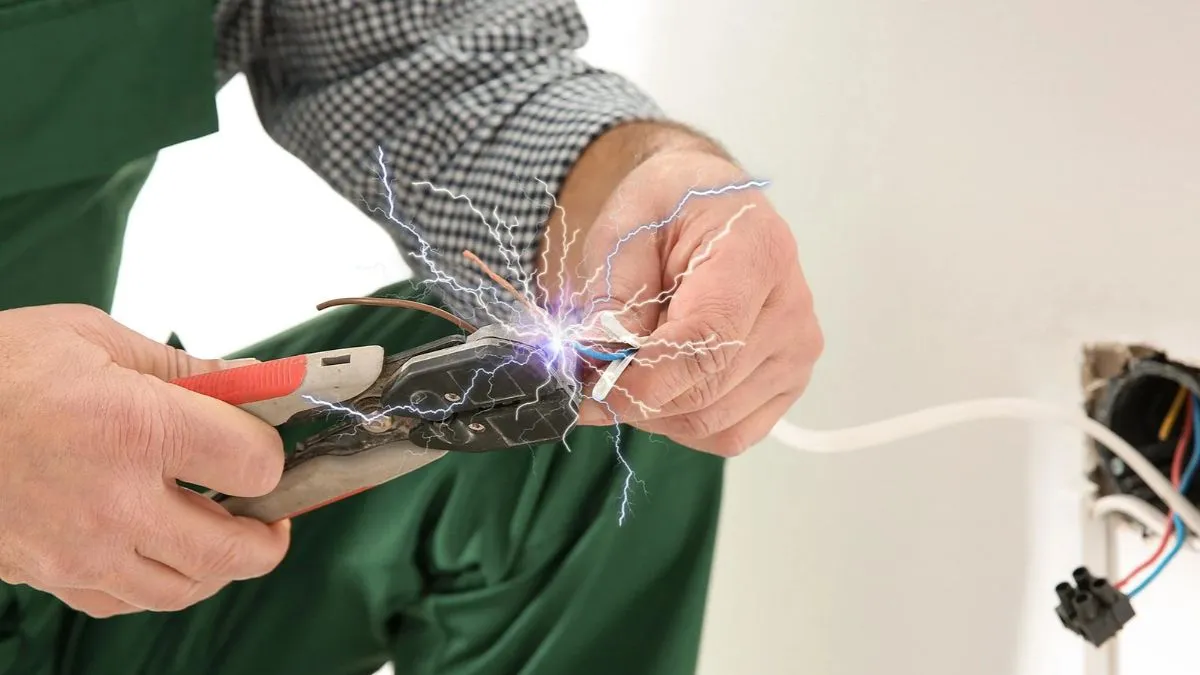 electric shock
Dr Fayaz stresses, “Never fix electrical faults yourself. Call a qualified electrician.”
- Keep wet hands away from switches and plugs.
- Replace damaged wires, loose plugs and broken sockets.
- Use earthed appliances and install an RCCB or ELCB, which cuts power in a fault.
- Use safety covers for sockets, and do not overload extension boards.
- Stay away from fallen wires and poles during rain.
- Learn CPR.
Conclusion
Dr Fayaz sums it up: “Switch off the power first, then call 112 or 108. If the person is not breathing, start CPR.” Treat burns gently. Take anyone seriously shocked, or who feels unwell, to a doctor, even if they seem to recover.
FAQ
1. What Is the Difference Between a Low-Voltage and a High-Voltage Shock?
Studies usually call shocks under 1,000 volts low voltage. Most household sockets in India fall in this group. High-voltage shocks, such as from power lines, cause far more severe injury and need emergency care.2. Can an Electric Shock Harm a Pregnancy?
Evidence is limited, and a brief low-voltage shock rarely causes harm. But pregnant women should always be checked by a doctor after a shock, to be safe.
All possible measures have been taken to ensure accuracy, reliability, timeliness and authenticity of the information; however Onlymyhealth.com does not take any liability for the same. Using any information provided by the website is solely at the viewers’ discretion. In case of any medical exigencies/ persistent health issues, we advise you to seek a qualified medical practitioner before putting to use any advice/tips given by our team or any third party in form of answers/comments on the above mentioned website.
How we keep this article up to date:
We work with experts and keep a close eye on the latest in health and wellness. Whenever there is a new research or helpful information, we update our articles with accurate and useful advice.
-
Current Version
Oct 30, 2026 19:19 IST
Modified By : Vivek Kumar Oct 30, 2026 19:19 IST
Published By : Vivek Kumar
Reviewed By : Prof Dr S M Fayaz