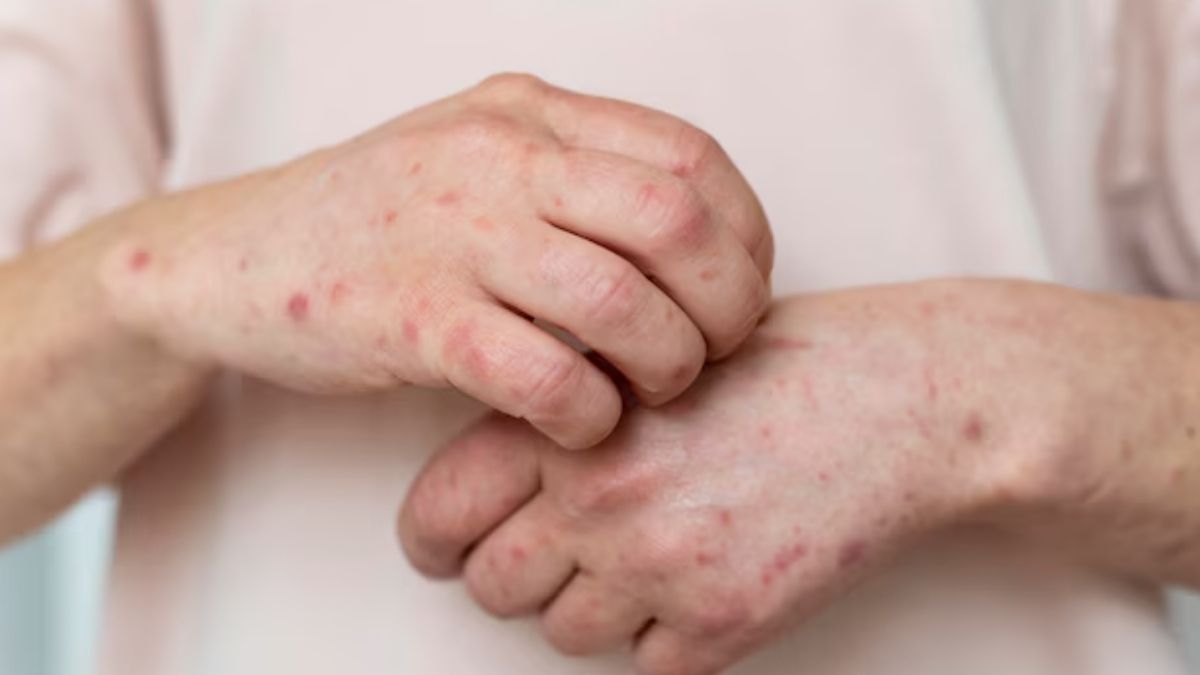
Itching can become surprisingly intense once you get into bed. For some people, it is a mild irritation that disappears by morning. For others, it can disturb sleep and leave the skin sore from repeated scratching. Night-time itching is not just in your head. Your body and skin actually change after dark, which can make itch signals stronger. Hormone levels, skin barrier function, temperature and even how much attention you pay to the sensation can all play a role. The effect can be more noticeable if you already have eczema, psoriasis or dry, sensitive skin. Here is what happens to your skin at night and when persistent itching needs medical attention.
Why Does Skin Itch More At Night?
“It’s not one single thing,” explains Dr Karuna Malhotra, Cosmetic Skin Clinic, New Delhi. “It’s three separate circadian changes converging at the same time, plus a psychological factor most people overlook entirely.”
Your body's internal clock influences several processes linked to night-time itching. Below are a few more reasons that Dr Malhotra has listed.
Cortisol Levels Drop At Night
Cortisol is a hormone with anti-inflammatory effects. Its levels naturally fall towards the evening and night before rising again towards morning.
Dr Malhotra explains that with less cortisol circulating at night, some inflammatory activity may become less suppressed. This can make itch signals feel stronger.
Research also shows that cortisol follows a clear circadian rhythm controlled by the body's internal clock. A 2024 review from Journal of Central South University explores why skin itch worsens at night. Key drivers include natural drops in cortisol, changes in melatonin, increased body temperature, and inflammatory markers. Specific circadian clock genes (like BMAL1 and CLOCK) regulate these itch pathways.
Your Skin Barrier Changes Overnight
Your skin barrier helps keep moisture inside the skin and irritants outside. One way scientists assess this function is through transepidermal water loss (TEWL).
When TEWL rises, more water escapes through the skin. This can contribute to dryness and make the skin more vulnerable to irritation.
The effect may be particularly important in people with eczema.
A 2024 J Biol Rhythms study found that the skin barrier in people with atopic dermatitis became weaker in the evening. Transepidermal water loss, aka, TEWL increased before bedtime, while healthy skin showed a different pattern. The researchers suggested that these changes could contribute to night-time itching. However, the study was very small, involving only four people with atopic dermatitis and two controls, so larger studies are needed.
Dr Malhotra says this is one reason people with eczema, psoriasis and dry skin may notice their itching more after dark.
Does Body Temperature Make Itching Worse?
It can. “Your core body temperature naturally falls as you prepare for sleep. At the same time, the skin surface can behave differently, particularly when you are under warm bedding,” according to Dr Malhotra.

These temperature changes can affect the nerve pathways involved in itch sensation. This is why a bedroom that is too warm, heavy blankets or thick nightwear may make itchy skin at night feel worse.
What Can Help Stop Skin Itching At Night?
Small changes can reduce some common triggers. Dr Malhotra recommends:
- Moisturise before bed: Use a rich, barrier-supportive moisturiser to help reduce overnight moisture loss.
- Keep the bedroom cool: Avoid excessive heat under blankets.
- Skip very hot showers: Hot water can worsen dryness and irritation.
- Choose breathable fabrics: Cotton or other comfortable, breathable materials can reduce heat and friction.
- Avoid new irritants: Check detergents, fragrances and skincare products if itching has recently started.
- Follow prescribed treatment: If you have eczema, psoriasis or another diagnosed condition, use your dermatologist's treatment as advised.
- Avoid scratching where possible: Scratching can further damage the skin barrier and keep the itch cycle going.
For diagnosed inflammatory skin conditions, treatment timing may sometimes be adjusted by a dermatologist according to symptom patterns. This should not be done without medical advice.
When Should Night-Time Itching Be Checked By A Doctor?
Occasional itching is usually not a reason to worry. But persistent itchy skin at night deserves attention if it is affecting your sleep or daily life.

See a dermatologist if:
- Itching regularly wakes you up.
- You have a persistent rash, redness or scaling.
- The itching is new and has no obvious trigger.
- Moisturising does not improve the problem.
- You have sores or skin damage from scratching.
- You also have unexplained fatigue or weight changes.
Dr Malhotra says these additional symptoms can sometimes point towards a condition beyond the skin, including systemic causes involving the liver or kidneys.
ALSO READ- Anxiety and Skin Hives: Dermatologist Explains The Hidden Connection
Conclusion
Why does your skin itch more at night? There is no single answer. Your circadian rhythm affects cortisol, skin barrier function and temperature. At the same time, being in bed means there are fewer distractions, so itching can feel much stronger. For people with eczema, psoriasis or very dry skin, the effect can be even more noticeable.
As Dr Karuna Malhotra explains, night-time itching is a “multi-layered” problem. Improving the skin barrier, keeping the bedroom cool and treating any underlying skin condition can help break the itch-sleep cycle.
FAQ
Can dry skin alone cause itching at night?
Yes. When the skin loses more moisture and becomes dry or irritated, it can trigger itch signals. Night-time changes in the skin barrier may make this sensation more noticeable.Why do I wake up scratching but don't remember doing it?
Itching can cause brief arousals from sleep without a person becoming fully awake or remembering them. Repeated scratching may still disturb sleep quality even if you do not recall waking up.
All possible measures have been taken to ensure accuracy, reliability, timeliness and authenticity of the information; however Onlymyhealth.com does not take any liability for the same. Using any information provided by the website is solely at the viewers’ discretion. In case of any medical exigencies/ persistent health issues, we advise you to seek a qualified medical practitioner before putting to use any advice/tips given by our team or any third party in form of answers/comments on the above mentioned website.

How we keep this article up to date:
We work with experts and keep a close eye on the latest in health and wellness. Whenever there is a new research or helpful information, we update our articles with accurate and useful advice.
-
Current Version
Sep 16, 2026 19:56 IST
Published By : Vivek Kumar
Reviewed By : Dr Karuna Malhotra