-1790252495830_m.webp)
Bad breath, or halitosis, is often blamed on poor brushing. But brushing your teeth is only one part of oral hygiene. The tongue, gums and spaces between the teeth can also harbour odour-producing bacteria. Dry mouth, gum disease, tooth decay and mouth breathing can add to the problem. Research suggests that most cases of halitosis have an oral cause, with coated tongue and periodontal disease among the important contributors. So, if your breath still smells bad after brushing, the problem may not be your brushing technique at all. It may be coming from another part of your mouth.
Why Does My Breath Smell Bad Even After Brushing?
Dr. Puneet Ahuja, Director, Dental Surgery, Sri Balaji Action Medical Institute, New Delhi, explains, “Brushing cleans teeth, but not the whole mouth.”
He says several overlooked factors can explain persistent bad breath.
1. Your Tongue May Be Holding On To The Smell
The back of the tongue has a naturally uneven surface. Food particles, dead cells and bacteria can collect there.
These bacteria can produce volatile sulphur compounds (VSCs), which are responsible for much of the unpleasant smell associated with oral malodour.

Dr. Ahuja explains, “The back of the tongue has a rough surface where food debris, dead cells and bacteria can accumulate.”
An International Journal of Environmental Research and Public Health study on mechanical tongue cleaning also identified bacteria on the tongue as an important source of VSCs. The researchers specifically described tongue cleaning as an important oral hygiene measure for reducing these compounds.
What this means: Brushing your teeth twice a day does not necessarily clean the area where some of the odour is being generated.
ALSO READ- Why Is My Tongue White? Doctor Explains Common Causes And Warning Sign
2. Gum Disease Can Keep Causing Bad Breath
If your breath remains unpleasant despite brushing, check your gums.
Gingivitis and periodontitis can increase the bacterial load around the gums. Bleeding, swelling, tenderness or persistent bad taste can be clues.
Dr. Ahuja says, “Simply brushing more aggressively will not solve the problem” when gum disease is responsible.
3. You May Not Be Cleaning Between Your Teeth
A toothbrush cannot effectively reach every narrow space between teeth.
Food trapped between teeth can be broken down by bacteria, contributing to an unpleasant smell. Plaque can also accumulate in these areas.
This supports the importance of cleaning between the teeth, not just brushing their visible surfaces.
4. A Dry Mouth Can Make Your Breath Worse
Saliva does more than keep your mouth comfortable. It helps wash away food debris and supports the mouth's natural microbial balance.
When saliva production decreases, odour can become more noticeable.
Dr. Ahuja explains that dry mouth can occur with:
- Dehydration
- Mouth breathing
- Smoking
- Certain medicines
- Sleeping with the mouth open
A 2023 systematic review involving more than 31,000 participants highlighted the importance of assessing salivary gland function when evaluating dry mouth. The authors noted that many different tests to measure dry mouth, making it hard to compare results. They emphasized the need for a standardized way to test dry mouth so doctors can find better treatments.
If you regularly wake with a very dry mouth and unpleasant breath, persistent mouth breathing or another cause of reduced saliva may need attention.
5. Morning Breath Is Not The Same As Persistent Bad Breath
Some bad breath immediately after waking is normal. Saliva production decreases during sleep. This allows bacteria and odour-producing compounds to accumulate.
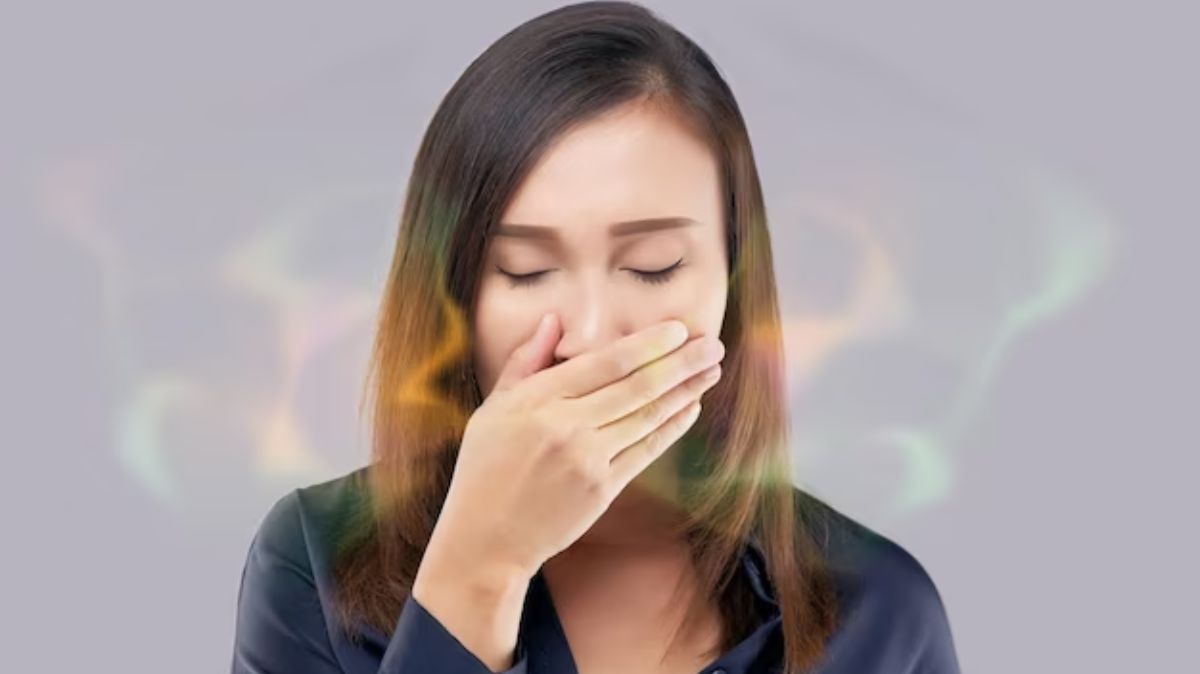
Morning breath should generally improve after:
- Drinking water
- Eating
- Brushing
- Cleaning the tongue
If the smell remains strong for much of the day despite good oral hygiene, it is worth finding the underlying cause.
6. A Cavity Or Infected Tooth Could Be Responsible
A decayed tooth can trap food and bacteria. An infected tooth can also produce an unpleasant taste or smell.
Look out for:
- Toothache
- Sensitivity
- Swelling
- Pus
- Pain when biting
- A persistent bad taste
In these situations, simply brushing more often will not treat the underlying problem. A dental examination is needed.
7. Dentures, Retainers And Braces Can Trap Bacteria
Dental appliances can collect plaque, food debris and bacteria.
If you use dentures, retainers or orthodontic appliances, they need appropriate cleaning as well as your teeth.
Dr. Ahuja says, “Anything that sits in the mouth can accumulate plaque and food debris if it is not cleaned properly.”
8. Mouth Breathing May Be Drying Out Your Mouth
A blocked nose, allergies or other nasal problems can lead to habitual mouth breathing.
This can dry the oral tissues and make bad breath more noticeable.
If you frequently wake up with a dry mouth, blocked nose and unpleasant breath, it may be worth discussing the underlying cause with a doctor or dentist.
9. Mouthwash May Only Be Masking The Problem
A strong mouthwash can make your breath smell fresher temporarily. But it does not necessarily treat the reason the odour is occurring.
If gum disease, tooth decay, tongue coating or dry mouth is responsible, simply masking the smell may delay appropriate treatment.
Research reviews continue to describe halitosis as a condition with multiple possible causes, which is why identifying the source matters.
What Should You Do If Brushing Is Not Helping?
Dr. Ahuja recommends looking beyond brushing and following a complete oral-care routine:
- Brush twice a day with fluoride toothpaste.
- Clean your tongue gently once a day.
- Floss or use interdental brushes daily.
- Drink enough water throughout the day.
- Clean dentures, retainers and other oral appliances properly.
- Avoid smoking and tobacco products.
- Attend regular dental check-ups.
- Get professional cleaning when your dentist recommends it.
- Do not use mouthwash simply to hide persistent odour.
The aim is not to brush harder. It is to clean the areas where bacteria and debris are actually accumulating.
When Should You See A Dentist For Bad Breath?
Persistent bad breath deserves a dental check, especially if it is accompanied by:
- Bleeding or swollen gums
- Loose teeth
- Toothache or sensitivity
- Persistent bad taste
- Pus or swelling
- Severe dry mouth
- A noticeable change in breath smell lasting several weeks
A dentist can examine the teeth, gums, tongue and other oral tissues to identify the source.
ALSO READ- Why Do Humans Have Wisdom Teeth If We Don't Need Them?
Conclusion
Bad breath that remains even after brushing does not automatically mean you have poor oral hygiene. Your tongue, gums, interdental spaces, saliva levels, teeth and dental appliances can all play a role.
Dr. Ahuja explains, “Someone can brush twice a day and still have bad breath if they never clean their tongue.”
So, instead of repeatedly brushing harder, look at the whole mouth. Persistent odour, particularly when accompanied by gum bleeding, tooth pain, swelling or dry mouth, should be evaluated rather than continually masked.
FAQ
Can drinking more water completely get rid of bad breath?
Not always. Water can help when dehydration or dry mouth is contributing to the odour. However, it will not treat causes such as gum disease, tooth decay or heavy tongue coating.Can bad breath come from the stomach?
It is possible for some non-oral conditions to contribute to unusual breath odour, but most halitosis is linked to the mouth.
All possible measures have been taken to ensure accuracy, reliability, timeliness and authenticity of the information; however Onlymyhealth.com does not take any liability for the same. Using any information provided by the website is solely at the viewers’ discretion. In case of any medical exigencies/ persistent health issues, we advise you to seek a qualified medical practitioner before putting to use any advice/tips given by our team or any third party in form of answers/comments on the above mentioned website.

How we keep this article up to date:
We work with experts and keep a close eye on the latest in health and wellness. Whenever there is a new research or helpful information, we update our articles with accurate and useful advice.
-
Current Version
Sep 24, 2026 17:58 IST
Modified By : Vivek Kumar Sep 24, 2026 17:58 IST
Modified By : Vivek KumarSep 24, 2026 17:58 IST
Modified By : Vivek KumarSep 24, 2026 17:58 IST
Modified By : Vivek KumarSep 24, 2026 17:58 IST
Published By : Vivek Kumar
Reviewed By : Dr Puneet Ahuja