
Psoriasis and eczema (atopic dermatitis) are two of the most common chronic inflammatory skin conditions worldwide. They can be really confusing because they have similar symptoms, such as redness, dryness, flaking, and itching. But even though they might look alike, psoriasis and eczema are actually quite different. Experts believe that it's really important to understand what sets them apart, so that one can get the right diagnosis and timely treatment.
In an exclusive interaction with us, Dr Passi shares that psoriasis and eczema may seem similar, but they are actually two distinct conditions. With psoriasis, the immune system goes into overdrive, causing skin cells to build up too quickly, resulting in thick, scaly patches. On the other hand, eczema is more about the disrupted skin barrier, leading to intense itching, inflammation, and dryness. The skin becomes really sensitive, making everyday life a bit of a challenge.
What Is Psoriasis?
Psoriasis is a chronic, immune-mediated skin disease in which the immune system accelerates skin cell turnover. This leads to thick, red plaques covered with silvery-white scales. Some key features of psoriasis are:
- Autoimmune origin
- Thick, raised plaques
- Well-defined borders
- Often appears on the scalp, elbows, knees, and lower back
- 30% may develop psoriatic arthritis (NPF data)
According to the National Psoriasis Foundation (NPF), psoriasis affects around 2-3% of people worldwide.
Underlying Mechanism for Psoriasis
Explaining medical information, Dr Passi shares, “Psoriasis is driven by immune pathways involving T-cells.” These particularly include:
Th17 and Th1 cells
Cytokines IL-17, IL-23, TNF-α
“These cells can cause inflammation and make the skin cells grow too quickly, which over time leads to psoriasis,” she adds.
ALSO READ- Skin-Brain Axis: How Chronic Stress Shows Up as Eczema and Psoriasis
 1-skin
What Is Eczema (Atopic Dermatitis)?
Eczema is a chronic inflammatory skin condition involving skin-barrier dysfunction, immune overactivation, and genetic susceptibility. Some key features include:
- Intense itching
- Red, dry, sometimes oozing patches
- More common in children
- Flare-ups triggered by irritants, allergens, and dryness
This condition is often linked to a trio of issues such as asthma, allergies, and hay fever, which are commonly referred to as the atopic triad.
Prevalence of Eczema
According to the Global Report on Atopic Dermatitis 2022, eczema affects:
- 15-20% of children
- 5-10% of adults
Underlying Mechanism for Eczema
Eczema is driven by:
- Skin barrier dysfunction (Filaggrin gene mutations)
- Th2-dominant immune response – cytokines IL-4, IL-13
Are Psoriasis and Eczema Similar?
Yes, they share some similarities, which is why people often get confused between them.
Some similarities include:
- Chronic inflammatory skin diseases
- Cause redness, dryness, and itchiness
- Triggered by stress, climate, and infections
- Can flare and improve over time
- Require long-term management
- Affects the quality of life and sleep
“However, when you look deeper, things aren't as similar as they seem. The way these conditions work under the surface is actually quite different, which sets them apart,” Dr Passi says.
Psoriasis vs Eczema: Key Differences
Feature |
Psoriasis |
Eczema (Atopic Dermatitis) |
Nature of disease |
Autoimmune |
Skin-barrier + immune-reactive |
Inflammatory pathway |
Th1/Th17 |
Th2 |
Appearance |
Thick, scaly plaques |
Red, inflamed, dry patches |
Borders |
Well-defined |
Ill-defined |
Scaling |
Silvery-white scales |
Flaky, sometimes oozing |
Itching |
Moderate to severe |
Very severe (dominant symptom) |
Common locations |
Scalp, elbows, knees |
Face (children), neck, flexures |
Age of onset |
Often adults |
Often babies/children |
Associated conditions |
Psoriatic arthritis, metabolic issues |
Asthma, allergies |
Triggers |
Stress, infections, cold weather |
Irritants, allergens, and sweating |
 2-skin
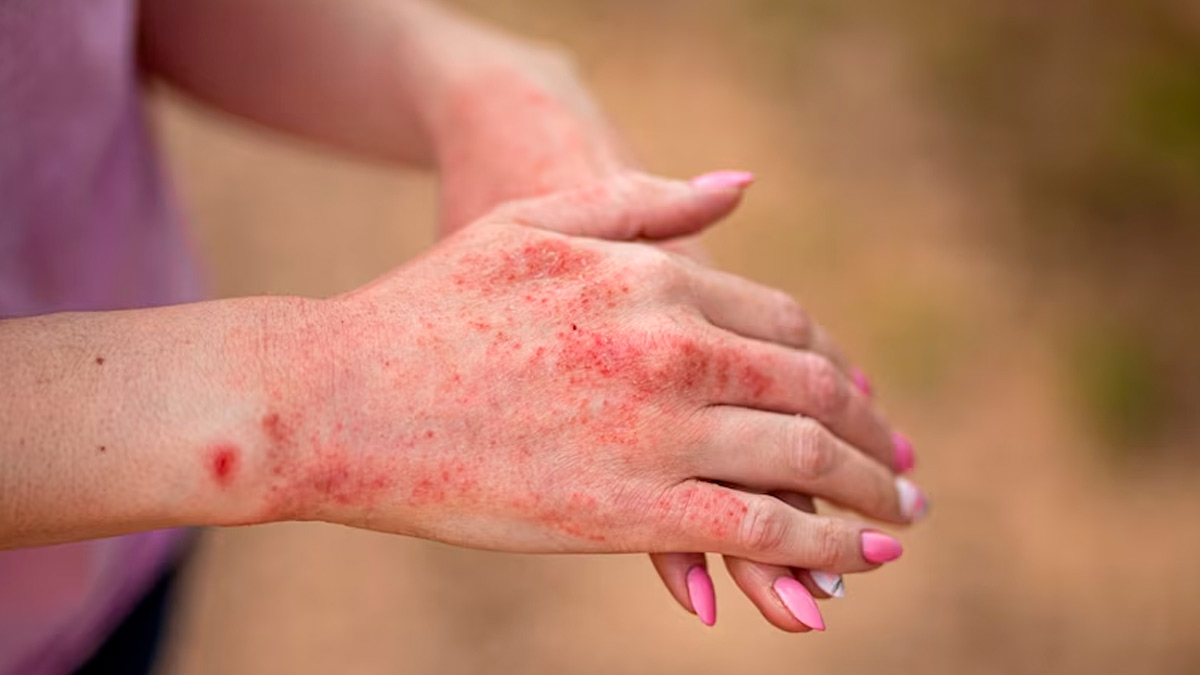
How Psoriasis and Eczema Look Different
Psoriasis
- Thick plaques
- Sharp edges
- Silver scales
- Symmetrical pattern
- Bleeding points if scraped
Eczema
- Angry red patches
- Poorly defined edges
- Sometimes oozing or crusting
- Scratch marks (lichenification)
- Often worsens at night
Dr Passi also notes that in people with deeper skin tones, eczema may appear dark brown, purple, or ashy, while psoriasis may appear violet with grey scales.
Symptoms: Which Itches More?
Eczema itching is way worse than regular itchiness and much more intense.
A 2022 issue of Journal of Allergy and Clinical Immunology found that eczema activates more itch-specific nerve fibres, explaining why scratching becomes uncontrollable.
Causes and Risk Factors
Some causes and risk factors of psoriasis:
- Autoimmune dysfunction
- Family history
- Infections (streptococcal throat infection)
- Obesity
- Smoking
- Heavy alcohol consumption
- Stress
- Certain medications (beta-blockers, lithium)
Alternatively, causes and risk factors of eczema include:
- Filaggrin mutations, meaning a weak skin barrier
- Family history of allergies
- Dry skin
- Irritants (soaps, shampoos, detergents)
- Heat and sweating
- Dust mites, pollen, pet dander
- Hard water
- Hormonal changes
ALSO READ- The Cardiac Impact Of Autoimmune Diseases: What Lupus, RA, And Psoriasis Can Do To The Heart
Can You Have Both Psoriasis and Eczema?
Yes, some people show both conditions simultaneously. This condition is medically known as psoriasiform dermatitis or eczema-psoriasis overlap. A biopsy may be needed for confirmation.
Diagnosis: How Dermatologists Tell the Difference
To diagnose both eczema and psoriasis, a dermatologist evaluates:
- Appearance and location
- Scales and plaque thickness
- Age of onset
- Medical history
- Family history
- Allergy profile
Based on the diagnosis, if needed, they may perform:
- Skin biopsy
- Patch testing (eczema triggers)
- Blood tests to rule out other conditions. However, no blood test definitively diagnoses either condition.
 3-sin
3-sin
How Psoriasis and Eczema Are Treated
Psoriasis and eczema are long-term conditions, but both can be managed well with the right approach. While your dermatologist creates a personalised plan, understanding the basics can help you feel more in control.
Treatment for Psoriasis
Psoriasis treatment usually focuses on calming the overactive immune response and slowing down skin-cell buildup. Your doctor may combine different approaches depending on the severity of your symptoms.
1. Skincare Treatments Applied to the Skin
These are often the first step. Common options include moisturisers, gentle steroid creams, and vitamin D-based preparations. A dermatologist decides which one suits your skin type and condition. They can help:
- Reduce redness and thickening
- Soften scales
- Soothe itching
2. Light-Based Therapy
Some individuals can get benefits from being exposed to UV light in a controlled medical environment. This can help to slow down how fast skin cells grow and reduce inflammation. It's different from sunbathing, though, and is a treatment that's closely watched and managed by medical professionals.
3. Oral or Injected Treatments
When psoriasis is more widespread or affects daily life, doctors may use treatments that work inside the body to calm inflammation. These treatments are typically recommended after a thorough evaluation and ongoing monitoring. These include:
- Immune-modulating tablets
- Targeted therapies (also called biologics)
Treatment for Eczema
Eczema treatment focuses on strengthening the skin barrier, reducing itch, and preventing flare-ups.
1. Daily Moisturising
People with eczema usually have a weak skin barrier, so keeping the skin moisturised makes a big difference. They work to keep your skin hydrated and shield it from things that might irritate it. Dermatologists often recommend:
- Thick creams
- Ointments
- Ceramide-rich moisturisers
2. Topical Treatments for Flare-Ups
When your skin is having a bad flare-up, doctors can give you special creams to help calm it down and stop the itching. These creams can be mild or medium-strength steroids, or they can be steroid-free and just help with the inflammation.
3. Identifying and Avoiding Triggers
Managing eczema is also about lifestyle. Many people see significant improvement simply through consistent skin care and trigger awareness. You may need to:
- Switch to gentle, fragrance-free products
- Take short, lukewarm baths
- Wear soft cotton fabrics
- Reduce exposure to allergens like dust mites or pet dander
4. Advanced Treatments
For moderate to severe eczema that doesn’t improve with topical care, dermatologists may suggest:
- Light therapy
- Biologic medications that target specific inflammation pathways
Bottomline
Psoriasis and eczema share common symptoms such as redness and itching, but are different conditions with different causes, immune pathways, and treatment needs. Psoriasis is autoimmune and causes thick plaques, while eczema is a skin-barrier disorder with severe itching and sensitivity.
A dermatologist can diagnose the condition and recommend the right treatment plan. If you take care of it properly, you can keep both conditions under control for a long time.
FAQ
1. Can psoriasis be mistaken for eczema?
When psoriasis first starts, it can be mistaken for eczema, especially in kids. But a dermatologist can tell the difference by looking at how thick the plaques are, what the scales look like, and sometimes they might even do a biopsy to be sure.2. Which condition causes more itching?
Eczema typically causes more severe itching due to activation of itch-specific nerve pathways.3. Can stress cause psoriasis and eczema flare-ups?
Yes. Stress is a major trigger for psoriasis and eczema.4. Is psoriasis an allergy like eczema?
No. Psoriasis is autoimmune, while eczema is often related to allergies and skin-barrier dysfunction.5. Are psoriasis and eczema curable?
No, but both can be well-controlled with treatment.
All possible measures have been taken to ensure accuracy, reliability, timeliness and authenticity of the information; however Onlymyhealth.com does not take any liability for the same. Using any information provided by the website is solely at the viewers’ discretion. In case of any medical exigencies/ persistent health issues, we advise you to seek a qualified medical practitioner before putting to use any advice/tips given by our team or any third party in form of answers/comments on the above mentioned website.
How we keep this article up to date:
We work with experts and keep a close eye on the latest in health and wellness. Whenever there is a new research or helpful information, we update our articles with accurate and useful advice.
-
Current Version
Apr 10, 2026 21:33 IST
Modified By : Tanya Srivastava Apr 10, 2026 21:33 IST
Modified By : Tanya SrivastavaApr 10, 2026 21:33 IST
Modified By : Tanya SrivastavaApr 10, 2026 21:33 IST
Published By : Tanya Srivastava
Reviewed By : Dr Ruben Bhasin Passi