
Vegetarians often struggle to build the right diet for themselves. And when we say ‘right’ – it not only means balanced meals, but also the one that can help them hit their protein target. One question that we often get to hear is – where do vegetarians get their protein from? Today, we will not only answer this for you, but also reveal some of the best vegetarian protein sources – that can help you reach your 100 g daily protein intake goal. So without further ado, let us begin.
To get a complete picture of this, the editorial team of OnlyMyHealth reached out to Ms Edwina Raj, Head of Services - Clinical Nutrition & Dietetics, Aster CMI Hospital, Bangalore. Read on.
Which Vegetarian Food Has The Highest Protein Content?
If you are of the notion that vegetarian foods do not offer enough protein, let us tell you why you may be wrong. Our expert shares names of the best protein sources from vegetarian food.
“Among vegetarian foods, soybeans have the highest protein content with balanced essential amino acid profile. Soybeans provide about 36 grams of protein per 100 grams, which is more than most other plant-based foods. They contain all essential amino acids, making them a complete protein, similar to animal protein. But the protein quality scores are not similar as per research studies, for which the solution is to combine it with other foods such as cereals or milk that would help you benefit the same as other animal protein sources,” explains Ms Raj.
Shedding more light on this, the expert adds, “Foods made from soybeans such as tofu, tempeh, and soy milk, are also rich in protein and easy to include in daily meals. Soybeans help in muscle building since it contains leucine in adequate amounts, weight management, and heart health benefits can be achieved. They are also rich in fiber, iron, and healthy fats. Because of their high protein and nutrient value, soybeans are considered the best vegetarian protein source, which is similar to paneer and beef. Although it is low in methionine, combining it with rice can help achieve complete balance in amino acid requirement.”
 veg protein 1
Dietary Tips For Vegetarians
Many people are opting to turn vegetarian. But some are embracing more of a middle way, and cutting meat from their diet, while keeping lean proteins like eggs and fish. As per the Academy of Nutrition and Dietetics, if you are planning to stop eating meat altogether, you may want to follow these dietary tips:
- Choose whole grain products like whole wheat bread, wild or brown rice, whole grain cereals. These are rich sources of B vitamins.
- Make the diet varied, and fill it with whole grains, fruits, vegetables, legumes, nuts, and so on.
- Have eggs and dairy products in moderation; try adding soy milk in your diet.
- You can consult a healthcare professional about supplements, especially vitamin B-12.
- Make sure you are having sufficient vitamin D, especially if your exposure to sunlight is low.
- Make sure your ‘healthy’ vegetarian snacks do not contain a lot of sugar, salt, or other additives.
- Junk food and fast food, whether vegetarian or not, can be unhealthy and high in calories. So they should be minimised.
- Reduce the intake of high sugar and high fat foods.
Also Read: Are Mushrooms Vegetarian Or Non-Vegetarian? Expert Explains
Top 10 Vegetarian Foods With Highest Protein Per 100g
As per a 2024 study, vegetarians have a reduced risk of many chronic diseases. It also cites that vegetarian diets, mainly in the low-fat vegan variant, can serve as effective tools in the management of people affected by one or more chronic diseases. On this note, Ms Raj shares the top 10 vegetarian foods with the highest protein per 100 grams. Let’s take a look at them:
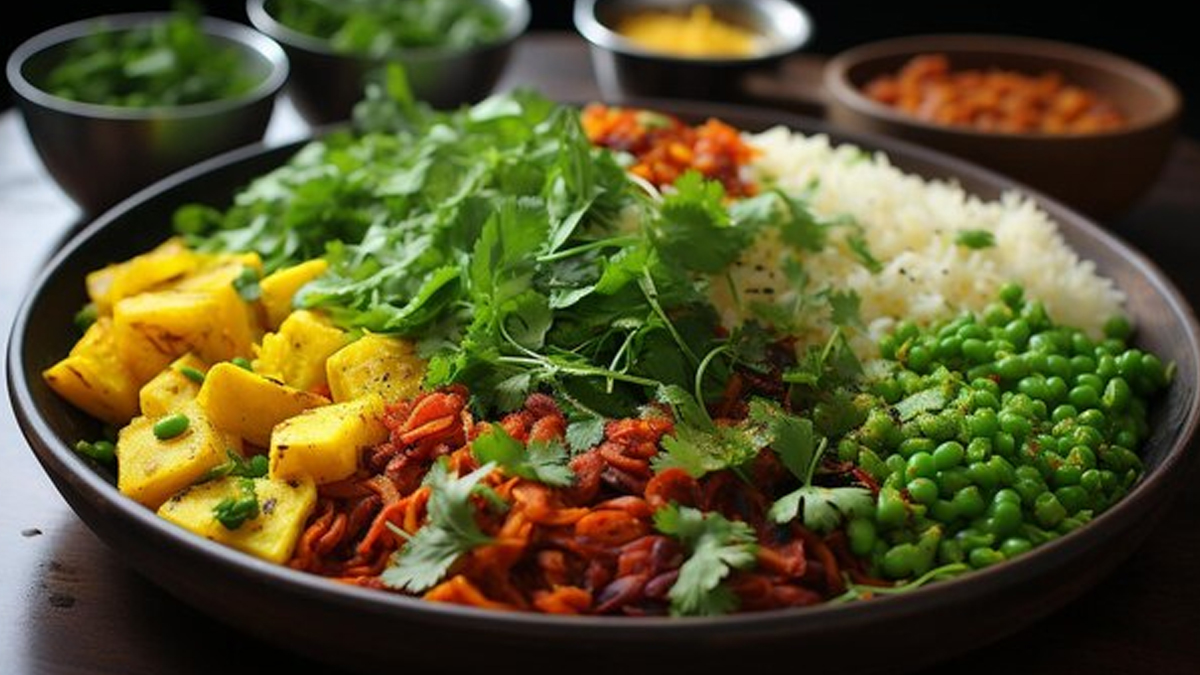
- Soybeans – 100 g soybeans provide around 36 g of protein. They are the richest plant source of protein.
- Tempeh – 100 g of tempeh gives around 19 g of protein.
- Tofu – 100 g tofu contains about 11 g of protein.
- Lentils – 100 g lentils offer nearly 22 g of protein.
- Chickpeas – 100 g chickpeas provide about 20 g when dry.
- Peanuts – 100 g peanuts contain around 26 g of protein.
- Almonds – 100 g almonds give about 21 g of protein.
- Pumpkin seeds – 100 g of pumpkin seeds provide nearly 30 g of protein.
- Chia seeds – 100 g of chia seeds offer around 17 g of protein.
- Quinoa – 100 g of quinoa contains about 14 g of protein and is a complete plant protein.
 veg protein 2
How To Hit The 100g Protein Target As A Vegetarian?
Getting 100 g of protein as a vegetarian is possible by planning your meals well. On this note, Ms Raj jots down some simple hacks which can help you with this:
- Start your day with soy or paneer, which gives high protein in small portions.
- Include lentils, chickpeas, and kidney beans in lunch and dinner.
- Add tofu or tempeh to curries or stir-fries.
- Eat nuts and seeds like peanuts, almonds, pumpkin seeds, and chia seeds as snacks. Include Greek yogurt or curd if you consume dairy.
- Choose whole grains like quinoa instead of refined grains.
- Spread protein intake across meals to improve absorption.
- Drink enough water.
- Balance meals with vegetables for good digestion and overall health.
 veg protein 3
The Final Word
Some of the most rich vegetarian sources of protein include soybean, tofu, tempeh, chickpea, lentils, peanuts, almonds, among others. Hitting your protein target as a vegetarian is possible by planning your meals well, and following simple hacks such as starting your day with paneer, choosing whole grains, including curd, and drinking enough water, among others.
FAQ
What vegetarian foods are high in protein?
Some of the top vegetarian high-protein foods include legumes (lentils, chickpeas, beans), soy products (tofu, tempeh, edamame), dairy (Greek yogurt, paneer, cottage cheese), nuts and seeds (chia, hemp, almonds, peanuts), and whole grains (quinoa, oats, amaranth).Which vegetarian food is highest in protein?
Soybeans (edamame) often tops the list of vegetarian food which has the highest protein content.Which fruits have lots of protein?
While fruits aren't primary protein sources, guava, avocado, jackfruit, apricots, and berries (blackberries, raspberries) offer surprisingly good protein boosts.
All possible measures have been taken to ensure accuracy, reliability, timeliness and authenticity of the information; however Onlymyhealth.com does not take any liability for the same. Using any information provided by the website is solely at the viewers’ discretion. In case of any medical exigencies/ persistent health issues, we advise you to seek a qualified medical practitioner before putting to use any advice/tips given by our team or any third party in form of answers/comments on the above mentioned website.
How we keep this article up to date:
We work with experts and keep a close eye on the latest in health and wellness. Whenever there is a new research or helpful information, we update our articles with accurate and useful advice.
-
Current Version
Jan 19, 2026 16:07 IST
Modified By : Shruti Das Jan 19, 2026 16:07 IST
Modified By : Shruti DasJan 19, 2026 16:07 IST
Published By : Shruti Das
Reviewed By : Edwina Raj