
When kidneys fail, there are really only two paths forward. Dialysis or a transplant. And for most patients, that decision doesn't come with an obvious answer. It depends on health, timing, and a fair bit of luck around donor availability. We asked two nephrologists to walk us through it.
Dr Mayoor Vasant Prabhu and Dr Sharad Sheth explained when a transplant actually makes sense, and when dialysis is still the safer bet.
Kidney Transplant vs Dialysis at a Glance
Dialysis |
Kidney Transplant |
|
What it does |
Filters waste and fluid on the kidney's behalf |
Replaces the failed kidney with a healthy donor kidney |
Time commitment |
3 sessions a week (haemodialysis) or daily exchanges (peritoneal) |
One surgery, then lifelong follow-up and medication |
1-year survival |
Generally lower than transplant |
Around 97 to 99% in well-selected patients |
5-year survival |
Generally lower than transplant |
Around 85 to 90% |
Quality of life |
More restricted, ongoing treatment burden |
Often improved energy, diet flexibility, independence |
Main ongoing risk |
Access complications, fluid/BP control issues |
Infection risk and organ rejection from immunosuppression |
Who it suits |
Patients not yet eligible, or awaiting a donor match |
Suitable candidates with an available donor |
Dialysis vs Kidney Transplant: What's the Actual Difference?
Put simply, one treats. The other replaces. "Dialysis is a treatment that does the kidney's job for it, filtering waste and excess fluid from the blood, but it needs to be repeated regularly for life, either through a machine or a home-based process," says Dr Sharad Sheth, Consultant and Head of Nephrology at Kokilaben Dhirubhai Ambani Hospital, Mumbai. "A kidney transplant replaces the failed kidney entirely with a healthy donor kidney, restoring the body's own natural filtering function. Dialysis manages kidney failure, whereas a transplant, when successful, resolves it."
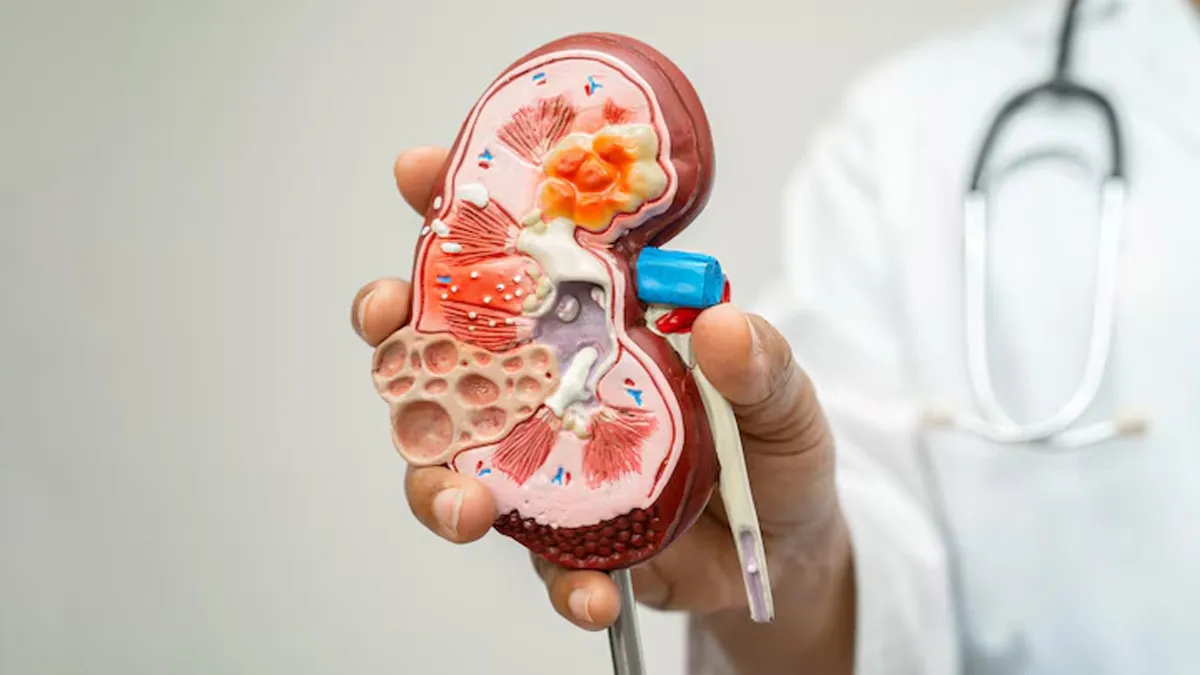
Dr Mayoor Vasant Prabhu, HOD and Consultant, Nephrology, at KMC Hospital, Mangalore, frames it slightly differently. For patients with end-stage kidney disease, dialysis and transplantation are the two main forms of kidney replacement therapy. Which one's right depends on the patient's clinical condition, other health issues, expected outcomes, how much treatment burden they can handle, whether a donor is available, and what the patient actually wants.
ALSO READ- Eating Packaged Food Every Day? Here's What It Could Do to Your Kidneys
When Do Doctors Actually Recommend Dialysis?
Dialysis isn't started just because a lab number crosses some threshold. Dr Prabhu explains that it begins when kidney failure causes complications that can't be managed medically anymore. That includes:
- Symptoms of uraemia, a buildup of waste products in your blood.
- Electrolyte or acid-base problems that won't respond to treatment
- Fluid overload or high blood pressure that's hard to control
- Worsening malnutrition
- Other uraemic complications
There are two main types, haemodialysis and peritoneal dialysis, and they come with very different schedules and lifestyle demands. Dr Sheth points out just how much time this actually takes. Haemodialysis usually means three sessions a week, each running several hours. Peritoneal dialysis means daily exchanges instead. Either way, it's a real, ongoing commitment.

The National Kidney Foundation adds useful context on how long a transplant actually lasts. A kidney from a living donor typically lasts 15 to 20 years, while one from a deceased donor lasts 8 to 12 years, though this varies by individual. It also confirms that pre-emptive transplants, done before dialysis ever starts, tend to lead to better long-term health outcomes than starting dialysis first.
When Should a Kidney Transplant Actually Be Considered?
Earlier than most people assume, according to both doctors. Dr Prabhu says patients with advanced kidney disease should ideally be referred for transplant evaluation before dialysis even starts, especially if a living donor is already in the picture. And patients already on dialysis shouldn't be ruled out either. They still need to be assessed.
Dr Sheth agrees and pushes the timeline even earlier. "Ideally, transplant evaluation should begin as soon as a patient's kidney function drops to a stage where end-stage kidney disease is anticipated, rather than waiting until dialysis has already started," he explains. "Pre-emptive transplantation, receiving a transplant before ever needing dialysis, generally offers the best outcomes when a suitable donor is available in time."
There are also warning signs in patients already on dialysis that should prompt a rethink, according to Dr Prabhu. Frequent hospital admissions. Complications from dialysis itself. Vascular access failing. Trouble keeping fluid and blood pressure under control. A decline in nutrition or daily functioning. Quality of life dropping. None of these alone means someone needs a transplant, but together, they point to a heavy burden that's worth reassessing.
Kidney Transplant vs Dialysis: How Do the Outcomes Actually Compare?
"Transplant is generally associated with better long-term survival and quality of life compared to long-term dialysis, in patients who are suitable candidates," says Dr Sheth. Dr Prabhu backs this with numbers. In well-selected patients, 1-year survival after a kidney transplant sits around 97 to 99%. Five-year survival is around 85 to 90%, though this varies by donor type, age, and other health conditions.
Recent research backs this up too, and the gap is bigger than you might expect. A 2025 study, published in Medicine Science, compared 1,500 kidney transplant recipients against 1,500 people on maintenance dialysis. The mortality rate for transplant recipients was just 3.0%. For dialysis patients, it was 18.5%. That's a massive difference.
A 2025 study from Global Health Economics and Sustainability looked beyond survival, at day-to-day life. Transplant recipients generally reported better physical and mental well-being, more independence, and greater life satisfaction than dialysis patients. Interestingly, even though transplants cost more upfront, the same study found they end up more cost-effective over time, since ongoing dialysis expenses add up.
Who Isn't a Good Candidate for a Kidney Transplant?
Transplant surgery isn't for everyone, and Dr Prabhu explains that it's a major surgery, and it comes with lifelong immunosuppression. Active infections, untreated cancer, severe uncontrolled heart or lung disease, and significant frailty can all raise the risk. That said, if a condition is reversible, it should be treated first rather than used to rule someone out entirely.
Dr Sheth breaks down what actually determines candidacy:
- Cardiovascular health, since surgery and recovery put real strain on the heart
- No active, uncontrolled infections or cancers
- A reasonably strong immune system and overall health, since immunosuppression afterwards raises infection risk
- Being psychologically and socially ready to manage medication for life and keep up with follow-up visits
- Having a compatible donor, living or deceased

Dr Prabhu adds one more crucial point. Patients need to actually be able to stick with immunosuppressive therapy and follow-up care. Skipping doses or appointments raises the risk of rejection and losing the graft. And immunosuppression itself isn't risk-free either. It raises the chance of infections and metabolic issues like type 2 diabetes down the line.
What Are the Real Risks of Choosing Transplant Over Dialysis?
Dr Sheth doesn't sugarcoat this part. The risks are real, and worth weighing carefully:
- Standard surgical risks, including bleeding, infection, and complications from anaesthesia
- A higher long-term risk of infections and certain cancers, from lifelong immunosuppressant medication
- Organ rejection, which can happen even with immunosuppression working as intended
- Risk to the living donor too, which needs an honest conversation and informed consent from both sides
- A transplanted kidney doesn't last forever. A second transplant, or a return to dialysis, may eventually be needed
ALSO READ- Kidney Stones or Urine Infection? 7 Signs That Can Help You Tell the Difference
So, Which One Should You Actually Choose?
There's no universal answer here, and both doctors are clear about that. "Dialysis and transplantation each have advantages and limitations," says Dr Prabhu. The right choice comes down to shared decision-making between the patient, their nephrologist, and the transplant team.
Dr Sheth adds an important, reassuring point. It's not necessarily a permanent, one-way decision. Some patients start on dialysis while they wait for a suitable donor, then move to transplant once one becomes available. In the end, it comes down to a patient's specific health, whether a donor is available, and how they personally weigh the benefits against the risks.
FAQ
1. Can a patient who has already had one failed transplant be considered for a second one?
Yes, a second transplant is often possible for suitable candidates. That said, the evaluation tends to be more thorough.2. Does a patient's blood type limit their transplant options significantly?
Blood type does affect donor matching, but it doesn't rule out a transplant entirely. Paired donation programmes and certain desensitisation treatments can sometimes work around incompatibility.
All possible measures have been taken to ensure accuracy, reliability, timeliness and authenticity of the information; however Onlymyhealth.com does not take any liability for the same. Using any information provided by the website is solely at the viewers’ discretion. In case of any medical exigencies/ persistent health issues, we advise you to seek a qualified medical practitioner before putting to use any advice/tips given by our team or any third party in form of answers/comments on the above mentioned website.
How we keep this article up to date:
We work with experts and keep a close eye on the latest in health and wellness. Whenever there is a new research or helpful information, we update our articles with accurate and useful advice.
-
Current Version
Sep 03, 2026 11:52 IST
Modified By : Vivek Kumar Sep 03, 2026 11:52 IST
Published By : Vivek Kumar
Reviewed By : Dr Sharad Sheth