-1784285039537_m.webp)
When a child is diagnosed with cancer, it's natural for parents to assume it works the same way as cancer in adults, just at a younger age. However, that is not the case. The underlying reasons for the disorder, the kinds of disorders and even how the body reacts to treatment are very different in childhood. So, what is different about childhood cancer, and what does this imply for a child's prognosis? Here's what an oncologist wants parents to understand.
Childhood Cancer Isn't ‘Adult Cancer at a Younger Age’
 childhood cancer
Dr Sachin Sekhar Biswal, Consultant, Medical Oncology at Manipal Hospitals, Bhubaneswar, says one of the most common misconceptions in oncology is that childhood cancer is simply adult cancer occurring earlier in life. As he puts it, "the disparities in terms of how these cancers occur and react to medical treatment are huge."
Aspect |
Childhood Cancer |
Adult Cancer |
Underlying trigger |
Random changes in cell development |
Builds up over years of lifestyle and environmental exposure |
Growth pattern |
Tends to grow and spread quickly |
Often grows more slowly |
Treatment sensitivity |
Highly responsive to chemotherapy |
Response varies widely by cancer type |
The body's recovery capacity |
Organs and bone marrow recover faster |
Recovery is generally slower |
Focus of long-term care |
Growth, development and future quality of life |
Managing the disease and preserving existing function |
According to the Pediatric Cancer Research Foundation, children's cancers are usually caused by one or two random mutations, while adult cancers often involve tens or hundreds. This actually helps targeted treatment work better in children.
Kids also tolerate chemotherapy better, since their organs are healthier. Because they may live decades longer after treatment, doctors also weigh long-term side effects far more carefully than they do for adult patients.
Why Do Childhood Cancers Happen Differently From Adult Cancers?
According to Dr Biswal, most adult cancers can be traced back to familiar risk factors that build up over time, such as:
- Ageing
- Smoking
- Obesity
- Drinking
- Infection
- Environmental factors
- Cellular damage over the years
Childhood cancers, on the other hand, tend to originate differently. Dr Biswal explains that they are usually caused by alterations in cell development, and rarely is there an apparent cause. This is why doctors often reassure parents that they are unlikely to have done anything that led to their child's illness.
Do Children Get the Same Types of Cancer as Adults?

No, not typically. The cancers most commonly seen in children are quite different from those seen in adults. Dr Biswal notes that childhood cases are largely made up of:
- Leukaemia
- Brain tumours
- Lymphomas
- Neuroblastoma
- Wilms' tumour
- Bone cancers
Adults, meanwhile, are more commonly diagnosed with cancers of the breast, lung, colon, or prostate. Since the diseases behave so differently, treatment strategies are built specifically for children rather than simply adapted from adult cancer care.
How Do Children Respond to Cancer Treatment?
Another field in which childhood cancers are unique is the response to treatment. “Many paediatric cancers grow quickly and are also more sensitive to chemotherapy,” explains Dr Biswal. He further adds that the survival rate for the most prevalent form of childhood cancer, Acute lymphoblastic leukaemia (ALL), has risen above 85 per cent in many specialist centres.
With the development of diagnosis, chemotherapy, surgery, radiotherapy and supportive care, similar advances have been seen in several other paediatric cancers. Children generally tolerate intensive treatment better than adults, since their organs have greater reserve and their bone marrow recovers more quickly after chemotherapy.
Childhood Cancer vs Adult Cancer Treatment Options
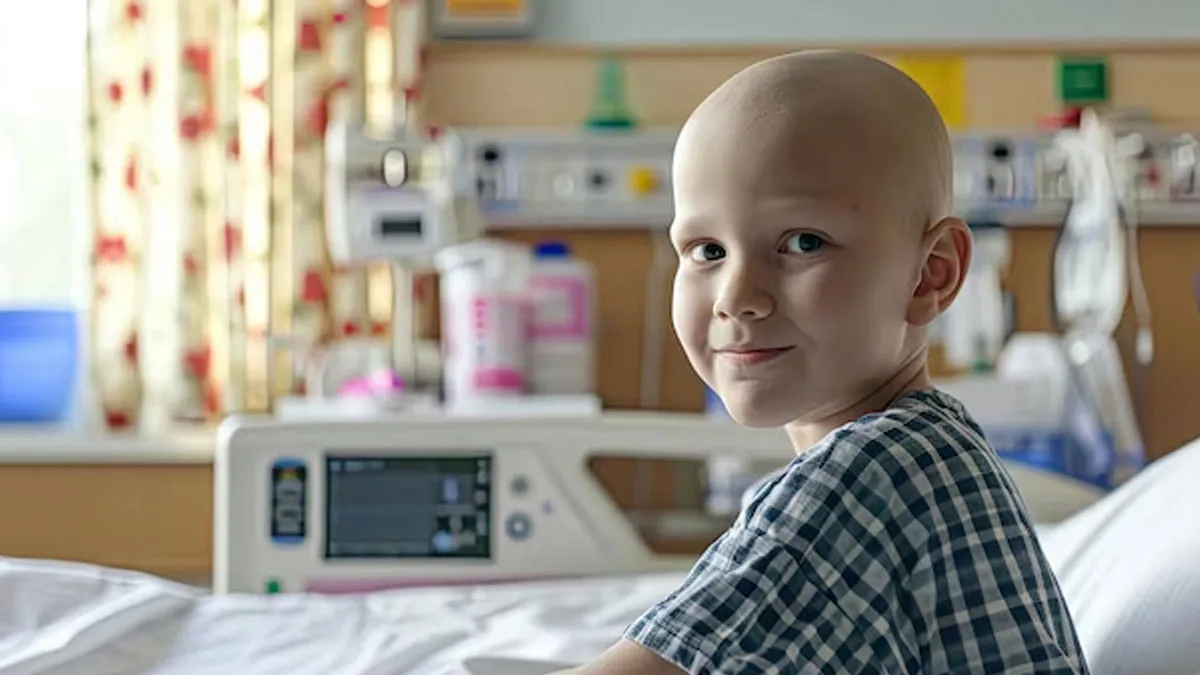
Treatment plans for childhood and adult cancers are built around very different needs, not just different diseases.
Aspect |
Childhood Cancer Treatment |
Adult Cancer Treatment |
Treatment protocols |
Paediatric-specific regimens designed for growing bodies |
Regimens built around the specific adult cancer type |
Common approaches |
Combination of chemotherapy, surgery, radiation and supportive care |
Chemotherapy, radiation, surgery, targeted therapy or immunotherapy |
Dosing considerations |
Calculated by weight and body surface area, adjusted as the child grows |
Based on adult body weight and existing organ function |
Treatment intensity |
Often more intensive, made possible by greater organ reserve |
Intensity is often limited by other health conditions and slower recovery |
Long-term monitoring |
Growth, fertility and organ development tracked for years |
Focused mainly on recurrence and managing existing conditions |
Does Better Tolerance Mean Easier Treatment?
Not quite. Dr Biswal is careful to point out that this doesn't mean treatment is easier for children. Every decision is weighed carefully because the body is still growing. Throughout treatment and long-term follow-up, doctors closely monitor:
- Heart function
- Hearing
- Kidney health
- Hormone production
- Growth
- Brain development
- Future fertility
What Does Success Really Mean in Childhood Cancer Care?
To oncologists, success is not just about eradicating cancer. The aim is to return children to the best possible quality of adult life, to help them grow and develop and to get them back to school, says Dr Biswal. Those outcomes are also greatly influenced by early diagnosis, he adds.
Conclusion
Childhood cancer is not a mini-adult cancer. It acts differently, responds to treatment differently and requires a completely different way of caring for it, caring for its growth, and caring for its well-being in future. It's important to acknowledge these differences as a first step to improved outcomes.
FAQ
1. Are the early signs of childhood cancer easy to notice?
Often, early signs are subtle, and the child may have persistent fatigue, bruising or a persistent fever, and may have been incorrectly diagnosed as suffering from a common childhood illness. This is why it is so vital to have regular paediatric checks and seek medical advice for any unusual, persisting symptoms.2. Do children need lifelong follow-up after completing cancer treatment?
Yes, the long-term follow-up is an important component of childhood cancer treatment. Over time, treatment may have an impact on the growth and development of a child; it's important that they receive follow-up care long after treatment, so that late effects can be detected early.
All possible measures have been taken to ensure accuracy, reliability, timeliness and authenticity of the information; however Onlymyhealth.com does not take any liability for the same. Using any information provided by the website is solely at the viewers’ discretion. In case of any medical exigencies/ persistent health issues, we advise you to seek a qualified medical practitioner before putting to use any advice/tips given by our team or any third party in form of answers/comments on the above mentioned website.
How we keep this article up to date:
We work with experts and keep a close eye on the latest in health and wellness. Whenever there is a new research or helpful information, we update our articles with accurate and useful advice.
-
Current Version
Jul 24, 2026 19:23 IST
Published By : Vivek Kumar
Reviewed By : Dr Sachin Sekhar Biswal