
Your dog bites you, but no blood is drawn. The overwhelming majority of people breathe a sigh of relief and get on with their lives. Unfortunately, that instinct can be a dangerous one. The short answer: a dog bite without bleeding can still require a rabies vaccine, because bleeding has nothing to do with whether the virus was actually transmitted. Dr Pooja Pillai explains that blood isn't the best indicator people think it is, and here are the reasons why.
Do Dog Bites Without Bleeding Require A Rabies Vaccine?
Dr Pooja Pillai, Consultant, Internal Medicine, Aster CMI Hospital, Bangalore, is direct about this common assumption. "Yes, and this is a genuinely dangerous misconception, that no blood means no risk. Rabies transmission doesn't depend on visible bleeding. it depends on the rabies virus, present in an infected animal's saliva, coming into contact with broken skin or mucous membranes."
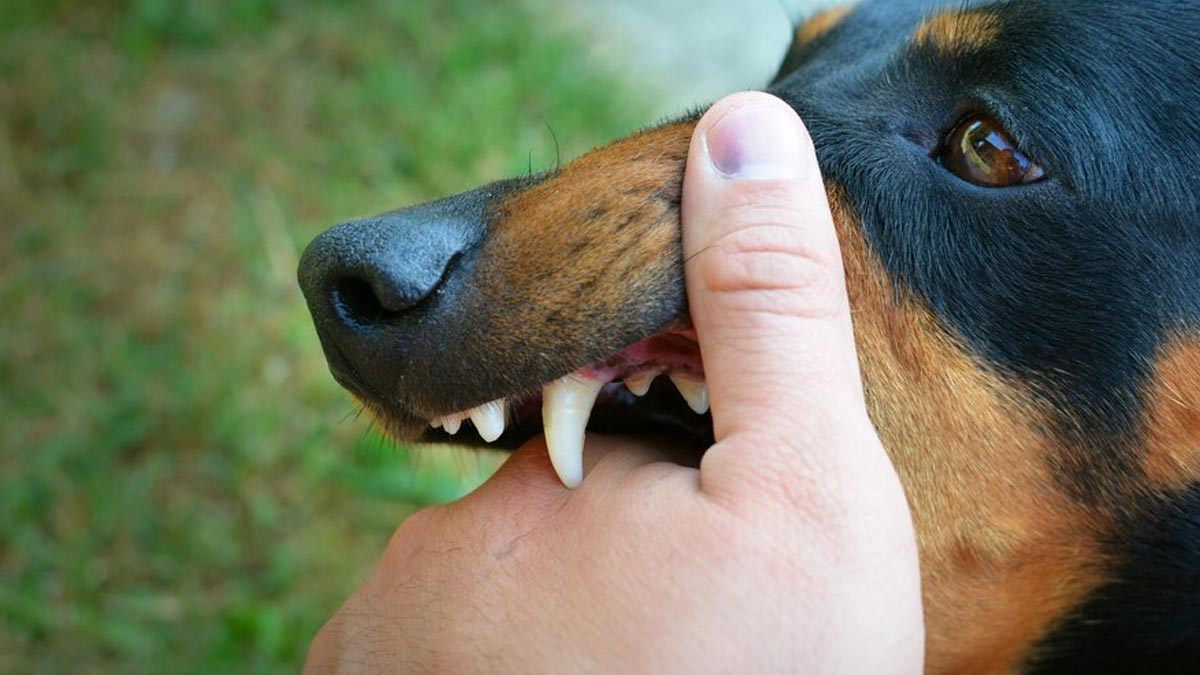 Even minor bites, or licks and scratches, "that barely break the skin, or even a scratch, lick, scrape that looks minor" can still provide enough saliva to transmit the virus," she says.
Why Does the 'No Bleeding, No Risk Belief Exist, and Why Is It Wrong?
Dr Pillai breaks down where this misconception comes from:
- Injuries are often judged by bleeding, and a bite that doesn't bleed is intuitively perceived as “minor”, despite the fact that the severity of the injury is more related to the depth of the wound and how much saliva was introduced into the wound.
- Rabies virus can be introduced into the body through saliva when the skin is broken, even if it's only a shallow scratch or abrasion, as long as the skin's integrity has been compromised.
- Some bites, particularly from smaller dogs or ones with less force, can leave puncture marks or scrapes with minimal or no visible bleeding, while still delivering enough saliva to pose a risk.
- Licks on already broken skin, open wounds, or mucous membranes like the eyes, nose, or mouth can transmit the virus without any bite or bleeding at all.

This gap between perceived and actual risk shows up clearly in real-world data. A 2024 study published in Cureus found that public understanding of rabies risk and treatment remains limited, with many participants holding inaccurate beliefs about what actually warrants post-exposure prophylaxis.
The researchers noted "an alarming lacuna" between general awareness of rabies and actually translating that awareness into correct wound-washing and treatment-seeking practices.
When Does a Bite Actually Require Vaccination?
Dr Pillai lays out the WHO's official framework, which notably doesn't factor in bleeding at all:
- Category I (touching or feeding animals, licks on intact skin): no exposure, no vaccine typically needed, provided the skin is genuinely intact.
- Category II (minor scratches or abrasions, but no bleeding, and nibbling of unbroken skin): generally, this type of exposure is considered an exposure which requires a vaccination series, even in the absence of bleeding.
- Category III (single or multiple transdermal bites or scratches, licks on broken skin, contamination of mucous membranes with saliva, contact with bats): highest risk category, regardless of the amount or quantity of bleeding, requires both rabies vaccine and rabies immunoglobulin.
As Dr Pillai puts it plainly: "The key point: bleeding is not part of how these categories are defined. Skin penetration and saliva contact are what matter, not blood."
What Should You Do Immediately After Any Dog Bite?
Dr Pillai's advice, whether the bite bled or not:
- Thoroughly wash the wound with soap and running water for at least 15 minutes; this will greatly decrease the risk of rabies transmission.
- If you have an antiseptic (such as povidone-iodine), clean with it after washing.
- Don't tightly cover the wound or apply traditional remedies such as oil, herbs or chilli powder, as this can exacerbate the risk of infection and hinder accurate wound assessment.
- Promptly seek medical evaluation, even if the bite is apparently minor, to ensure that the exposure is properly categorised for the need to vaccinate.
Does the Type of Animal or Bite Location Change the Urgency?
According to Dr Pillai, yes. “Bites from unknown, unvaccinated, or stray animals carry higher risk and generally require prompt post-exposure prophylaxis without waiting to observe the animal.”
Bites in higher-risk areas such as the face, neck, hands, and genitalia are more likely to be in proximity to the nervous system and to have a higher concentration of nerve endings, and require prompt assessment.

This may sometimes impact the management if the animal that bit the dog is a vaccinated pet and the animal is observed for 10 days without showing signs of it developing, but this should be done in consultation with a vet and not by the individual.
What Happens If You Skip Vaccination Because There Was No Bleeding?
Dr Pillai is blunt about the stakes. "Rabies is almost universally fatal once symptoms develop, and there is no effective treatment at that stage. This is precisely why post-exposure prophylaxis exists. It works only if given before symptoms begin." Skipping vaccination based on the assumption that a non-bleeding bite is "not serious enough" removes the window in which prevention is actually possible. The decision to vaccinate should be based on exposure category, not on how much visible blood was involved.
Rabies Is Still a Serious Public Health Issue
It's worth stepping back to see the bigger picture here. A 2026 study published in The Lancet Regional Health - Southeast Asia looked at rabies prevention strategies in Kerala, India. It is a state where post-exposure prophylaxis is already provided free to almost one million people every year, with one of the highest vaccination completion rates in the country.
Despite this, Kerala still recorded 33 human rabies deaths in 2025, including among children. The researchers found that expanding dog vaccination coverage, rather than introducing routine pre-exposure vaccination for the general population, was the most effective and cost-effective way to bring these remaining deaths down further.
ALSO READ- 5 Tips To Avoid Mosquito Bites
Conclusion
Dr Pillai's key takeaway is simple: "if skin was broken at all, even without visible bleeding, or if saliva contacted a wound, scratch, or mucous membrane, medical evaluation for rabies post-exposure prophylaxis should happen promptly." It's not a decision to make based on how the wound looks. It's about whether exposure occurred at all, and that's a judgment best left to a doctor.
FAQ
1. Can rabies be transmitted through a dog bite over clothing?
If the animal's teeth have broken through the clothing, it may be considered as if they had done so without clothing; any bite through the skin, regardless of clothing, should be treated the same. A bite that leaves a mark on clothing (no skin contact) is not an exposure, however.2. Does a bite from a puppy carry the same rabies risk as an adult dog?
Yes. Rabies is a problem of whether or not the animal is carrying the virus and is not related to its age or size. A puppy may be capable of carrying and spreading rabies, as well as an adult dog, and should be treated the same way as an adult dog in the same manner.
All possible measures have been taken to ensure accuracy, reliability, timeliness and authenticity of the information; however Onlymyhealth.com does not take any liability for the same. Using any information provided by the website is solely at the viewers’ discretion. In case of any medical exigencies/ persistent health issues, we advise you to seek a qualified medical practitioner before putting to use any advice/tips given by our team or any third party in form of answers/comments on the above mentioned website.
How we keep this article up to date:
We work with experts and keep a close eye on the latest in health and wellness. Whenever there is a new research or helpful information, we update our articles with accurate and useful advice.
-
Current Version
Sep 10, 2026 16:59 IST
Modified By : Vivek Kumar
Reviewed By : Dr. Pooja Pillai Sep 10, 2026 16:59 IST
Published By : Vivek Kumar