
Have you noticed that some people eat a small bowl of salad before moving on to their main course? This simple practice actually has immense health benefits. It is believed that eating salad before a meal has the ability to keep your glucose spike in check. Sounds interesting, isn’t it? To know more about this, keep reading.
The editorial team of OnlyMyHealth reached out to Dr Geetika Chopra, Celebrity Holistic Nutritionist, to get an expert opinion on this topic.
Does Eating Salad Before A Meal Reduce Blood Sugar?
Eating salad before your meal can keep your blood sugar level in check – is this a truth or myth? Our expert answers. “Yes, eating salad before a meal helps reduce post-meal blood sugar spikes by slowing carbohydrate absorption. The fibre in raw vegetables forms a physical barrier in the gut, delaying how quickly glucose enters the bloodstream and reducing insulin overload,” shares Dr Chopra.
She adds, “Let me tell you a story about the ‘TRAFFIC POLICE’, that I learned in Nutrition School. I tell people and my clients to think of salad as a ‘traffic police’ for sugar — letting glucose move slowly instead of rushing in all at once.”
 salad 2
So, what exactly happens when you eat salad before a meal? “Eating salad first activates fullness hormones, slows gastric emptying, and reduces how fast enzymes break down carbs eaten later. This improves insulin response, reduces overeating, and leads to steadier energy levels. Over time, it helps improve insulin sensitivity and lowers post-meal inflammation,” explains the expert.
Dr Chopra continues, “This is what I like to call Magic Dietitian’s Golden Rule: Eat salad for just five minutes before touching carbohydrates. This simple habit creates a fibre layer in the gut that slows glucose absorption and improves post-meal blood sugar response — without changing the rest of the meal or removing any foods.”
Also Read: Can Protein Deficiency Make You Fat? Hear It Out From An Expert
What Other Foods Can We Eat Before A Meal To Lower Blood Sugar?
Not just salads, there are other foods too which serve the same purpose. “Apart from salad, foods rich in protein, healthy fats, and fibre work effectively when eaten before a meal. These include protein foods such as boiled eggs, paneer, tofu, or Greek yogurt; healthy fats like a small handful of nuts or seeds; vegetable soups or light broths, curd, and even apple cider vinegar diluted in water. All these foods help activate insulin-friendly gut hormones and slow down the speed at which glucose from carbohydrates enters the bloodstream,” answers Dr Chopra.
“This is what I like to call my ‘protein insurance policy’ — a simple habit I’ve been telling my clients to follow, where even just five almonds or a few paneer cubes before a meal can help protect them from sudden sugar spikes later,” she adds.
What Should An Ideal Healthy Salad Bowl Look Like?
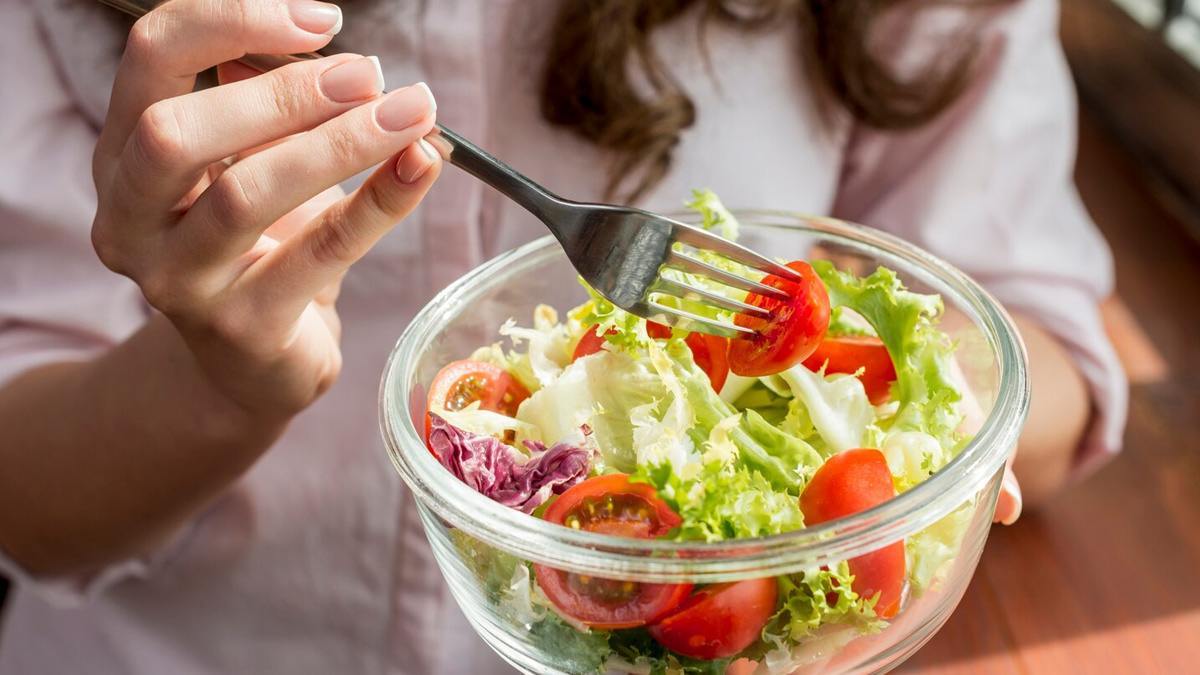
Now, if you are wondering what exactly should your salad consist of, we have got your covered. “When I design a blood-sugar-friendly salad for my clients, my focus is always on fibre first, protein next, and zero hidden sugars. I always keep the base simple — non-starchy vegetables like cucumber, lettuce, spinach, cabbage, and carrot because they slow glucose absorption and improve insulin response. Then I add a protein source such as paneer, eggs, tofu, or legumes, along with a small amount of healthy fats like olive oil, seeds, or avocado to keep blood sugar stable and prevent cravings,” shares Dr Chopra.
 salad 1
She adds, “I ask my clients to avoid sweet dressings or sauces completely. This is one of my viral Magic Dietitian health hacks — I tell them to build their salad like a traffic signal: green vegetables in the maximum quantity, yellow fats and proteins in moderation, and a full stop for red-light foods like sugary dressings.”
Can We Control Blood Sugar with Food Sequencing?
Have you heard of food sequencing? It is the practice of eating different food groups in a specific order (veggies/fiber first, then protein/fats, then carbs) to help manage blood sugar spikes. So, let us hear it out from our expert on how this practice can keep our blood sugar in check.
“I use this principle with almost every client I work with. I strongly believe in food sequencing, where the order of eating directly influences blood sugar response. My simple structure is fibre first, followed by protein and healthy fats, and carbohydrates at the end. I’ve seen time and again that when clients follow this order, their post-meal glucose readings improve even when the food quantity remains the same. This is what I like to call Dr Geetika Chopra’s F-P-C Rule for blood sugar control— carbohydrates are allowed, but they should be treated like VIP guests and come last, not first,” explains Dr Chopra.
 salad 3
Dietary Tips To Keep Blood Sugar Levels In Check
On this note, Dr Chopra shares dietary tips that can keep your glucose spike in check:
- Start meals with vegetables or salad, never eat carbs alone, and choose complex carbohydrates over refined ones.
- Emphasise on proper hydration.
- Have fixed meal timings.
- Avoid sugary drinks.
- Engage in light movement after meals because even a short walk improves glucose uptake by the muscles.
“Some of my Magic Dietitian viral health hacks include following a 10-minute walk after meals, aiming to fill half the plate with vegetables, and practising the ‘one-bite pause’ — taking at least one bite of vegetables before touching rice or roti. These habits are simple, sustainable, and extremely effective,” concludes Dr Chopra.
Also Read: What Are Purple Foods? Here’s Why You Must Add Them To Your Winter Diet
The Final Word
Eating salad before a meal helps reduce post-meal blood sugar spikes by slowing carbohydrate absorption. The fibre in raw vegetables forms a physical barrier in the gut, delaying how quickly glucose enters the bloodstream and reducing insulin overload.
FAQ
Does eating salad before a meal reduce blood sugar?
Yes, this helps prevent overconsumption of high-calorie foods that could cause blood sugar spikes.Should you eat salad before a meal?
By eating salads first, before proteins, and finishing the meal with starchy carbohydrates, blood glucose spikes will be flattened.Can you eat salad on an empty stomach?
Eating a salad on an empty stomach can be healthy for many, but the raw vegetables may cause bloating, gas, or discomfort in some people.
All possible measures have been taken to ensure accuracy, reliability, timeliness and authenticity of the information; however Onlymyhealth.com does not take any liability for the same. Using any information provided by the website is solely at the viewers’ discretion. In case of any medical exigencies/ persistent health issues, we advise you to seek a qualified medical practitioner before putting to use any advice/tips given by our team or any third party in form of answers/comments on the above mentioned website.
How we keep this article up to date:
We work with experts and keep a close eye on the latest in health and wellness. Whenever there is a new research or helpful information, we update our articles with accurate and useful advice.
-
Current Version
Dec 31, 2025 16:11 IST
Modified By : Shruti Das Dec 31, 2025 16:11 IST
Modified By : Shruti DasDec 31, 2025 16:11 IST
Modified By : Shruti DasDec 31, 2025 16:11 IST
Published By : Shruti Das
Reviewed By : Dr Geetika Chopra