-1765551604901.png)
With Christmas and New Year around the corner and the wedding season also in full swing, it's truly the festive season. With this season comes family gatherings, office parties, or the mega celebrations of wedding bells. And along with all this comes the temptation of festive food. Your healthy diet goals may take a back seat, and most importantly, your sugar level spikes become a real concern. But the good part is that with smart planning and caution, you can save yourself from that sugar shot and other concerning health problems.
The editorial team of Onlymyhealth spoke to two experts, Dr Geetika Chopra, a Celebrity Holistic Nutritionist, and Ritesh Bawri, Founder & Chief Science Officer at nirā balance, to help you find an expert-backed guide to enjoy these festive treats without compromising your health.
Festive Season And Food Overindulgence
The festive season often throws the body off its natural rhythm, with late nights, irregular meals, and heavy celebratory foods, which often lead to constant glucose spikes.
Speaking about how overindulgence during festive days affects your health, Dr Geetika Chopra mentions, “Most festive foods are rich in refined carbs, sugar, and saturated fats while being low in fibre and protein. This combination causes rapid blood sugar elevation followed by sharp drops, leading to fatigue, cravings, and irritability. Over time, these fluctuations impair insulin sensitivity and slow metabolism.”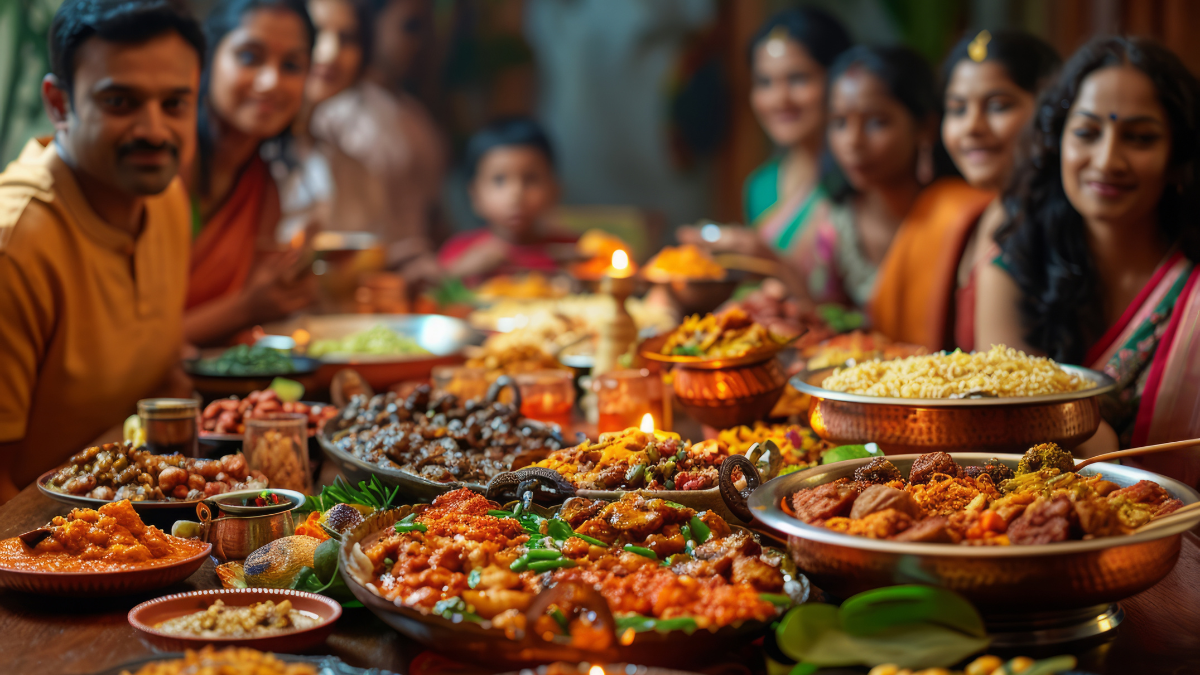 Festive food
Add to this the lack of sleep, a shift from healthy food to more outside and packaged food, and physical inactivity during festivities, and you have a perfect setup for inflammation, bloating, and post-festive weight gain.
“Food is one of the major highlights of weddings and other festive gatherings: savouries, fried food, sweets. But over-consumption of these foods, which generally have too many spices and oil with almost no nutrient value, may result in health complications, particularly a sugar spike,” Ritesh Bawri notes.
Most of the festive and party eateries have sugar overload. Both experts share how one can actually manage their sugar level and fitness with a few lifestyle changes and caution.
Also Read: What Is The Viral ‘Maggi Capsule’? Here’s The Truth Behind It
1. Specific Dietary Fibre Goal To Improve Insulin Sensitivity
As per what Dr Chopra explains, a daily target of 25 to 35 grams of dietary fibre is ideal for adults. “Most people barely reach half of this required fibre intake. Fibre slows digestion, reduces the glycaemic impact of meals, and nourishes the gut microbiome, which plays a major role in insulin sensitivity,” Dr Chopra states.
Soluble fibre from foods like oats, flaxseeds, chia seeds, lentils, and vegetables stabilises post-meal glucose, while insoluble fibre from whole grains aids digestion.
Dr Chopra shares that she often asks clients to follow the colour rule, as every plate should include at least three colours of plant-based foods to ensure fibre diversity. Wedding Season
2. Most Effective Post-Meal Activity to stabilise blood sugar
Dr Chopra shares an effective post-meal activity to stabilise blood sugar levels after festive eating. The simplest and most effective activity is a 10 to 15-minute slow walk, often called a glucose walk.
“It activates large muscle groups in the legs, which use glucose for energy, thereby reducing post-meal sugar spikes without needing extra insulin. A stroll around the banquet area or your home after eating can lower glucose levels by at least 25 to 30%,” the nutritionist adds.
For those unable to walk, gentle standing calf raises or seated leg marches for a few minutes can achieve a similar effect. Avoid lying down immediately after a meal and try to do some physical activity, as even mild movement aids digestion and glucose clearance.
Also Read: The Viral Content Creator Gunit Banga’s Painful Discovery Of Nephrotic Syndrome. Know What This Medical Condition Is?
3. Managing late-night dessert temptations during late-night events
Desserts are an emotional part of celebrations, and complete restriction often backfires. As per Dr Chopra, the best strategy is to pair and portion rather than completely avoid.
“First, eat your dessert after a protein or fibre-rich meal, never on an empty stomach. This slows sugar absorption and reduces cravings. Second, share your dessert or take only two mindful bites instead of finishing an entire portion. I also recommend clients enjoy sweets before 9 PM rather than late at night, when the body’s insulin sensitivity is at its lowest,” she notes.
And if you’re craving something sweet post-dinner, opt for jaggery-coated nuts, a small date, or dark chocolate, as these satisfy the palate without overloading your pancreas.
Also Read: 6 Fruits to Limit During Your Winter Period
A Quick and Small Guide To Manage Sugar Spikes
Ritesh Bawri underlines that no option completely saves you from festive dining. No matter how you try to avoid it, there will be times when you will lose control over your favourite delicacies. However, he also shared a small guide, following which one can maintain the stability of a sugar spike:
- Food is quickly digested and converted into sugar. It gets converted into stored fat even faster. So, starving yourself after indulging will not help.
- While simple carbohydrates such as sweets, sugary drinks, and even juice can spike blood sugar quickly, all foods can be converted into sugar. According to Mr Bawri, if you want to prevent sugar spikes, you need to understand how food interacts with your body.
- If you want to prevent sugar spikes, the best thing you can do is start building resilience. “Resilience comes from having low body fat. For a woman, about 25% and for a man, about 20%. Low body fat improves your tolerance to sugar spikes,” Mr Bawri adds.
- Lower your stress levels, as it generates cortisol, which feeds on sugar. You will get cravings that are hard to withstand. You can control or manage your stress level with some mindful practices, like breathing exercises or journaling.
- Eat slowly and mix your food with a bit of fat such as ghee, as it turns a sugar-spiking food into a complex food, lowering the sugar spike.
Bottomline
As both experts suggest, you can only try to maintain your diet and sugar levels with a few precautions because festive food is full of sweetness and fat. However, if you do not have any serious medical conditions and your weight is within the tolerance, you can occasionally indulge in your favourite treats.
All possible measures have been taken to ensure accuracy, reliability, timeliness and authenticity of the information; however Onlymyhealth.com does not take any liability for the same. Using any information provided by the website is solely at the viewers’ discretion. In case of any medical exigencies/ persistent health issues, we advise you to seek a qualified medical practitioner before putting to use any advice/tips given by our team or any third party in form of answers/comments on the above mentioned website.
How we keep this article up to date:
We work with experts and keep a close eye on the latest in health and wellness. Whenever there is a new research or helpful information, we update our articles with accurate and useful advice.
-
Current Version
Dec 22, 2025 17:20 IST
Modified By : Chanchal Sengar Dec 22, 2025 17:20 IST
Modified By : Chanchal SengarDec 22, 2025 17:20 IST
Published By : Sameeksha Sharma
Reviewed By : Dr Geetika Chopra