On December 15, 2025, Delhi woke up with a thick layer of smoke and its second-worst Air Quality Reading of December, touching the Severe category with 461 AQI. However, air pollution is not just a problem for Delhi now, as other metro cities like Mumbai and Kolkata, even remote villages and mid-tier cities, are also choking. This worsening air quality and pollution lead to numerous major health problems, significantly impacting your cardiovascular health. But there is one more thing that gets affected severely but receives the least attention: your hair.
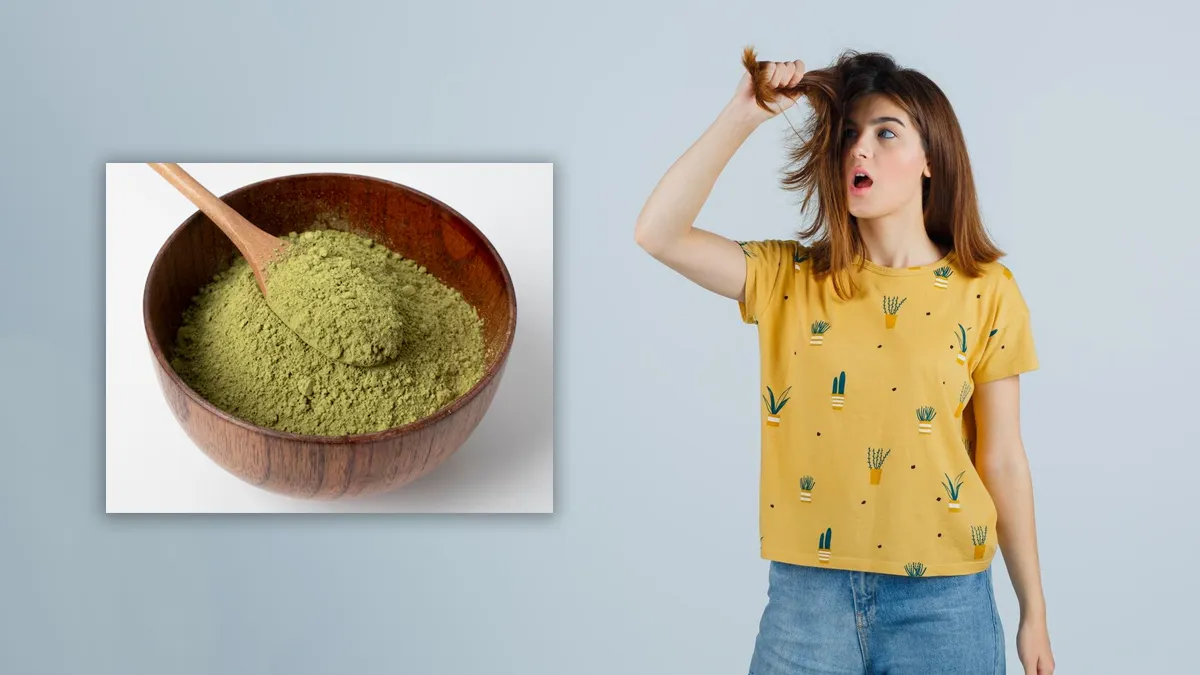
You might already be battling with hair loss and baldness throughout the year; however, air pollution makes it worse, and in this scenario, it becomes far more important to find out what can protect your hair from these toxic particles. Henna, also known as mehndi, has been one of the major sources of goodness for hair, particularly in India, but does it also help protect your hair from air pollution? In an exclusive conversation with the Onlymyhealth editorial team, Dr Ruben Bhasin Passi, Consultant Dermatologist, CK Birla Hospital, Gurugram, answers this most sought-after question for you. Continue reading to know what she said.
Henna and Air Pollution
Henna has been a crucial part of the Indian hair care routine for ages, but when someone claims its efficacy to protect from air pollution, it needs to be backed by facts and expert advice.
Air pollution has been a major contributing factor, along with stress and hormonal imbalance, for hair loss and hair thinning, most severely impacting the urban environment. According to Dr Ruben Bhasin Passi, in some way or other, Henna may be a good thing for your hair in this polluted environment against toxic pollutants such as PM2.5, but it is not a 100% cure or shield.
Also Read: How to Enjoy Wedding Buffets Without Spiking Your Glucose: A Science-Backed Guide to Smarter Festive Eating
Explaining the same, Dr Passi states, “A thin film is formed on the hair shaft by Henna, and this might provide at least a degree of protection for hair against dust and pollutants. Ultrafine particles, such as PM2.5, can penetrate through this film and reach the scalp. Of course, it is not an entirely effective shield against pollution.”
Henna Against Oxidative Stress Caused by Pollution
Dr Passi highlights that demanding overall protection from air pollution from Henna is not the right thing, as there is not much research or study that proves its effectiveness. However, she explains, “The antioxidants found in henna include lawsone, which can work to counteract free radicals present on the hair surface.”
Free radicals can be a result of pollution and can affect the hair in a negative way, and Henna can have a protective layer with limited effectiveness.-1766492707522.jpg) 02 (1)
02 (1)
Treating Inflammation and Irritation Triggered by Pollutant Buildup
“The presence of mild anti-inflammatory and antimicrobial qualities in henna can help soothe an irritated scalp,” Dr Passi notes.
Pollution accumulated on the scalp can cause redness and itching, which can be alleviated. However, it will not control the inflammatory effects in the scalp, and the need for proper scalp washing still exists, and in some cases, may even be increased.
How Often To Use Henna
Natural henna can be used for not more than four to six weeks without any major side effects. Dr Passi suggests first considering your hair colour also, as frequent application of Henna leads to the hair becoming more red and darkening the hair colour, which may not be preferred by everyone.
Also Read: Can Passive Smoking Lead To Irregular Periods?
Also, in winter, one should reduce the frequency, keeping a greater distance for weeks, as Henna also has cooling effects, potentially resulting in cough and cold. Depending on the weather, health, and hair condition, one can choose how often they want to apply Henna.
Potential Side Effects
In general, it is considered safe for everyone to use Henna, but Dr Passi warns that everyone has a different scalp and hair type, and the effects of air pollution make it more complicated, necessitating more caution while applying Henna to the hair. Here are a few common side effects that come with Henna in general, as Dr Passi states:
- Henna can sometimes lead to dryness, coarseness, or irritation of the scalp in some people.
- One should always go for a patch test before applying Henna to the whole hair, as the chances of allergic reactions are always there.
- Those with dried or damaged hair should use this less frequently, as in some cases, it can further damage their hair follicles.
- Using Henna or Mehndi requires subsequent conditioning to keep your hair hydrated and soft.
- One should use mild warm water to wash hair when using Henna, as cold water can lead to cough and cold because it already has cooling effects.
- If your skin is sensitive, be careful while using it, as the product remaining on your head can result in skin breakouts or redness.
Bottomline
As per the information available and what Dr Passi advises, Henna is beneficial for your hair health, and in a minor way, it can protect your hair from toxic particles of air pollution for a while, but it does not replace the need for hair wash, medical treatment, and other hair care needs. Alone, using Henna does not work wonders; however, depending on the scalp health, it can improve the hair texture and quality.
FAQ
Is henna environmentally friendly?
Yes, henna is a natural, plant-based hair dye which is biodegradable, making it environmentally friendly.Is henna safe in pregnancy?
Naturally grown, chemical-free henna is generally considered safe to use in pregnancy; however, considering the hormonal changes during this phase, one should consult a doctor before applying it.Is henna (mehndi) good for hair?
Yes, if your mehndi is pure, it is naturally good for your hair, making it smooth, shiny, and healthy. However, it also has a few side effects, which makes it important to first patch test before using it on the full hair growth.
All possible measures have been taken to ensure accuracy, reliability, timeliness and authenticity of the information; however Onlymyhealth.com does not take any liability for the same. Using any information provided by the website is solely at the viewers’ discretion. In case of any medical exigencies/ persistent health issues, we advise you to seek a qualified medical practitioner before putting to use any advice/tips given by our team or any third party in form of answers/comments on the above mentioned website.
How we keep this article up to date:
We work with experts and keep a close eye on the latest in health and wellness. Whenever there is a new research or helpful information, we update our articles with accurate and useful advice.
-
Current Version
Dec 23, 2025 17:59 IST
Modified By : Sameeksha Sharma Dec 23, 2025 17:59 IST
Modified By : Sameeksha SharmaDec 23, 2025 17:59 IST
Published By : Sameeksha Sharma
Reviewed By : Dr Ruben Bhasin Passi