When someone is diagnosed with cancer, one of the very first questions that comes up, for the patient or their family, is whether age will affect the treatment. It's a legitimate and frequently asked question. Treatment may have a different effect on a patient's body depending on their age, the patient's risk/benefit analysis of the treatment, and the goal of the treatment. Does it actually impact the treatment received? We consulted with an oncologist to find out how it really affects the care of cancer and where it isn't as significant as you might think.
Is Age Really the First Thing Doctors Consider?

"It's one of the first questions patients ask, and according to oncologists, it should be," explains Dr Sachin Sekhar Biswal, Consultant Medical Oncology, Manipal Hospital, Bhubaneshwar. He notes that age isn't simply a number on a form. It shapes almost every decision made about a patient's care, from the intensity of treatment to how closely a patient needs to be monitored.
ALSO READ- Importance of Healthy Eating Habits During Cancer Treatment
How Does Age Matter For Cancer Treatment?
Here's something worth understanding early on: oncologists don't treat a birth certificate. They treat the person in front of them. Dr Biswal says that a fit 75-year-old man or woman without other medical conditions may be able to receive the same type of aggressive chemotherapy as a man or woman in their 30s. On the other hand, a 55-year-old with heart disease or diabetes may perhaps be a more mature player, but in reality.
Actually, it is what doctors refer to as "physiological age" that is important, says Dr Biswal. This includes:
- Organ function
- Muscle mass
- Mobility
- How well the body recovers from physical stress
In other words, two patients of the same age can have very different treatment experiences, depending on how their bodies are actually functioning.

According to a 2024 study published in BMC Cancer, researchers examined age-related enrollment patterns across cancer clinical trials for breast, prostate, colorectal, and lung cancer. They found real disparities: trial participants were often noticeably younger than the typical patient population for these cancers in real life. This matters because older patients, who make up a large share of actual cancer cases, are still underrepresented in the very trials that shape modern treatment guidelines.
Where Age Genuinely Changes the Treatment Plan![Age Genuinely Changes the cancer Treatment Plan]()
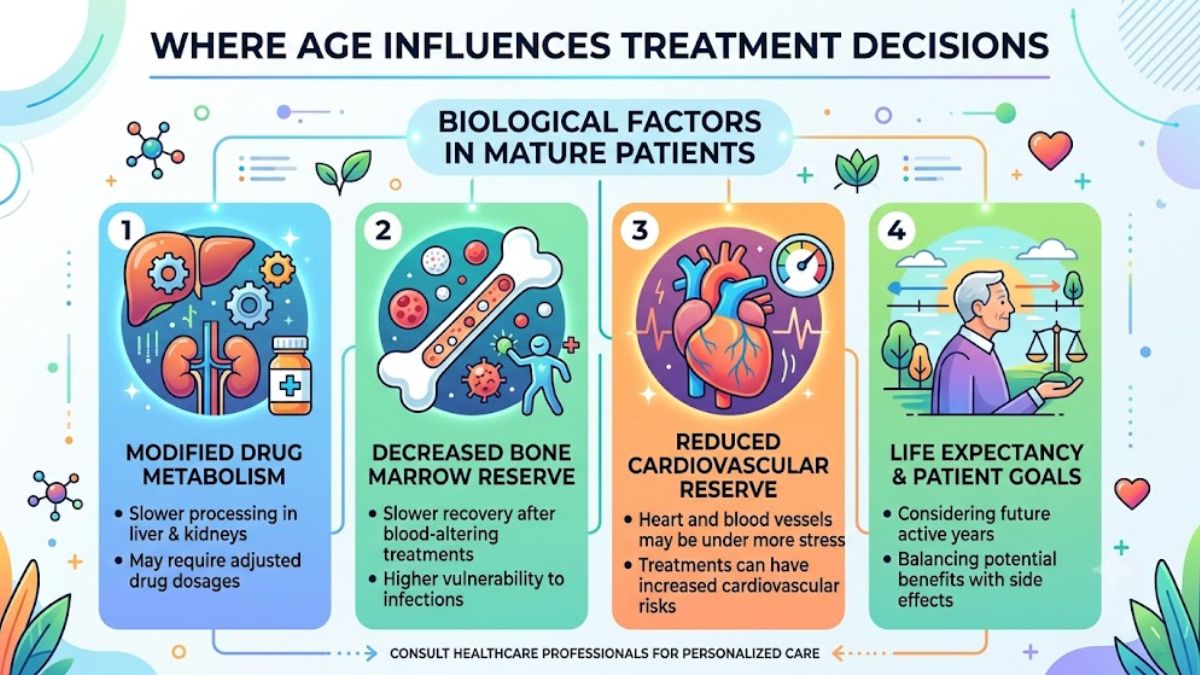
That said, age isn't entirely irrelevant either. There are real, biological reasons it factors into decision-making. Dr Biswal outlines several areas where this plays out:
- Drug metabolism: As people age, the metabolism of chemotherapy is slower in the kidneys and liver, which may require lower doses.
- Reduced bone marrow reserve: Older people may take longer to make a recovery from blood-lowering treatments, making them more susceptible to infection.
- Cardiovascular reserve: Some chemotherapy and radiation treatments can stress the heart, which can be more of a problem for older patients who don't have as much heart and blood vessel reserve.
- Life expectancy and goals: In very elderly patients, physicians need to be aware whether vigorous treatment offers any truly productive years of life or whether it offers many side effects for little payoff.
Does the Type of Cancer Change How Much Age Matters?
Yes, indeed. As Dr Biswal notes, the impact of ageing varies from one type of cancer to another. In some cases, such as breast and prostate cancer, cancer grows more slowly in older people. Doctors can sometimes be more conservative in treating the disease, as it may be a slow one.
But it's a completely different ball game if the cancer is aggressive. Situations, such as acute leukaemia or triple-negative breast cancer, typically require aggressive therapy irrespective of the age of the patient, because the cancer is a much greater risk than the aggressive treatment.
What Do Doctors Actually Check Before Deciding on Treatment?
Before finalising any treatment plan, oncologists look well beyond age alone. Dr Biswal lists several factors that come into play:
- Overall physical fitness
- Other existing medical conditions
- Nutritional status
- Cognitive function
- Family support system
This is exactly why, as Dr Biswal puts it, two people with identical tumours can end up with completely different treatment plans. Their bodies, circumstances, and personal priorities simply aren't the same.
ALSO READ- Is Heart Cancer Treatable? A Cardiologist Weighs In
Does Age Decide Whether Cancer Gets Treated?
No, and this is the main point. “While age does affect the way cancer is treated, it doesn't usually determine whether it is treated,” Dr Biswal explains. The actual discussion, he said, should always focus on the patient and not age.
This is a true comfort to those on the receiving end of the cancer diagnosis, or to those who have family members with cancer. Older isn't always better, and younger is not necessarily worse. The key is to have an in-depth and honest discussion with the oncology team about overall fitness, health, and goals so the treatment plan is truly tailored to the individual receiving treatment.
FAQ
1. Does being older mean a cancer patient will receive less treatment?
Not necessarily. Treatment decisions depend more on a patient's overall physical fitness and organ function, known as physiological age, than on chronological age alone.2. Why do doctors adjust chemotherapy doses for older patients?
As people age, the kidneys and liver process chemotherapy more slowly, and bone marrow recovery can take longer. This often requires dose adjustments to reduce side effects and infection risk.
Read Next
→
All possible measures have been taken to ensure accuracy, reliability, timeliness and authenticity of the information; however Onlymyhealth.com does not take any liability for the same. Using any information provided by the website is solely at the viewers’ discretion. In case of any medical exigencies/ persistent health issues, we advise you to seek a qualified medical practitioner before putting to use any advice/tips given by our team or any third party in form of answers/comments on the above mentioned website.

How we keep this article up to date:
We work with experts and keep a close eye on the latest in health and wellness. Whenever there is a new research or helpful information, we update our articles with accurate and useful advice.
-
Current Version
Jul 30, 2026 16:15 IST
Published By : Vivek Kumar
Reviewed By : Dr Sachin Sekhar Biswal