If your child seems to catch ear infections far more often than you ever did growing up, you are not imagining it. Ear infections really are more common in children than adults, and there is a clear reason behind it. According to an ENT specialist, ear infections in children are more common compared to adults due to several factors. Here is what an expert wants parents to understand about why this happens, and what can be done to reduce the risk.
Why Are Children More Prone to Ear Infections?
Dr Rohit Udaya Prasad, Lead and Senior Consultant, ENT and Cochlear Implants, KIMS Hospitals, Electronic City, Bengaluru, explains that ear infections in children are more common compared to adults due to several factors.
First, the Eustachian tubes in children are relatively short, narrow, and more horizontal. This shape makes it easier for bacteria and viruses to enter the middle ear, and harder for any trapped fluid to drain out properly.
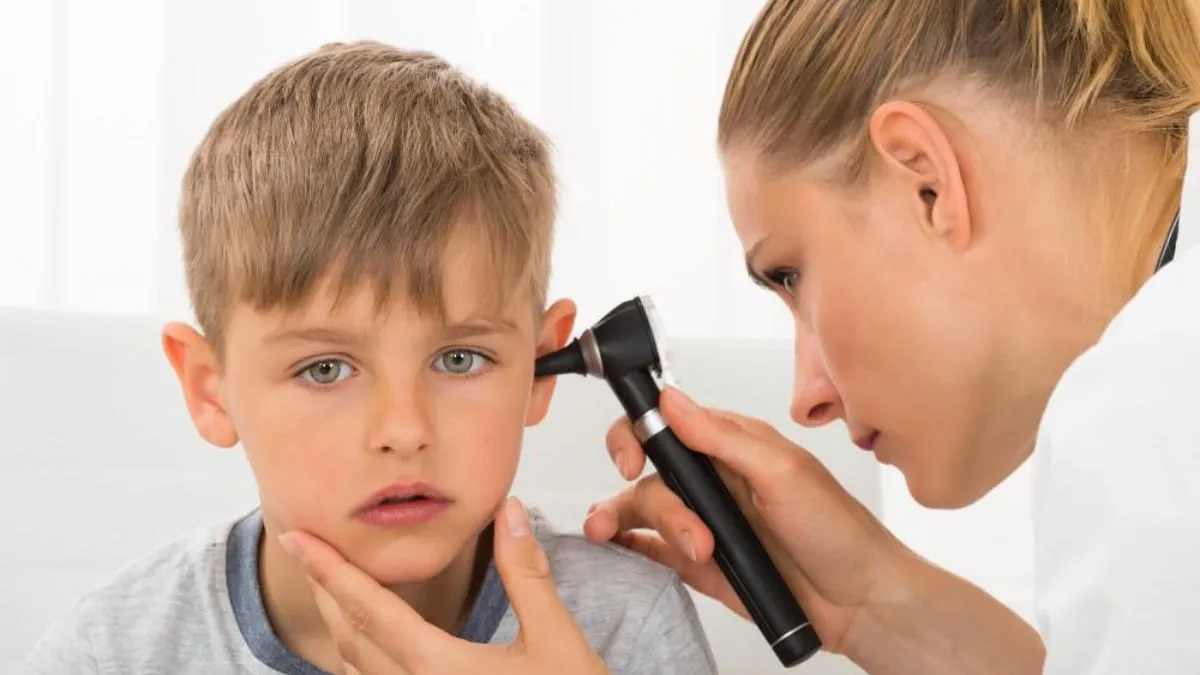
Another factor to consider, according to Dr Prasad, is that the immune system of children is yet to develop fully, making them prone to infections after illnesses such as cold and flu.
This combination of anatomy and immunity explains why the same cold that barely affects an adult can quickly turn into an ear infection in a young child.
According to the National Institute on Deafness and Other Communication Disorders (NIDCD), children get ear infections far more often than adults, with five out of six children having at least one by age three. This happens for a few key reasons. Their Eustachian tubes are smaller and sit more level, making it hard for fluid to drain, especially during a cold.
Their immune system is still developing, so it struggles more to fight off infections. On top of that, their adenoids, small immune tissue pads near the Eustachian tubes, can trap bacteria, which then spreads to the middle ear and triggers infection.
ALSO READ- Is Putting Oil in Your Ear Safe for Ear Pain? An ENT Specialist Explains
How Feeding Habit That Raises the Risk of Ear Infection
It is easy to overlook small daily habits as meaningful risk factors, but Dr Prasad's guidance highlights just how much they matter. Bottle feeding a baby while lying completely flat, for example, can allow milk to travel into the Eustachian tube more easily, increasing infection risk. Similarly, daycare settings naturally expose children to a wider range of germs than they would encounter at home, which is why hand washing and prompt illness management become especially important in these environments.

According to a study in the Indian Journal of Child Health, researchers followed 118 infants under one year old with acute ear infections. They found babies fed lying flat, in a supine position, had significantly higher rates of ear infections than those fed upright. This was especially true for babies aged seven to nine months.
Researchers explained that lying flat lets milk flow backwards into the middle ear, carrying germs along with it. Based on these findings, they recommended keeping a baby's head and shoulders, where possible, raised and supported during every feed.
What Are the Common Causes of Ear Infections in Children?
Dr Prasad outlines several everyday triggers that commonly lead to ear infections in children. These include viral upper respiratory infections, bacterial infections, enlarged adenoids, exposure to second-hand smoke, bottle feeding while lying flat, and frequent exposure to germs in daycare settings.
According to the CDC, ear infections in children are mainly caused by two types of bacteria, Streptococcus pneumoniae and nontypeable Haemophilus influenzae. Viruses that cause the common cold can also trigger these infections. Often, an ear infection develops as a follow-on illness, starting after a cold or another respiratory infection, since these viruses can pave the way for bacteria to take hold in the middle ear.
Understanding these causes helps explain why ear infections tend to cluster around certain seasons or environments, particularly during cold and flu season or when a child starts attending daycare and encounters new germs regularly.
How Can Parents Reduce the Risk of Ear Infections?

According to Dr Prasad, there are several practical steps parents can take to lower the chances of their child developing an ear infection. These include:
- Vaccinating children at the right time
- Ensuring the infant is breastfed exclusively until six months of age
- Preventing exposure to cigarette smoke
- Practising good hand washing
- Managing allergies quickly
- Positioning the child properly while feeding
Each of these measures targets a different part of the risk picture, from strengthening the immune system to reducing direct exposure to germs and irritants.
What Is the Treatment for Ear Infections in Children?
Dr Prasad explains that treatment depends on the degree of the problem. For mild cases of viral infections, the patient is required to get adequate rest, plenty of fluids, and analgesics like paracetamol and ibuprofen.
For bacterial infections, the use of antibiotics might be recommended, especially for severe cases or when the symptoms persist for more than 48 to 72 hours.
This distinction matters because not every ear infection needs antibiotics. Many mild viral cases resolve with rest and supportive care alone, which is why proper diagnosis by a doctor helps avoid unnecessary antibiotic use.
ALSO READ- How to Know If Ear Pain Is Serious? An ENT Expert Explains
Conclusion
Children are more prone to ear infections largely because of their still developing anatomy and immune systems, not because of anything parents are doing wrong. Understanding the common causes, from viral infections to feeding position, gives parents practical ways to reduce risk. When an infection does occur, knowing the difference between mild viral cases and those needing antibiotics helps ensure the right treatment is given at the right time.
FAQ
1. At what age do children usually stop getting frequent ear infections?
Most children experience fewer ear infections as they grow older, typically around age six or seven, once the Eustachian tubes have grown longer, wider, and more angled. This anatomical change makes it much easier for fluid to drain properly and harder for bacteria and viruses to reach the middle ear.2. Can swimming increase the risk of ear infections in children who already get them frequently?
Swimming itself is more commonly linked to outer ear infections, often called swimmer's ear, rather than the middle ear infections typically seen in young children. However, keeping ears dry after swimming and avoiding prolonged water exposure can still help reduce overall ear-related irritation in children who are prone to infections.
All possible measures have been taken to ensure accuracy, reliability, timeliness and authenticity of the information; however Onlymyhealth.com does not take any liability for the same. Using any information provided by the website is solely at the viewers’ discretion. In case of any medical exigencies/ persistent health issues, we advise you to seek a qualified medical practitioner before putting to use any advice/tips given by our team or any third party in form of answers/comments on the above mentioned website.

How we keep this article up to date:
We work with experts and keep a close eye on the latest in health and wellness. Whenever there is a new research or helpful information, we update our articles with accurate and useful advice.
-
Current Version
Jul 31, 2026 19:50 IST
Published By : Vivek Kumar
Reviewed By : Dr Rohit Udaya Prasad