-1790934270528_m.webp)
Everyone begins to plan a trip when there is a possibility for a break from work. With the October 2 long weekend around Mahatma Gandhi Jayanti, many travellers have already booked flights to their saved destinations with friends, family and loved ones. However, for a few, the thrill of landing comes with a nuisance: blockage in their ears, popping noises or ear pain.
The issue isn't typically about a flight. It occurs when cabin pressure drops too quickly for the pressure in the middle ear. An ENT specialist explains the reason for this, how it can make you feel worse when you land, and what you can do before you get on a plane next time.
Why Do You Feel Pressure In Your Ears After A Flight?
Dr Rohit Udaya Prasad, Lead and Senior Consultant, ENT and Cochlear Implants, KIMS Hospitals, Bengaluru explains, “Ear pressure after a flight usually happens because the pressure inside the middle ear has not equalised with the pressure outside. This is most noticeable during take-off and landing, when cabin pressure changes relatively quickly.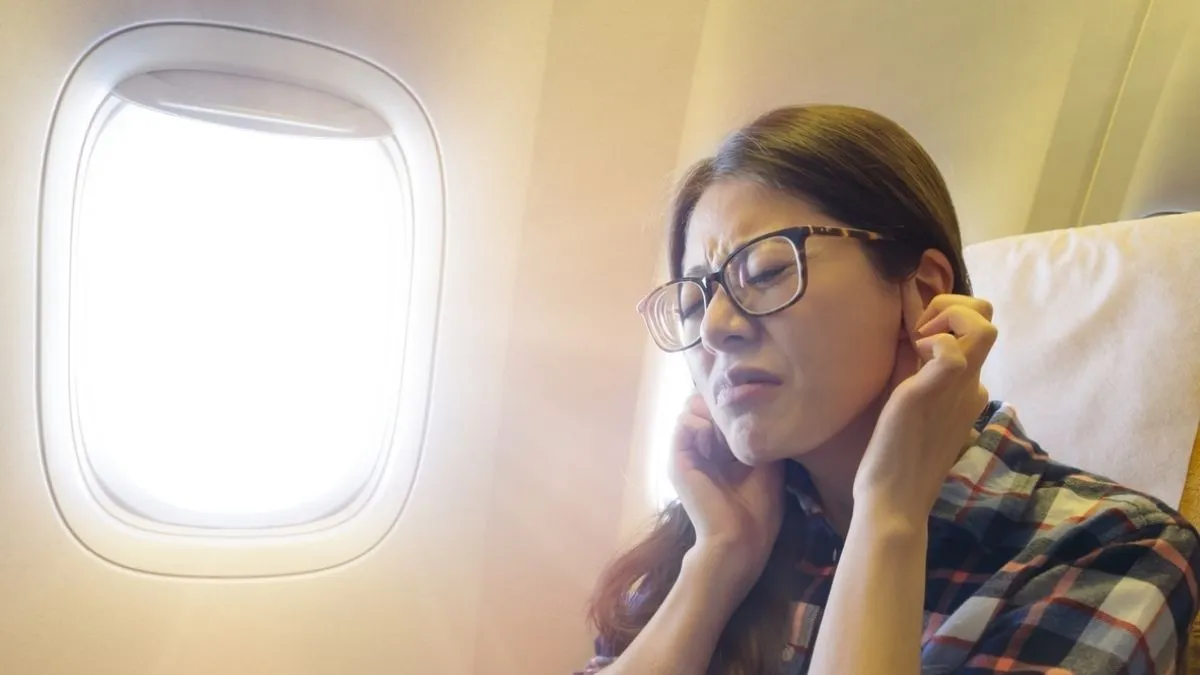 ear pain after flights
“The Eustachian tube, which connects the middle ear to the back of the nose, normally opens when we swallow, yawn or chew. This allows air to move in or out and keeps pressure balanced. If the tube does not open properly, a person may feel fullness, popping, muffled hearing or mild pain.”
This is commonly called airplane ear or ear barotrauma. It can affect one or both ears.
A 2023 Cureus study mapped the exact anatomical distances of the Eustachian tube orifice relative to adjacent nasal structures, giving doctors accurate reference points to better navigate and treat middle ear conditions.
Why Is Ear Pressure Worse During Landing?
When an aircraft lands many passengers will experience earaches or have their ears pop. It's simple because cabin pressure increases during descent. It is the middle ear that has to adapt to this change.
The Eustachian tube must open for air to flow and equalize the pressure. Dr Prasad says, “Descending to lower pressure is more of a challenge for the ear to adjust to. The middle-ear pressure must change as the pressure in the cabin changes. When the Eustachian tube is blocked or is not opening properly, it can cause discomfort due to a difference in pressure.”
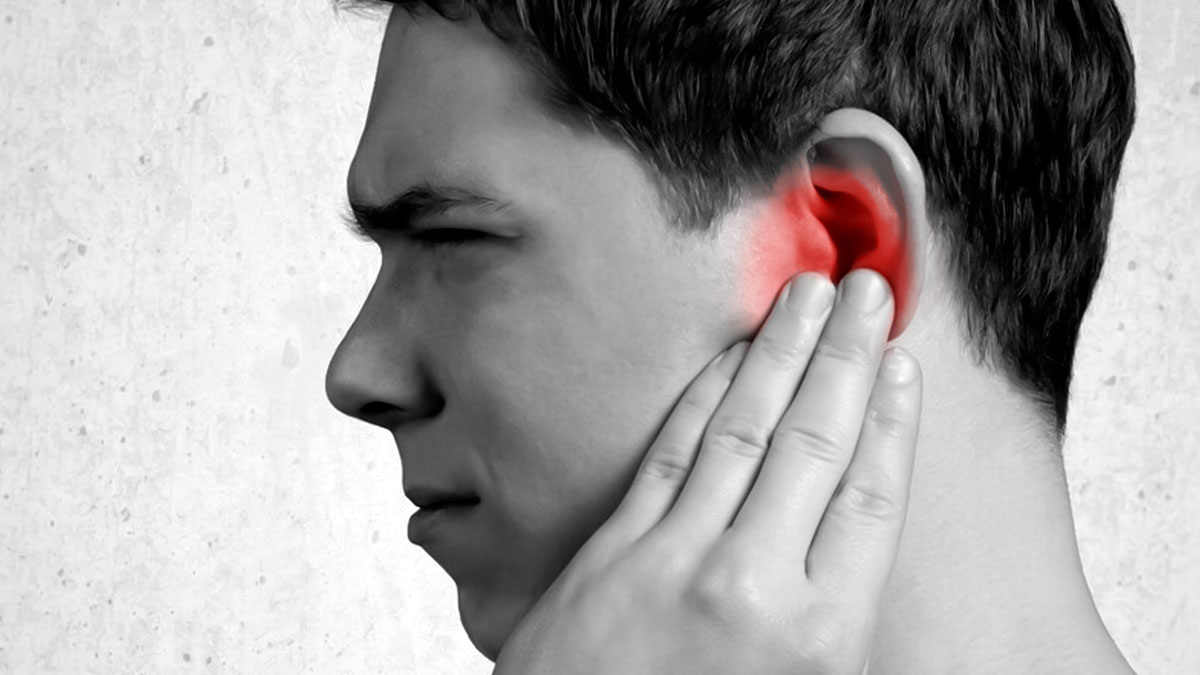
That is why some people find that their ears ‘pop', and their hearing becomes clearer after they land. The tube may be able to open by itself if you swallow, yawn and chew.
ALSO READ- Is Putting Oil in Your Ear Safe for Ear Pain? An ENT Specialist Explains
Can A Cold Make Your Ears Hurt During A Flight?
Yes. A blocked nose can make the problem worse. Dr Prasad explains, “A cold, sinus congestion, allergy or nasal inflammation can interfere with the opening of the Eustachian tube. This makes it harder for the middle ear to equalise pressure during the flight.”
This is why someone with a cold or heavy nasal congestion may experience more ear pain, fullness or temporary muffled hearing while flying. A Indian J Otolaryngol Head Neck Surg study was conducted on Eustachian tube function and pressure equalisation.
The researchers discovered that there were discrepancies between the ability to equalize pressure among the flight individuals and those who were not flying. Repeated exposure to changes in pressure was recommended to affect adaptation to pressure changes.
Why Does One Ear Stay Blocked After Landing?
Sometimes the plane has landed, but your ear still feels blocked. This can happen when the Eustachian tube does not immediately return to normal function. The pressure difference may also irritate the middle ear.
Dr Prasad says, “Usually, the pressure equalises fairly quickly once the Eustachian tube starts functioning normally. But if the tube remains swollen or the pressure difference has caused irritation in the middle ear, the sensation of fullness can last for hours or occasionally longer.
“Some people may also develop fluid behind the eardrum. This can cause a blocked sensation and muffled hearing even though the flight has already ended.”
So, a blocked ear after flying does not automatically mean that something serious has happened. The duration and severity of symptoms matter.
How Can You Prevent Ear Pressure During A Flight?
You do not need complicated tricks to help your ears adjust. The main aim is to keep the Eustachian tubes opening, particularly during descent.
Try these simple measures:
- Swallow frequently during landing.
- Sip water slowly.
- Chew gum or suck a sweet.
- Yawn deliberately.
- If you know you are prone to ear pressure, start these measures before the descent becomes uncomfortable.
- Avoid flying with a severe cold or heavy nasal congestion if your travel plans can safely be changed.
Dr Prasad says a gentle Valsalva manoeuvre can also help some adults. This involves closing your mouth, pinching your nose and gently trying to breathe out. “ It should never be done forcefully because excessive pressure can injure the ear,” he cautions.
Does Chewing Gum Really Help?
It can. The benefit is less about the gum itself and more about the repeated swallowing and jaw movement. These actions can help the Eustachian tube open.

Dr Prasad explains, “Chewing and swallowing repeatedly activate the muscles that help open the Eustachian tube. This is a simple measure that can be particularly useful during descent.”
So, chewing gum during the last part of the flight is a simple option, especially for people who regularly experience blocked ears.
When Should You See An ENT After A Flight?
Most mild cases settle on their own. However, persistent or severe symptoms should not simply be blamed on flying.
Dr Prasad recommends medical evaluation if you develop:
- Severe or increasing ear pain
- Hearing loss that does not improve
- Fluid or blood coming from the ear
- Significant dizziness or spinning
- Persistent ringing in the ear
- Symptoms that continue for several days
- Repeated ear pain after most flights
These rare cases should not make routine travellers anxious. They simply reinforce why severe, unusual or persistent symptoms deserve proper assessment.
What Should You Avoid If Your Ear Feels Blocked?
Trying to force the ear to pop can sometimes make things worse.
Dr Udayan advises:
- Repeat the forceful Valsalva manoeuvre is forbidden.
- Avoid forcibly blowing your nose.
- Never place cotton buds or other objects in the ear.
- If you have severe symptoms related to your ears, do not fly without medical advice.
- Never use decongestant medicines without determining if they are suitable for you.
This problem is typically associated with pressure behind the eardrum. Cleaning the outside of the ear will not help correct it.
ALSO READ- How to Know If Ear Pain Is Serious? An ENT Expert Explains
Conclusion
After flying, ear pressure is typically due to the temporary difference in pressure between the middle ear and the cabin of the aircraft. This can be worse when landing, as the Eustachian tube is required to move more to equalise pressure.
Try swallowing, yawning, drinking water or chewing gum to help. However, if there is severe pain, persistent hearing loss, dizziness, bleeding or symptoms persist for several days, it is advisable not to ignore it and visit an ENT specialist for a checkup.
FAQ
Can flying cause temporary hearing loss?
Yes. The work of the eardrum and middle ear may change temporarily in response to pressure changes, and make sounds seem muffled. Hearing should progressively improve with equalisation of pressure. If hearing loss persists, see an ENT specialist.Once your ear is blocked, is it safe to fly again?
This depends on the cause and severity. If there is still a lot of pain after a previous flight, particularly if you are experiencing hearing loss and/or dizziness, it is preferable to communicate with the ENT doctor before another flight.
All possible measures have been taken to ensure accuracy, reliability, timeliness and authenticity of the information; however Onlymyhealth.com does not take any liability for the same. Using any information provided by the website is solely at the viewers’ discretion. In case of any medical exigencies/ persistent health issues, we advise you to seek a qualified medical practitioner before putting to use any advice/tips given by our team or any third party in form of answers/comments on the above mentioned website.
How we keep this article up to date:
We work with experts and keep a close eye on the latest in health and wellness. Whenever there is a new research or helpful information, we update our articles with accurate and useful advice.
-
Current Version
Oct 02, 2026 15:17 IST
Published By : Vivek Kumar
Reviewed By : Dr Rohit Udaya Prasad