
Acne is a frustrating skin issue that is quite widespread. There are various factors that lead to this skin problem: stress, bacteria, inflammation, dust, hormones, and the list goes on. In fact, there are different types of acne as well. Today, we will talk about pomade acne, which is caused by hair products. But how exactly are they formed, what are its risks, how can you prevent or manage them – you can find the answers for all these in this article.
To understand this better, we reached out to Dr Ruben Bhasin Passi, Senior Consultant Dermatology, CK Birla Hospital, Gurgaon.
What is Pomade Acne?
Before we begin, let us understand what pomade acne is. Answering this, Dr Passi says, “Pomade acne is one of those conditions that patients rarely bring up on their own because they simply do not connect their hair products to the small, persistent bumps appearing along their forehead, temples and hairline. As a dermatologist, it is often something I have to point out myself during a consultation, and once I explain the link, the penny usually drops straight away.”
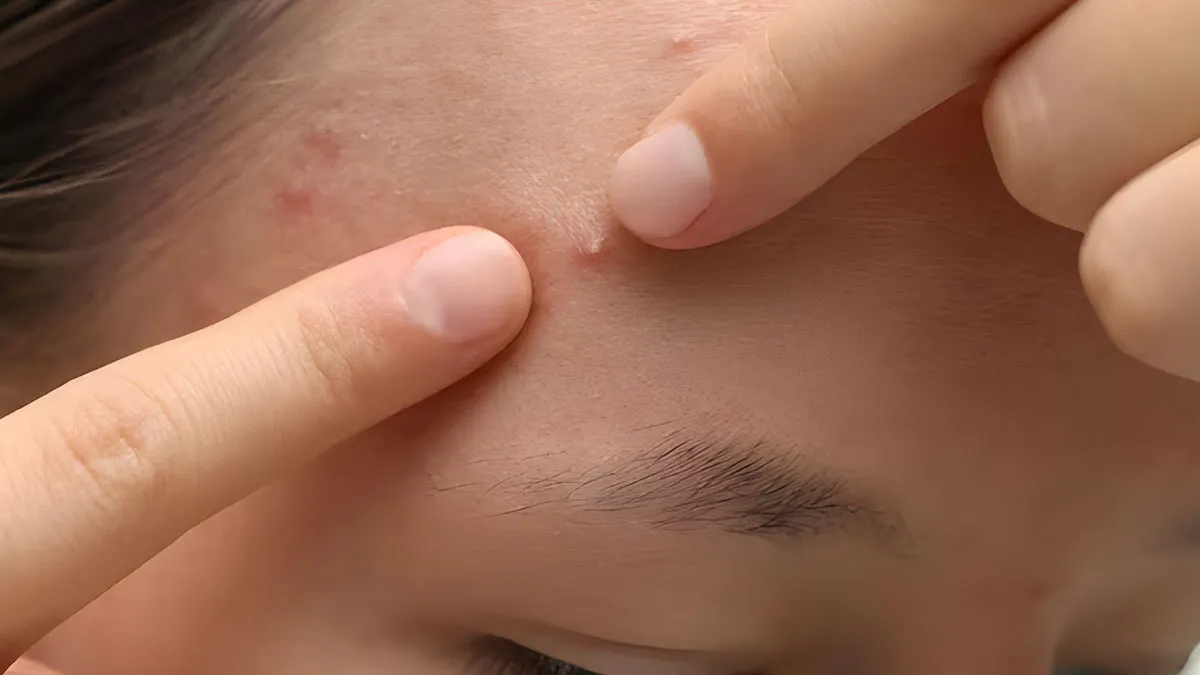
So what exactly is pomade acne? “Pomade acne, sometimes called acne cosmetica, when related to hair products specifically, is a form of comedonal acne caused by oils, waxes and heavy styling products coming into repeated contact with the skin. It typically presents as small, uniform whiteheads or blackheads clustered along the forehead, temples, hairline and sometimes the back of the neck, rather than the larger, inflamed cysts seen in hormonal acne,” explains the expert.
Dr Passi continues, “The name comes from pomade, the classic waxy hair product long favoured for slicked-back styles; but in practice, any heavy hair oil, wax, gel, styling cream or even certain conditioners can trigger the same reaction.”
 pomade acne 1
What Causes Pomade Acne?
Now let us understand the causes behind it. Dr Passi says that the mechanism is fairly straightforward. “Thick, occlusive ingredients such as petrolatum, lanolin, mineral oil and certain waxes sit on the skin's surface and physically block hair follicles. This traps dead skin cells and sebum inside the pore, creating the perfect environment for comedones to form. Unlike typical acne, which is often influenced by hormones or bacteria, pomade acne is largely a mechanical and ingredient-driven problem,” explains the expert.
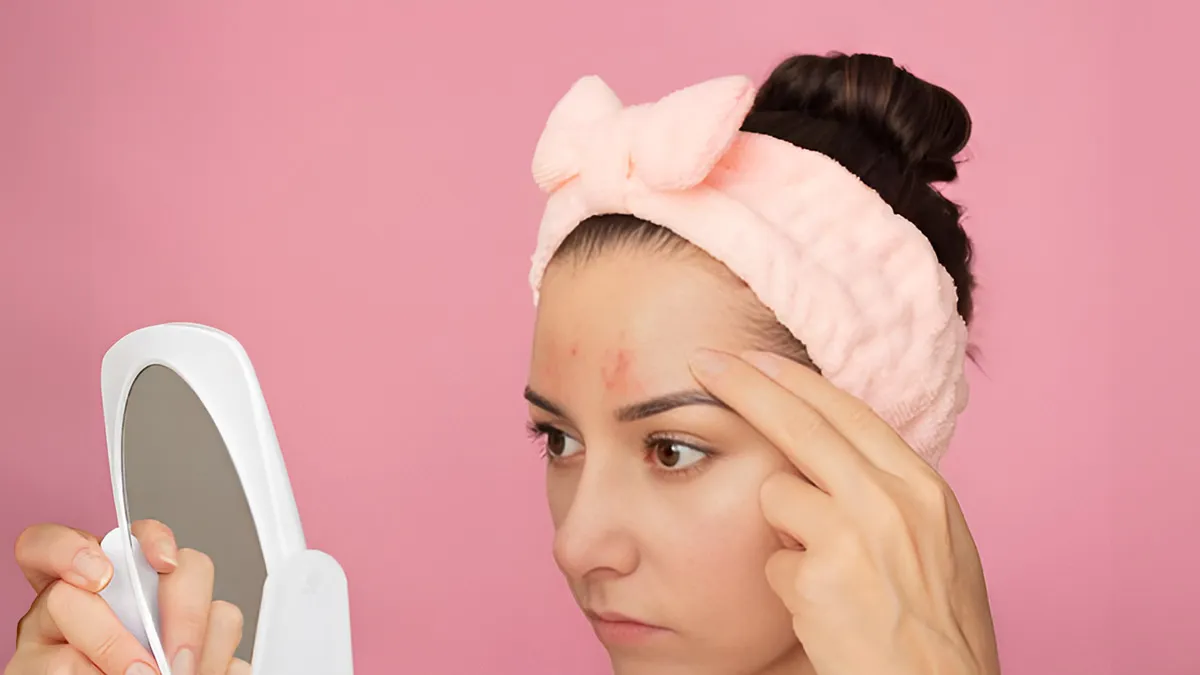
She adds, “Contributing factors include using products too close to the hairline, not washing the face after applying hair products, sleeping with product still in the hair, and wearing hats or headbands that press product-laden hair against the skin throughout the day.”
According to the journal Acne: Morphogenesis and Treatment, pomade acne typically shows up as a cluster of small, uniform whiteheads and blackheads closely following the forehead, temples, and hairline. The research notes that it is especially common among individuals who regularly use heavy moisturisers or styling creams to manage tightly coiled or textured hair. The findings add that the most effective treatment is simply stopping the use of the pore-clogging products or switching to lighter, water-based alternatives which will naturally clear up the skin.
 pomade acne 2
What Are The Risks of Ignoring Pomade Acne?
If you ignore a pomade acne, thinking it will go away on its own, think again. Shedding light on the risks of ignoring this type of acne, Dr Passi says, “Left untreated, pomade acne tends to persist indefinitely because the trigger keeps being reapplied daily. Chronic, low-grade comedonal acne of this type can lead to enlarged, stretched-out pores over time and.”
She continues, “In some cases, post-inflammatory hyperpigmentation, particularly in deeper skin tones. Because the bumps are usually not painful or dramatically inflamed, people often dismiss them or scrub harder, which can further irritate the skin barrier without addressing the actual cause.”
 pomade acne 3
Tips to Manage and Prevent Pomade Acne
Dr Passi says that the good news is that pomade acne is one of the more straightforward acne types to resolve once the cause is identified. On this note, the expert shares some tips to effectively prevent and manage it:
Switch to lighter, water-based or non-comedogenic hair products, particularly if you style hair close to the hairline.
- Apply styling products at least an inch away from the skin, focusing on mid-lengths and ends rather than the roots.
- Wash your face thoroughly after styling your hair, not just at the end of the day.
- Avoid sleeping with products left in.
- Wash pillowcases regularly, as they absorb residual oils.
- Introduce a gentle salicylic acid cleanser or leave-on exfoliant along the hairline a few times a week to help clear existing congestion.
- If breakouts persist despite these changes, a topical retinoid can help normalise skin cell turnover and prevent new comedones forming.
“Most cases improve significantly within six to eight weeks of removing the offending product and adjusting hair care habits. If the bumps remain stubborn or become inflamed, it is worth seeing a dermatologist, as prescription-strength treatments may be needed to fully clear things up,” concludes Dr Passi.
ALSO READ - Fungal Acne vs Regular Acne: Dermatologist Explains Their Differences
Conclusion
Pomade acne is an often overlooked skin issue. Understanding its root cause is the first step towards clearer skin. All you need to do is simply identify and swap out the heavy, pore-clogging hair products that are responsible for the breakouts. By doing so, you can effectively stop this condition in its tracks. Following better hygiene habits, such as washing your face after styling your hair and using gentle exfoliants, will also help clear up existing bumps along your hairline. However, if your skin doesn't improve with these basic lifestyle changes, consult a dermatologist.
FAQ
Can pomade cause breakouts?
Yes, pomade can cause breakouts on your forehead, temples, and hairline when pore-clogging ingredients migrate onto your skin.How to get rid of pomade acne?
Some of the easiest ways to get rid of pomade acne are by restricting use of heavy or oil-based hair styling items near your face, and washing your hairline and forehead thoroughly with a gentle cleanser after styling or sweating.
All possible measures have been taken to ensure accuracy, reliability, timeliness and authenticity of the information; however Onlymyhealth.com does not take any liability for the same. Using any information provided by the website is solely at the viewers’ discretion. In case of any medical exigencies/ persistent health issues, we advise you to seek a qualified medical practitioner before putting to use any advice/tips given by our team or any third party in form of answers/comments on the above mentioned website.
How we keep this article up to date:
We work with experts and keep a close eye on the latest in health and wellness. Whenever there is a new research or helpful information, we update our articles with accurate and useful advice.
-
Current Version
Aug 28, 2026 15:54 IST
Published By : Shruti Das
Reviewed By : Dr Ruben Bhasin Passi