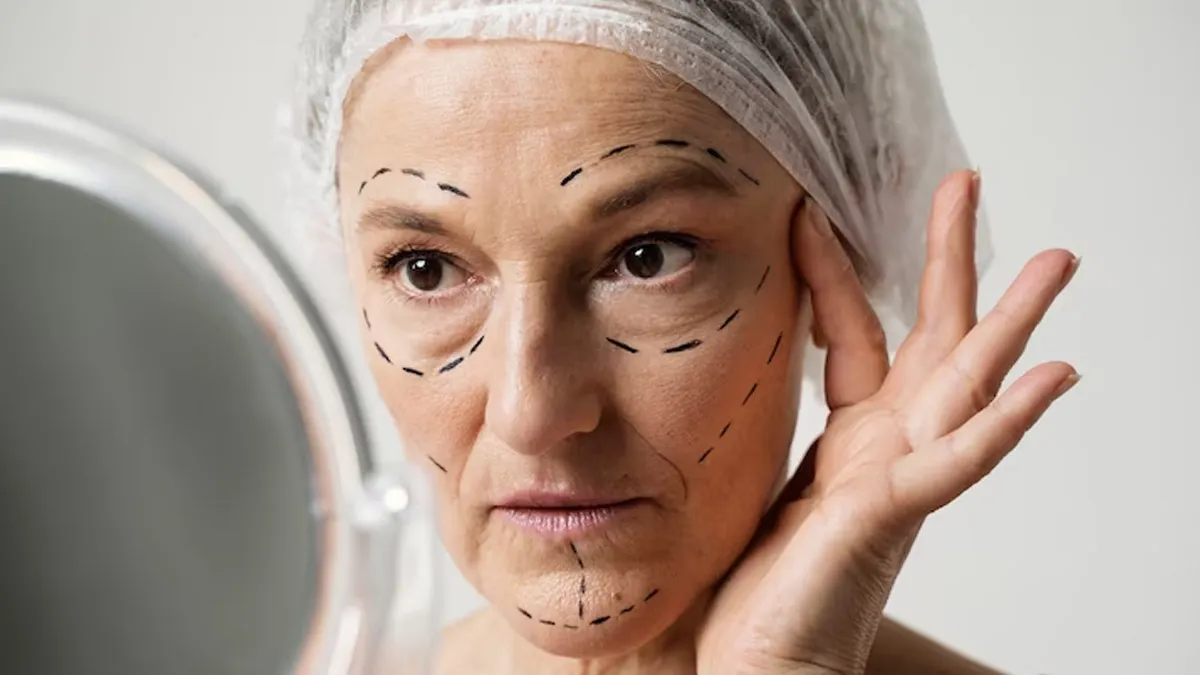
Anti-ageing skincare has become a buzzword across all age groups, with teenagers browsing retinol serums and people in their 40s wondering if it’s already too late. From social media trends to celebrity routines, the pressure to start early is everywhere. But, is there really an appropriate age for anti-ageing care or is it all about skin care behaviours rather than timing?
As per our expert, Dr Ruben Bhasin Passi, Consultant Dermatologist, CK Birla Hospital, Gurugram, there is no specific right age to begin using anti-ageing products, as the pace of skin ageing varies depending on genes, lifestyle, and exposure. “But preventive measures may begin in the mid-20s, without using aggressive treatments, focusing on moisturisers, sunscreen, and antioxidants,” she said. Read ahead to know everything she shared with us.
Why Does Skin Age Differently on Every Individual
Skin ageing is both an internal and external process. Genetics affect collagen degradation rates, but exposure to the sun, pollution, smoking, stress, diet, and lack of adequate sleep contribute greatly to skin degradation. Which is why some people see fine lines in their late twenties, and some will keep their skin smooth well past their forties.
 1_age
1_age
Instead of trying to stay on trend, Dr Passi recommend you learn what your own skin actually needs at various stages of life.
Skincare in your 20s: Prevention is Hey
In your twenties, you still have a good level of collagen. During this age group, it's all about preventing premature ageing and has nothing to do with removing wrinkles.
Dr Passi recommended that the emphasis should be on:
- Broad-spectrum sunscreen to shield from UV damage, which is the no. 1 contributor to premature ageing
- Moisturisers for a healthy skin barrier
- Antioxidants such as Vitamin C protect against pollution damage and prevent premature collagen degradation
The harsh anti-ageing compounds may not be needed during this period. Overuse of such compounds may lead to irritation and increased skin sensitivity and damage the skin barrier.
 2_age
2_age
Skin care in the 30s: Early treatment
The actual process of ageing usually begins from the early to late 30s, when the first indications of ageing appear, and this might be characterised by the presence of fine lines, dullness, texture, and pigmentation.
“Anti-ageing active ingredients such as retinoids and peptides are usually recommended in one's early to late thirties when the first signs begin to show. At this point, skin care regimens should remain simple but more deliberate in terms of cell renewal, hydration, and repair,” Dr Passi shared.
ALSO READ- What Is Food Noise? An Expert Guide On How To Quiet It
Skincare Routine In Your 40s and Afterwards: Repair and Maintenance
In the 40s, the loss of collagen is even more apparent, manifesting in the form of wrinkles, sagging, and hyperpigmentation. Procedures that address laxity, deep wrinkles, and dermal irregularities gain importance.
However, Dr Passi advised against viewing anti-aging as damage control. "It is advised that one should not start with strong actives too soon because unnecessary exposure leads to irritation and degradation of one’s complexion. It is all about constant care, not age," she explained.
The Biggest Anti-Ageing Myth
One of the most common misconceptions is that earlier is always better. However, in reality, misuse of strong products can accelerate skin sensitivity and ageing rather than prevent it. A gentle, balanced approach guided by a dermatologist is always safer.
Bottomline
Anti-ageing treatments do not have an age limit on when you need to begin, and maintenance or preventive treatments could be begun somewhere within your mid-20s, while active treatments should be introduced based on resultant changes on the skin and not on trends.
FAQ
1.Can I use retinol in my 20s?
Retinol is usually not necessary in the early 20s unless prescribed for acne or specific concerns. Overuse can irritate the skin.2. Is sunscreen really an anti-ageing product?
Yes. Sunscreen is the most effective anti-ageing product as it prevents UV-induced wrinkles, pigmentation, and collagen loss.3. Do expensive anti-ageing creams work better?
Not always. A simple routine with proven ingredients and regular use works better than costly products used inconsistently.
All possible measures have been taken to ensure accuracy, reliability, timeliness and authenticity of the information; however Onlymyhealth.com does not take any liability for the same. Using any information provided by the website is solely at the viewers’ discretion. In case of any medical exigencies/ persistent health issues, we advise you to seek a qualified medical practitioner before putting to use any advice/tips given by our team or any third party in form of answers/comments on the above mentioned website.
How we keep this article up to date:
We work with experts and keep a close eye on the latest in health and wellness. Whenever there is a new research or helpful information, we update our articles with accurate and useful advice.
-
Current Version
Dec 28, 2025 08:50 IST
Modified By : Tanya Srivastava Dec 28, 2025 08:50 IST
Modified By : Tanya SrivastavaDec 28, 2025 08:50 IST
Published By : Tanya Srivastava
Reviewed By : Dr Ruben Bhasin Passi