-1789118789461_m.webp)
Notice your weight seems to settle around your middle no matter what you do, even if the rest of you hasn't changed much? If you have PCOS, that's not your imagination, and it's not just "normal" weight gain either. Dr Lavanya Kiran says there's a specific hormonal reason behind it, one that goes well beyond calories in versus calories out. Here's what's actually driving it, and what genuinely helps.
Just a quick note before we get started: PCOS (Polycystic Ovarian Syndrome) has recently been renamed PMOS (Polyendocrine Metabolic Ovarian Syndrome) by a group of global experts, published in The Lancet. The name change doesn't just indicate how much it has to do with hormones and metabolism, as it's what makes belly fat one of the most constant components of the condition.
Why Does PCOS Cause Weight to Collect Around the Waist?
Dr Lavanya Kiran, Director and Lead Consultant, Obstetrics, Gynaecology, KIMS Hospitals, Electronic City, Bengaluru, explains, "This comes down to insulin resistance, which affects most women with PCOS to some degree, regardless of overall body weight,".
As your cells become less responsive to insulin, your body will produce more insulin to make up for it. That additional insulin will do two things:
- It will encourage the storage of fat
- and it will direct that fat storage towards the abdomen and not the hips or thighs.
That is why there are so many women with PCOS, or PMOS, who end up with a body that has a distinct "apple" shape without a ton of weight gain.
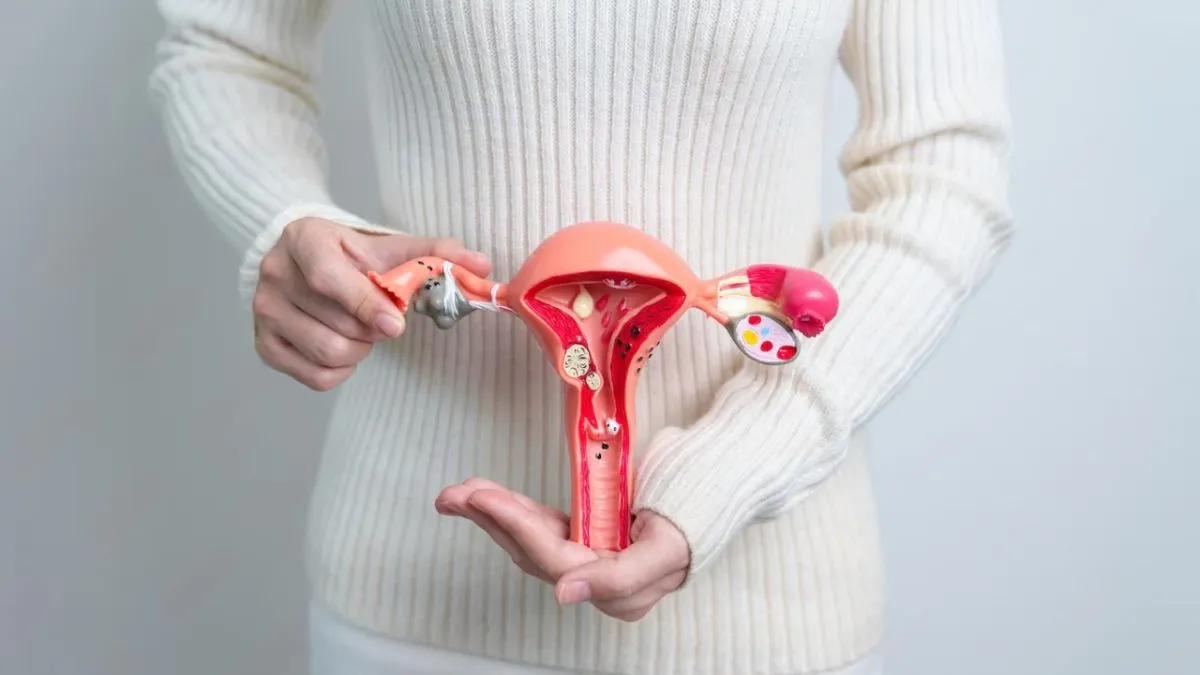
A separate 2023 study in the journal Nutrients looked closely at 56 women with PCOS. Researchers measured their belly fat in detail, both the visceral fat around the organs and the fat just under the skin, and compared this to their insulin resistance levels.
The results were clear. Women with more visceral fat, and a higher ratio of visceral to skin-level fat, were far more likely to have insulin resistance. In short, the study backs up exactly what Dr Kiran describes: belly fat and insulin resistance feed into each other, but diet and movement can genuinely shift that balance.
ALSO READ- Women with PMOS Have 4 Times Higher Risk of Heart Attacks and Strokes, Says Lancet Study
What's Actually Driving This at a Hormonal Level?
A few things work together here, according to Dr Kiran:
- The primary cause is insulin resistance. Increased insulin can cause the body to store fat in the abdominal area instead of other areas.
- PCOS is associated with an increase in androgens, such as testosterone, which are themselves known to promote central fat distribution.
- Chronic low-grade inflammation is commonly experienced with PCOS and is further contributing to insulin resistance in a vicious cycle.
- Disruptions in Cortisol levels, especially when coupled with chronic stress, contribute to abdominal fat accumulation.
- Genetics and family history influence how strongly all of this shows up in your body.
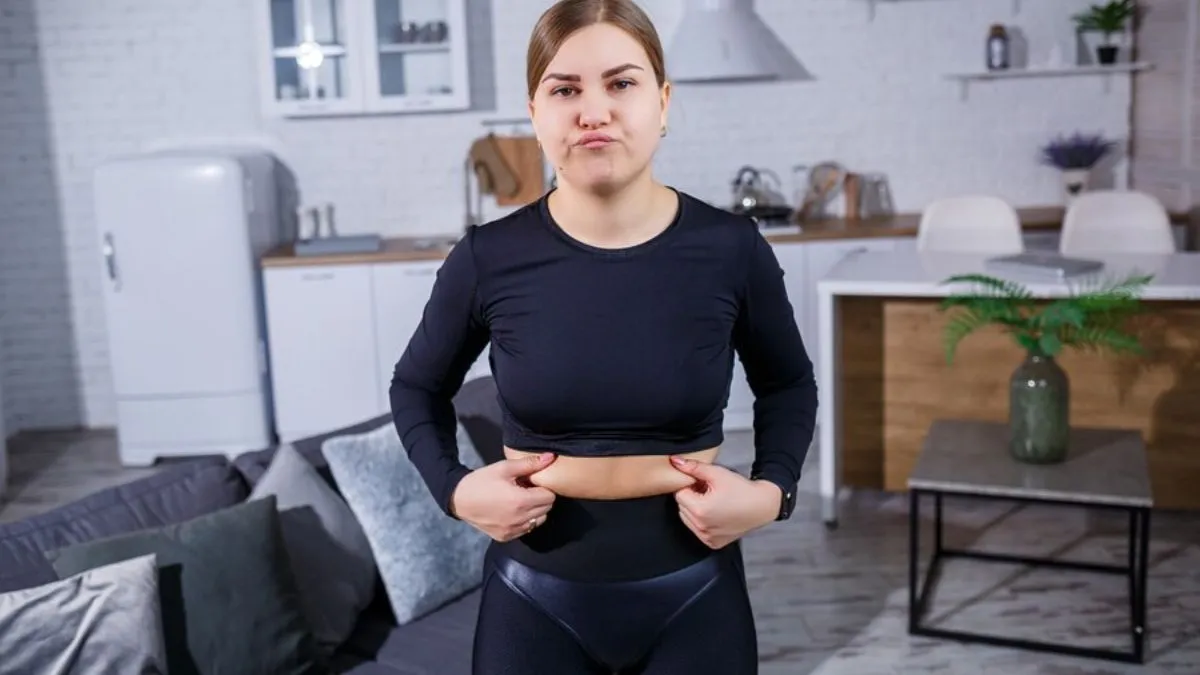
Recent research backs this up clearly. A 2025 Obes Facts. Study of Asian Indian women with PCOS found that participants had disproportionately higher visceral fat alongside lower peripheral fat compared to women without PCOS. This specific fat distribution pattern helped explain their heightened insulin resistance.
Managing Stubborn Belly Fat With a PCOS Diet
Dr Kiran's suggestions are not about restricting insulin but maintaining it at a steady level:
- Consider a low glycaemic index diet: whole grains, legumes and non-starchy vegetables release glucose slowly and thus don't cause spikes in blood sugar that lead to abdominal fat storage.
- Fill up on protein all day long! It adds fullness and helps to support normal blood sugar levels.
- Incorporate good fats, nuts, seeds, olive oil, and fatty fish that will help balance hormones without causing a spike in insulin levels.
- Reduce refined sugar and heavily processed carbohydrates, which are the two primary foods that cause an increase in insulin.
- Eat smaller meals more often instead of two large meals, as this can help maintain a steady insulin level.
- Get enough fibre. It supports gut health and slows glucose absorption.
- Skip the crash diets. Moderate, sustainable changes work better long-term than extreme calorie restriction, which can stress hormonal balance further.
Effective Exercise Routines for PCOS Belly Fat
According to Dr Kiran, a mix beats any single approach:
- Combine strength training with cardio. Building muscle mass improves insulin sensitivity over time, more than cardio alone.
- Aim for resistance training 2-3 times a week, which helps muscles use glucose more effectively.
- Add moderate cardio, brisk walking, cycling, or swimming, for calorie balance and heart health without overly spiking cortisol.
- Use HIIT in moderation. It's shown particular benefit for insulin sensitivity, but shouldn't be your only approach, especially if cortisol is already a concern.
- Prioritise consistency over intensity. Regular, moderate exercise over months beats sporadic intense efforts.
- Keep moving throughout the day, not just during structured workouts, since general activity supports insulin sensitivity too.
PCOS Belly Fat: Causes and Natural Remedies
Beyond diet and exercise, a few other factors matter, according to Dr Kiran:
- Losing even 5-10% of body weight, if you're overweight, can meaningfully improve insulin sensitivity and reduce symptoms, including central fat.
- Prioritise consistent sleep. Poor sleep worsens both insulin resistance and cortisol balance.
- Manage stress through yoga, meditation, or simply regular downtime, addressing the cortisol piece of the puzzle.
- Some women find supplements like inositol genuinely helpful for insulin sensitivity, though this should be discussed with a doctor rather than self-prescribed.
- Limit alcohol, which affects insulin sensitivity and adds empty calories, often right around the midsection.

Treat natural remedies as a complement, not a replacement, for medical management. PCOS often benefits from a doctor-guided approach, sometimes including medication like metformin, alongside lifestyle changes.
When Should PCOS-Related Belly Fat Prompt a Doctor's Visit?
Dr Kiran recommends seeing a doctor if:
- After several consistent months, lifestyle changes don't seem to be taking effect.
- You see symptoms that may indicate insulin resistance is becoming more severe, such as darkening of the skin around the neck and under the arms (acanthosis nigricans), excessive thirst or tiredness.
- Weight and lifestyle management is not effective at regularising or eliminating periods.
- The family history of diabetes and/or cardiovascular disease, as earlier structured intervention might be beneficial.
- You want to consider if medication (such as metformin) or other insulin sensitising drugs might help your efforts.
ALSO READ- Endometriosis Vs PCOS: Experts Explain The Key Differences
Conclusion
Belly fat in women with PCOS is not a matter of willpower but a matter of hormones, the most common culprit being insulin resistance. Acknowledging that diet, exercise, stress and sleep routines affect insulin levels more than just cutting calories does is the first step.
However, it is always advised to visit a gynacoelogist if you find any problem or any changed within the body.
FAQ
1. Can PCOS belly fat return even after significant weight loss?
Yes, it can, especially if insulin resistance is not actively treated. That's why, rather than a short-term diet, a long-term lifestyle change is the most important factor when maintaining a slimmer-looking tummy.2. Is the belly fat from PCOS different in appearance or sensation to normal belly fat?
Not so much in appearance, but more so in metabolism as it tends to be more closely linked to insulin resistance, which leads to visceral fat.
All possible measures have been taken to ensure accuracy, reliability, timeliness and authenticity of the information; however Onlymyhealth.com does not take any liability for the same. Using any information provided by the website is solely at the viewers’ discretion. In case of any medical exigencies/ persistent health issues, we advise you to seek a qualified medical practitioner before putting to use any advice/tips given by our team or any third party in form of answers/comments on the above mentioned website.
How we keep this article up to date:
We work with experts and keep a close eye on the latest in health and wellness. Whenever there is a new research or helpful information, we update our articles with accurate and useful advice.
-
Current Version
Sep 11, 2026 15:04 IST
Modified By : Vivek Kumar Sep 11, 2026 15:04 IST
Published By : Vivek Kumar
Reviewed By : Dr Lavanya Kiran