A good night's sleep is 7 to 8 hours. However, that is not the case for some women who suffer from PCOS, which is now termed as PMOS. They may sleep all night and still feel tired in the morning, have trouble paying attention, or feel sleepy during the day. This can be frustrating, especially when they think they just need more sleep.
The issue with it may not be the quantity of sleep, but the quality of sleep. Sleeplessness can be caused by problems like diabetes, sleep apnoea, stress, anxiety, and hormonal changes. Here is what an expert wants women with PCOS to know about persistent tiredness.
Why Can PCOS Make You Tired Even After Enough Sleep?
Dr Lavanya Kiran, Director and Lead Consultant, Obstetrics, Gynaecology, KIMS Hospitals, Electronic City, Bengaluru, explains, “This is a genuinely common complaint, and it points to something important: with PCOS, sleep quantity and sleep quality often don't match up the way they should.”
A woman may spend eight hours in bed but still not get enough deep, restorative sleep. “Several PCOS-related factors interfere with the depth and restorative quality of that sleep, not just how long it lasts,” she adds.
-1771594045420.webp)
Research supports this link. A 2022 Frontiers in Endocrinology review looked at 18 studies involving 16,152 participants. Women with PCOS were more likely to have sleep disturbances and sleep quality problems compared to women without PCOS. On average, they also slept 16 minutes less.
ALSO READ- Understanding PCOS and Period: A Complete Guide
Reasons That May Be Actually Disrupting Sleep Quality in PCOS?
According to Dr Kiran, several overlapping factors are usually at play:
1. Obstructive sleep apnoea
Significantly more common in women with PCOS, even those who aren't overweight, largely linked to elevated androgen levels affecting airway and breathing patterns during sleep. Repeated micro-awakenings from breathing interruptions block deep, restorative sleep, even when total sleep time looks fine on paper.
2. Insulin resistance
A core feature of PCOS, and independently linked to poorer sleep quality and disrupted sleep architecture, creating fatigue that duration alone doesn't explain.

3. Elevated cortisol
Disrupted stress hormone regulation, sometimes seen alongside PCOS, can interfere with the deeper sleep stages needed to actually feel rested.
4. Anxiety and depression
Both occur at higher rates in women with PCOS, and both are known to quietly erode sleep quality, even when total sleep time looks normal.
5. Hormonal imbalances
Irregular oestrogen and progesterone patterns can throw off the body's sleep-wake cycle and natural melatonin production.
6. Restless leg syndrome
Appears more often in women with PCOS, potentially tied to insulin resistance, and can fragment sleep without the person fully waking or remembering it.

The sleep apnoea connection in particular has strong, recent evidence behind it. A 2025 Front Endocrinol review looked at eight different studies to see how common sleep apnoea is in women with PCOS.
It found that 37% of women with PCOS have obstructive sleep apnoea, compared to only 6% of women without PCOS. Women who have PCOS are likelier to develop this breathing disorder by about 9 and a half times.
These disruptions prevent deep and restorative sleep, which means that sleeping for eight hours does not fully refresh the body and hence the reason why even after getting 8 hours of sleep one may feel tired.
Why Doesn't Sleeping More Hours Fix This?
Because the real problem usually isn't duration. Dr Kiran adds, "If deep sleep keeps stopping due to breathing pauses, hormone swings, or stress, your brain and body never get the rest they need."
No matter how many hours you spend in bed, you only get a tiny bit of true, deep sleep. Someone can spend eight hours in bed and only get a fraction of that in genuinely restorative sleep.
Is This the Same as General PCOS Fatigue?
Related, but not quite the same thing, says Dr Kiran. General PCOS-related fatigue can come from insulin resistance and metabolic dysfunction affecting energy levels throughout the day, independent of sleep entirely.
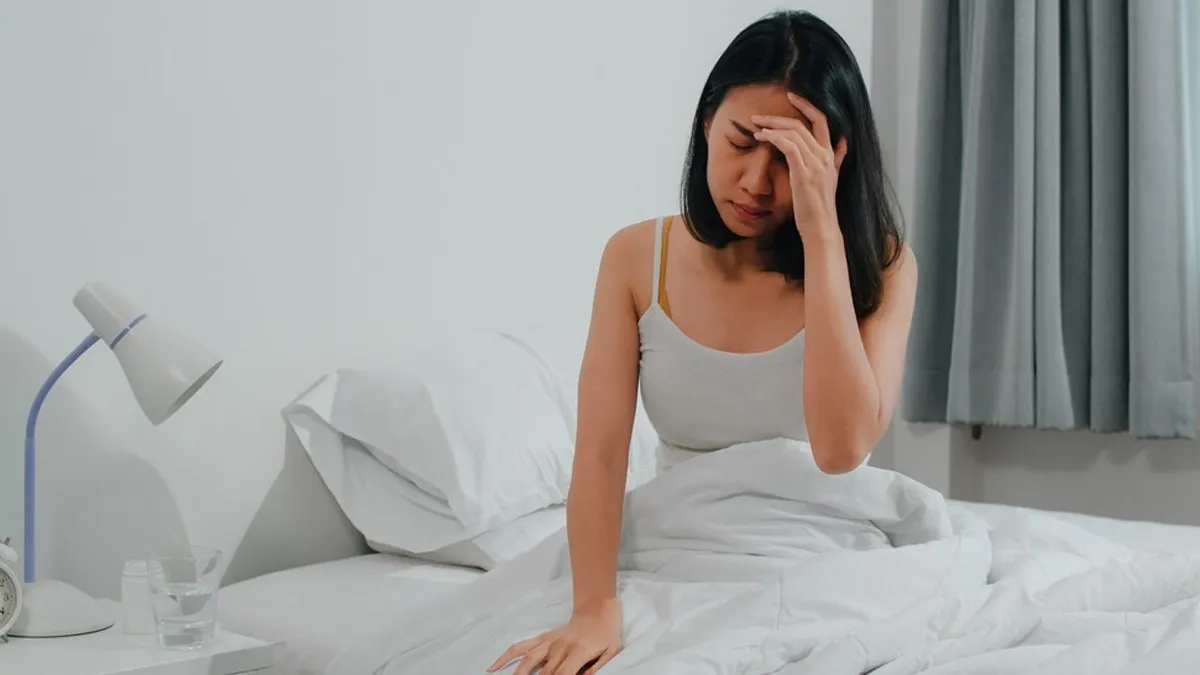
Sleep-specific tiredness, waking up exhausted despite plenty of time in bed, points more directly toward a sleep quality issue, like undiagnosed sleep apnoea, that deserves its own evaluation rather than being lumped in with general fatigue.
Could It Be Sleep Apnoea? Signs to Watch For
Dr Kiran flags a few symptoms that point specifically toward sleep apnoea:
- Loud snoring, or a partner mentioning witnessed pauses in breathing during sleep.
- Waking up with headaches, a dry mouth, or a sore throat.
- Persistent daytime sleepiness despite what seems like enough sleep.
- Difficulty concentrating or brain fog during the day.
- Waking up gasping or choking, even if it's not clearly remembered the next morning.
ALSO READ- Endometriosis Vs PCOS: Experts Explain The Key Differences
When To See A Doctor For This Kind of Tiredness?
Dr Kiran suggests a relatively regimented method:
- Begin with a thorough discussion of sleep habits, snoring, and daytime symptoms since sleep problems in PCOS may not be discussed unless inquired about.
- If you think you may have sleep apnoea, think about having a sleep study (polysomnography) as this is often not diagnosed in women, even less so in PCOS women who are not overweight.
- Check for anxiety and depression, as both are more prevalent in PCOS and can have a negative impact on sleep.
- Treat insulin resistance and decrease insulin resistance with diet, exercise, and/or medication, if necessary, which will also benefit sleep.
- If restless leg syndrome is suspected, check iron levels because this can be a cause of RLS.
Improve sleep hygiene, stick to a schedule, reduce screen time prior to bedtime, cool dark environment, but remember this often won't be sufficient if it is something such as sleep apnoea.
FAQ
Can PCOS-related sleep problems affect fertility treatment outcomes?
Inadequate sleep quality can increase insulin resistance and hormonal imbalance, which are already factors in fertility in PCOS. This can be an added benefit of good sleep if coupled with the treatment for PCOS, and it should be discussed with the treating specialist.Does Weight loss cure sleep apnoea if it is caused by PCOS?
Not always. In some women, weight loss will make sleep apnoea less severe, but in women with PCOS, there are androgen-dependent and airway-dependent factors that are associated with sleep apnoea that are not influenced by weight loss and are not treated directly with sleep apnoea.
All possible measures have been taken to ensure accuracy, reliability, timeliness and authenticity of the information; however Onlymyhealth.com does not take any liability for the same. Using any information provided by the website is solely at the viewers’ discretion. In case of any medical exigencies/ persistent health issues, we advise you to seek a qualified medical practitioner before putting to use any advice/tips given by our team or any third party in form of answers/comments on the above mentioned website.

How we keep this article up to date:
We work with experts and keep a close eye on the latest in health and wellness. Whenever there is a new research or helpful information, we update our articles with accurate and useful advice.
-
Current Version
Sep 14, 2026 17:43 IST
Modified By : Vivek Kumar Sep 14, 2026 17:43 IST
Published By : Vivek Kumar
Reviewed By : Dr Lavanya Kiran