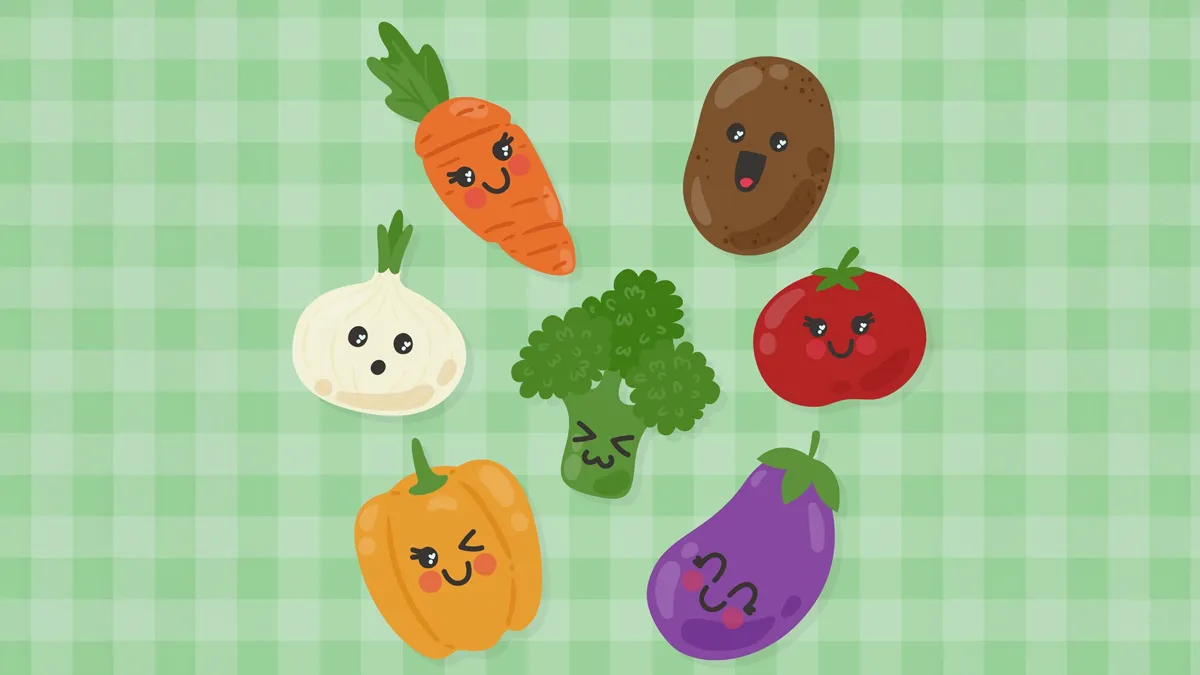
You must have heard while growing up that we should eat more and more vegetables. While eating veggies seemed like a punishment when we were kids, now as grown up adults, many of us realise why our parents forced us to eat them. We are now growing more and more aware of the importance of vegetables in our daily diet. Yes, we are talking about the ones which we often take for granted – such as potato, chilli, onion, karela etc. Recently, Google India shared an adorable reel, in which they attempted to humanise our everyday vegetables. The clip also gave us a glimpse into what every vegetable is all about, as well as their uniqueness.
To get an idea about the nutritional value of our everyday veggies, we reached out to Dr Geetika Chopra, Celebrity Holistic Nutritionist.
What Is The Reel On Vegetables All About?
Google India has shared an interesting reel, with the caption – ‘who would you hire as the CEO of vegetables?’. The video, which has been made using Google Gemini, has curated adorable animated versions of our daily vegetables such as potato, chilli, cucumber, bitter gourd, among others. The clip starts with an interviewer asking a potato – “Tell me something about yourself?” That’s when each of these vegetables start giving their quirky introductions. For instance, a potato says, “I am a team player. I get along well with everyone like cauliflower, carrots; and I am even enough alone.”
View this post on Instagram
Similarly, we see different types of vegetables appear before the interviewer one by one. Then the man asks onion, “Why do people call you strict?” To this, the onion answers, “I don’t even say anything, still people start crying.” We see many other funny conversations, such as – capsicum is being asked what he wants his work locations to be? To which, the vegetable replies: “I think Shimla would be perfect. Don’t you think so?”
This video has received a lot of love from netizens. With such informative yet funny clips, one can definitely grow more awareness among kids or youth about different foods.
 reel veggies 2
Nutritional Values Of Our Everyday Vegetables
On this note, let us take a look at the nutritional value of all these vegetables. “When my clients ask me which vegetable is the ‘best’, I always explain that nutrition is not about ranking — it’s about metabolic roles,” says Dr Chopra. The expert gives us a brief about the different vegetables and their role in our plate:
- Potato is primarily a source of complex carbohydrates, potassium, vitamin C, and vitamin B6. Potassium is critical for nerve signaling, muscle function, and blood pressure regulation. When eaten boiled or roasted, potatoes provide steady glucose release. The issue is not potatoes — it’s deep frying and refined oils.
- Onion is rich in quercetin and sulphur compounds, which act as antioxidants and anti-inflammatory agents. Onions also contain prebiotic fibers that feed healthy gut bacteria, making them extremely important for digestion and immunity.
- Karela (bitter gourd) contains bioactive compounds like charantin and polypeptide-P, which help improve insulin sensitivity and glucose uptake. This is why I frequently recommend karela in metabolic disorders.
- Chili contains capsaicin, which stimulates thermogenesis and improves circulation. It also provides vitamin C and vitamin A. In controlled amounts, chili can mildly boost metabolism and reduce inflammation.
- Tomato is rich in lycopene, a fat-soluble antioxidant that reduces oxidative stress and inflammation. Cooked tomatoes improve lycopene bioavailability, which is why tomato-based gravies are nutritionally valuable.
- Cucumber has high water content and provides hydration, potassium, and antioxidants. It supports digestion and helps regulate body temperature.
- Carrot is rich in beta-carotene, fiber, and antioxidants. Beta-carotene converts into vitamin A, supporting vision, immunity, and skin health.
- Capsicum (especially red and yellow) is one of the highest natural sources of vitamin C, supporting immune function, collagen synthesis, and iron absorption.
 reel veggies 3
Health Benefits Of Vegetables In Our Daily Diet
Now that we know how nutritionally rich each of these vegetables are, let us see how beneficial they are for our health. Dr Chopra lists down their pros for us:
- I recommend potatoes as a clean energy source when physical activity is high or when clients need satiety without refined carbs.
- Onion is foundational for gut health and immunity; it is not optional — it is functional food.
- Karela plays a therapeutic role in insulin resistance, diabetes, and fatty liver.
- Chili, in moderation, supports metabolism and reduces inflammation, without adding calories.
- Tomato protects cells from oxidative damage and supports heart and skin health.
- Cucumber maintains hydration and digestive balance, especially in hot climates or high-fiber diets.
- Carrot supports vision, immunity, and skin integrity.
- Capsicum boosts immunity and supports connective tissue repair through vitamin C.
 reel veggies 4
The Final Word
Every vegetable, be it potato, tomato, chilli or carrot, has a unique role to play in our diet. Each one of them brings something different to our plate, and are rich with nutritional benefits. That’s why it is said that the more colourful your plate, the healthier your gut.
FAQ
Why are vegetables important?
Fruit and vegetables are a good source of vitamins and minerals, including folate, vitamin C and potassium.What happens if you don't eat vegetables?
Due to lack of fiber, your bowels will slow down and generally can become painful due to constipation.Are all vegetables good for health?
Yes, all vegetables are healthy, but some pack an extra-strong boost of nutrients.
All possible measures have been taken to ensure accuracy, reliability, timeliness and authenticity of the information; however Onlymyhealth.com does not take any liability for the same. Using any information provided by the website is solely at the viewers’ discretion. In case of any medical exigencies/ persistent health issues, we advise you to seek a qualified medical practitioner before putting to use any advice/tips given by our team or any third party in form of answers/comments on the above mentioned website.
How we keep this article up to date:
We work with experts and keep a close eye on the latest in health and wellness. Whenever there is a new research or helpful information, we update our articles with accurate and useful advice.
-
Current Version
Jan 19, 2026 17:52 IST
Modified By : Shruti Das Jan 19, 2026 17:52 IST
Modified By : Shruti DasJan 19, 2026 17:52 IST
Published By : Shruti Das
Reviewed By : Dr Geetika Chopra