
In recent years, removing facial hair has become a norm in women and, in many cases, a necessity for many. It does not just provide a smooth base for makeup but also helps maintain hygiene and achieve a glass skin glow. While the market offers several hair removal options these days, using a facial razor is not only budget-friendly but also the most convenient and easiest method. However, there is a long-standing belief that shaving facial hair makes it grow back thicker, darker, or faster.
During an exclusive conversation with the editorial team of Onlymyhealth, Dr Veena Praveen, Head Medical Advisor (South) and Consultant Dermatologist at Kaya Limited, Bengaluru, explains that the belief regarding shaving is a total beauty myth. Continue reading to discover what else she shared with us.
Does Shaving Facial Hair Make it Thicker?
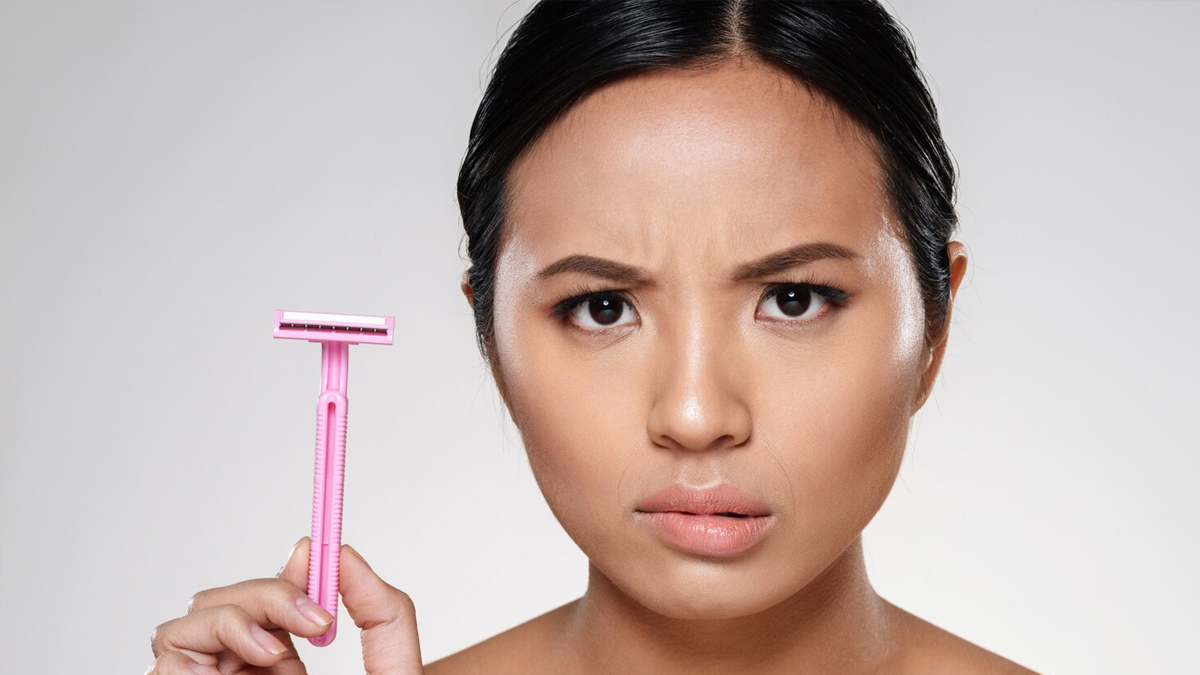
Facial razors and dermaplaning tools are surging in popularity among women, and with them, concerns about hair regrowth have resurfaced on social media. Addressing one of the most frequently asked questions, Dr Praveen explains that a facial razor does not make facial hair grow thicker or coarser.
Nonetheless, there is a clear reason why many people believe this to be true. According to Dr Praveen, “The razor cuts the hair at the skin’s surface. This leaves a blunt edge on the hair. As the hair grows back, this blunt tip feels stiffer and looks darker than hair that has not been shaved and tapers naturally. This change in perceived texture makes the hair look thicker.”
 2 - 2026-02-04T180006.231
She further underlines that the hair’s actual structure, colour, and growth rate remain unchanged. The hair follicle, located deep beneath the skin, determines thickness and growth. Since a razor never touches the follicle, it is biologically impossible for shaving to affect the thickness or rate of growth.
ALSO READ- How To Detect A Spiked Drink and The Risks of Date Rape Drug Use, Experts Reveal
What Factors Actually Affect Facial Hair Growth?
Dr Praveen shares that facial hair growth is determined by a variety of factors, such as genetics, hormones, and age.
“When there is a change in hormones, especially a rise in androgens, facial hair can become thicker or more visible. This often occurs during puberty, pregnancy, or in those living with Polycystic Ovary Syndrome (PCOS). When people start shaving around the time these hormonal shifts occur, the razor is often unfairly blamed for the change in hair texture,” she adds.
 1 - 2026-02-04T180009.321
Is Facial Shaving Safe for Women?
Absolutely, facial shaving is highly effective when performed correctly. In a clinical setting, this is often referred to as dermaplaning, a dermatological practice that removes fine vellus hair (peach fuzz) and dead skin cells.
Speaking on the benefits, Dr Praveen mentions that facial shaving makes the skin feel significantly smoother and helps improve the absorption of skincare products. “Even makeup sits more evenly on the skin after shaving. However, you must follow the proper technique; otherwise, it can cause irritation, nicks, or ingrown hairs. It can be especially aggravating for acne-prone skin,” she notes.
ALSO READ- 7 Signs of a Drug Overdose: What Happens to the Body and Why Every Second Counts
However, to avoid unwanted harm to your skin, it is best to follow these safe practices:
- Wash your face first with cool water using a gentle face wash.
- Always begin with a clean, sharp, and fresh razor.
- Apply gentle strokes in the direction of hair growth (with the grain). This helps keep your skin safe and free from irritation.
- After shaving, apply aloe vera ice cubes or a high-quality moisturiser.
“ Moisturising immediately after shaving helps keep the skin barrier strong and prevents dryness. People with active acne, eczema, or rosacea should consult a dermatologist before trying facial shaving,” Dr Praveen advises.
When to Be Cautious
If your facial hair suddenly becomes thicker or begins to grow in new areas, it is important to take note. As Dr Praveen explains, this is likely due to an underlying medical issue or hormonal imbalance rather than your razor. In such cases, it is best to see a specialist to understand the root cause.
Bottomline
Whether for men or women, shaving facial hair is a safe and normal practice. According to Dr Praveen, shaving changes the feel of the hair, not the biology of the hair. Facial razors are effective tools when used correctly, and understanding the science helps separate fact from myth.
FAQ
Does shaving facial hair make it grow back thicker?
No, this is a myth. Shaving only cuts the hair at the skin’s surface and does not touch the follicle, so it cannot change the actual thickness, colour, or biology of your hair.Why does facial hair feel thicker after shaving?
When you shave, the razor leaves a blunt, flat edge on the hair. As it grows out, this blunt tip feels stiffer and looks darker than naturally tapered hair, creating the illusion of thickness.Can frequent shaving affect hair growth?
No, factors like genetics, age, and hormones (such as PCOS) determine how your hair grows. Frequent shaving might change how the hair feels to the touch, but it won't change the growth rate.Are there ways to make facial hair appear softer after shaving?
According to experts, applying moisturiser immediately after shaving helps keep the hair and skin barrier soft. You can also use aloe vera or a high-quality face cream to prevent dryness and stiffness.Does using a razor damage facial skin?
It is safe if done correctly, but poor technique can cause nicks, irritation, or ingrown hairs. You should always use a clean, sharp razor and shave in the direction of hair growth to protect your skin.
All possible measures have been taken to ensure accuracy, reliability, timeliness and authenticity of the information; however Onlymyhealth.com does not take any liability for the same. Using any information provided by the website is solely at the viewers’ discretion. In case of any medical exigencies/ persistent health issues, we advise you to seek a qualified medical practitioner before putting to use any advice/tips given by our team or any third party in form of answers/comments on the above mentioned website.
How we keep this article up to date:
We work with experts and keep a close eye on the latest in health and wellness. Whenever there is a new research or helpful information, we update our articles with accurate and useful advice.
-
Current Version
Feb 04, 2026 18:15 IST
Modified By : Sameeksha Sharma Feb 04, 2026 18:15 IST
Modified By : Sameeksha SharmaFeb 04, 2026 18:15 IST
Published By : Sameeksha Sharma
Reviewed By : Dr Veena Praveen