Cracked Heels in Winter: Why Regular Foot Cream May Not Be Enough

Winter brings dry air, hot showers and closed shoes. Many people then spot rough, split skin on their heels. Cracked heels look unpleasant. They can also sting, bleed and make walking hard. Most of us reach for a regular foot cream. Yet the cracks often stay, or return within days. This is not because you are doing something wrong. It is because heel skin behaves differently from the rest of the body. Here is what a skin expert says, what recent studies show and what actually helps.
Why Do Cracked Heels in Winter Not Heal With Regular Foot Cream?
Dr Karuna Malhotra, Cosmetologist, Skin Specialist and Founder, Advanced Skin Clinic, New Delhi explains that a plain cream falls short "because heel skin is far thicker and harder than skin elsewhere, and cracks are usually caused by more than dryness."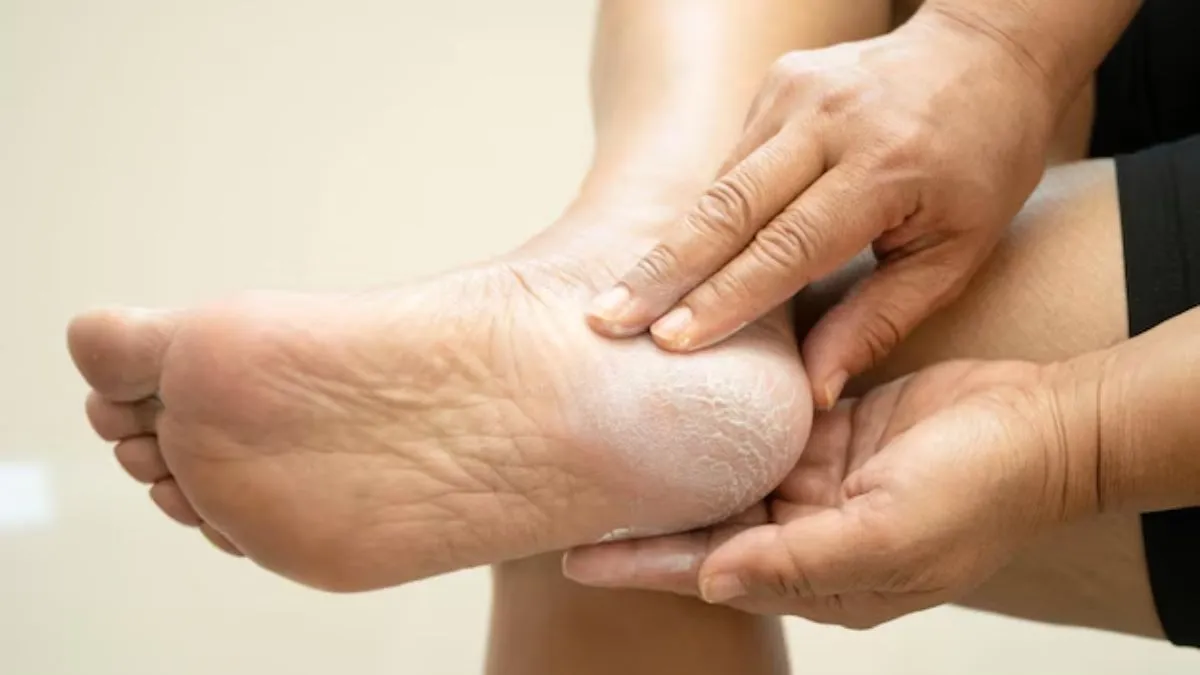
"The skin there has sweat glands but no oil glands, so it relies on outside moisture," says Dr Malhotra.
- No oil glands. Heels cannot moisturise themselves.
- A thick layer. Heels carry your weight, so the skin builds hard layers called a callus.
- Lost stretch. In cold air, stiff skin splits when you walk. These splits are called fissures.
- Deep cracks hurt. They can bleed, sting and let germs in.
Why Does Regular Foot Cream Fall Short for Cracked Heels?
Dr Malhotra says, "A plain cream adds some moisture to the surface, but it cannot soften thick dead skin or seal in water."
- Light creams are mostly water. They do not sink into hard skin.
- They cannot break down dead skin.
- They rub off, especially if you skip socks.
- Water escapes fast in winter air.
What Works Better Than Regular Foot Cream for Cracked Heels?
"You often need an exfoliating ingredient and a heavy seal," Dr Malhotra advises.
Try this three-step plan:
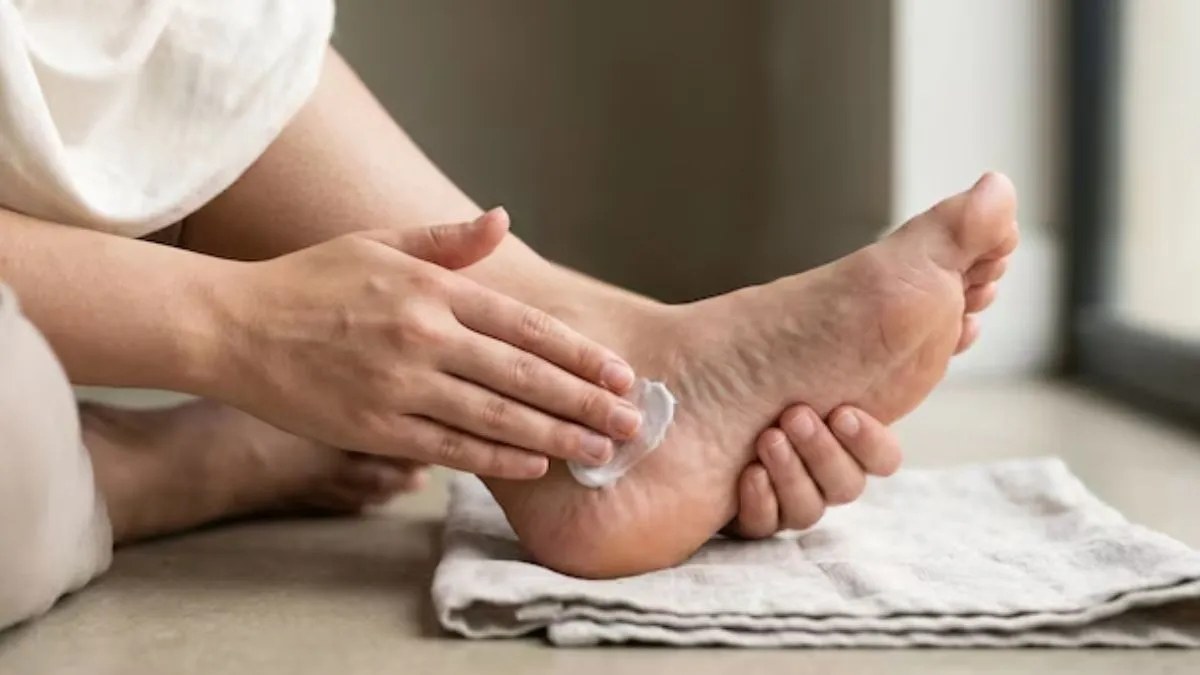
- Soften. Use a cream with 10 to 25 per cent urea, alpha hydroxy acid or salicylic acid. Apply it after a bath, on damp skin. Urea draws in water and loosens dead skin.
- Seal. At night, add plain petroleum jelly to hold water in.
- Cover. Wear cotton socks overnight.
A 2025 trial in the Journal of the American Podiatric Medical Association compared 40% urea with a newer skin repair cream. The trial included 48 patients for four weeks. The foot treated with urea 40% also improved over the four weeks. The authors called the new cream "a comparably effective treatment for pedal fissures." So strong urea works. But the study was small.
Why Do Heels Crack More in Winter?
"Cold, dry air, long hot showers and walking barefoot all strip moisture," says Dr Malhotra. Open footwear, such as sandals and chappals, adds to the problem.
What Else Can Cause Cracked Heels?
Dr Malhotra says, "If creams do not help, there may be another reason."
- Fungal infection (athlete's foot), which causes itching and peeling
- Eczema or psoriasis
- Diabetes
- An underactive thyroid
- Obesity or long hours on your feet
- Open-back shoes
What to Avoid, and How to Remove Hard Skin Safely
Dr Malhotra advises, "After a short, lukewarm soak, gently rub the callus with a pumice stone or foot file, using light strokes."
Do this a few times a week at most. Then moisturise. Avoid:
- Long, hot soaks
- Cutting hard skin with blades
- Hard scrubbing
- Lemon, vinegar or harsh home remedies
- Acids on open or bleeding cracks
- Walking barefoot
Who Needs Extra Care With Cracked Heels in Winter?
"A small crack can become a serious infection," warns Dr Malhotra. This applies to people with diabetes, nerve damage or poor circulation. Older adults and people with eczema, psoriasis or weak immunity should also take care. Check your feet daily. Do not do home foot filing if you have diabetes.
A 2022 abstract in the Journal of the American Academy of Dermatology tested a 10% urea lotion. Twenty people with type 2 diabetes treated one foot for 28 days. After 28 days, 90% of treated feet had normal or mildly dry skin, against 25% of untreated feet.
The authors also noted that "no improvement was observed on the untreated foot." The study was small and funded by the maker of the lotion.
When to See a Dermatologist?
Dr Malhotra concludes, "See a doctor if cracks are deep, painful or do not improve."
Also go if you notice:
- Redness, swelling, warmth, pus or fever
- Scaling that spreads or itches
- No change after two to four weeks of proper care
- Any foot problem alongside diabetes
ALSO READ- Can You Get Tanned In Winter? Here's Why Cold Weather Does Not Protect Your Skin
Conclusion
Heel skin is thick and has no oil glands. So a plain foot cream often cannot soften it or hold in water. Winter air makes this worse. A better plan is simple. Use a cream with urea or salicylic acid after bathing.
Seal it in with petroleum jelly and cotton socks at night. Skip hot soaks, blades and barefoot walking. Be patient, as results take a couple of weeks. If cracks are deep, painful or not improving, see a doctor. People with diabetes should check their feet daily and seek help early.
FAQ
1. Does drinking more water heal cracked heels?
Water helps your general health. But there is no strong proof that it heals thick heel skin. Topical care, with a softening cream and a heavy seal, matters more.
All possible measures have been taken to ensure accuracy, reliability, timeliness and authenticity of the information; however Onlymyhealth.com does not take any liability for the same. Using any information provided by the website is solely at the viewers’ discretion. In case of any medical exigencies/ persistent health issues, we advise you to seek a qualified medical practitioner before putting to use any advice/tips given by our team or any third party in form of answers/comments on the above mentioned website.
How we keep this article up to date:
We work with experts and keep a close eye on the latest in health and wellness. Whenever there is a new research or helpful information, we update our articles with accurate and useful advice.
-
Current Version
Nov 27, 2026 18:19 IST
Published By : Vivek Kumar
Reviewed By : Dr Karuna Malhotra