
When it comes to diagnosis of heart related issues, getting the right imaging test done is extremely crucial. Both MRI (Magnetic resonance imaging) and CT (Computed Tomography) scans are recommended by medical professionals as they provide us with important information about your heart health. However, they are different in many ways. This article will not only tap into the differences between MRI and CT scan, but will also dive deeper into their risks and benefits.
To get a better understanding of this, we reached out to our experts, Dr Sanjay Bhat, Senior Consultant - Interventional Cardiology, Aster CMI Hospital, Bangalore and Dr VP Sharma, Director and Senior Consultant Cardiology, Fortis Hospital Jalandhar, Punjab.
CT Scan Vs MRI: Which Is Better?
“Cardiac CT scan and Cardiac MRI are two advanced imaging tests used to look at the heart, but they work in different ways and are used for different purposes,” shares Dr Bhat. Which one is better though? Shedding light on this, he says, “One is not always better than the other, and the choice depends on the patient’s condition. A Cardiac CT scan uses X-rays to create detailed pictures of the heart and blood vessels. It is fast and very useful to check for blockages or narrowing in the coronary arteries. Doctors often use it to detect calcium deposits and assess the risk of heart disease. It is also helpful in emergency situations because it takes only a few minutes.”
 ct scan vs mri 1
The expert adds, “A Cardiac MRI uses strong magnets and radio waves to create detailed images of the heart. It does not use radiation, which makes it safer for repeated use. Cardiac MRI is better for looking at the heart muscles, structure, and function. It helps diagnose conditions like heart muscle damage, inflammation, scarring, and certain types of heart failure. In simple terms, Cardiac CT is best for checking blood vessels and blockages, while Cardiac MRI is better for understanding the heart muscle and its function.”
ALSO READ - How Many CT Scans Are Safe? Expert Explains The Risks And Benefits
What Are MRIs Used For?
Speaking about the use of MRI, Dr Sharma says, “It is best used for conditions like cardiomyopathy, myocarditis, checking heart muscle viability before revascularisation, and complex congenital heart diseases. However, it takes longer, may not be suitable for some patients with implanted devices, and can be uncomfortable for some people.”
The expert adds, “Cardiac MRI uses no radiation and excels at detailed assessment of heart muscle, chambers, valves, blood flow and tissue characterisation (inflammation, fibrosis, viability), with very high spatial resolution and reproducible measurements of function.”
According to the Cleveland Clinic, MRIs are used for the following:
- Tissue
- Nerves
- Organs
- Spine and spinal cord
- Blood vessels
- Lymph nodes
- Brain
- Joints
 ct scan vs mri 2
What Are CT Scans Used For?
Explaining the use of CT scan, Dr Sharma says, “Cardiac CT angiography is usually preferred when we need a fast and non‑invasive look at the coronary arteries to rule out significant blockages. It uses X‑rays and iodinated contrast, where radiation exposure and kidney function are considered, and image quality is best with a slow, regular heart rate. However, heavy calcium or stents can limit the accuracy of the result.”
As per the Cleveland Clinic, CT scans are used to look at the following:
- Bones
- Stones
- Blood
- Organs
- Lungs
- Cancer stages
- Abdominal emergencies
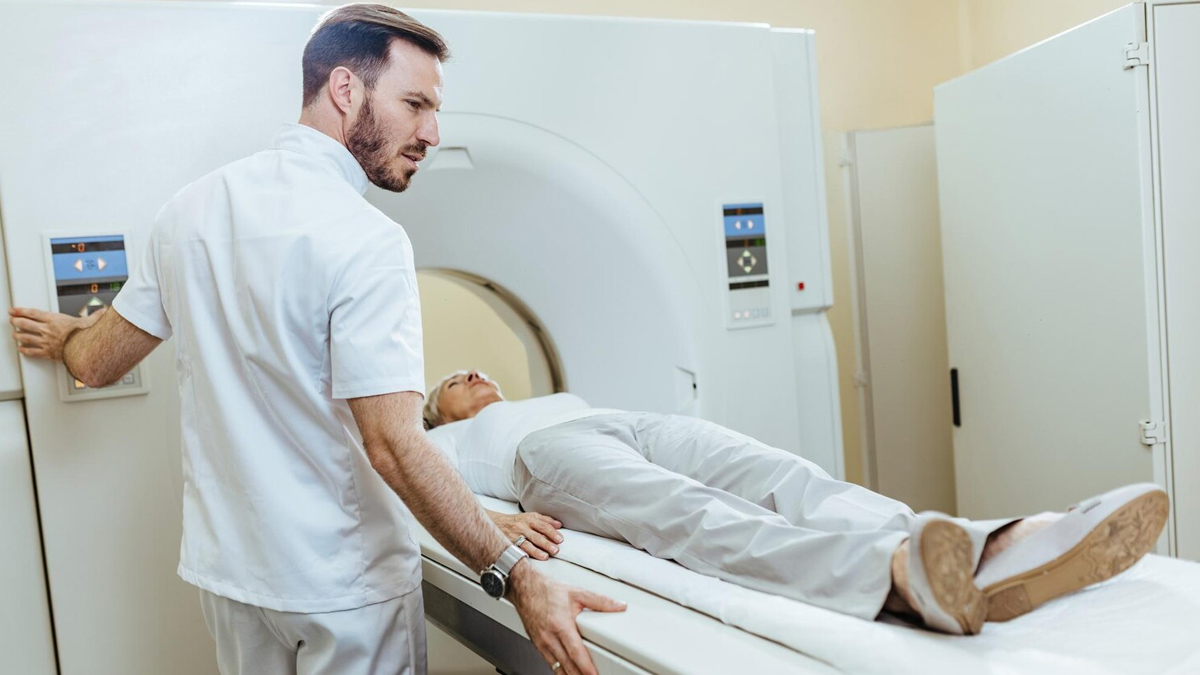
Are CT scans risky?A 2025 study, published in JAMA Internal Medicine journal, studied whether future cancers could result from radiation exposure from annual computed tomography (CT) examinations. The findings took note of 93 million CT examinations, which were performed in 62 million patients in 2023. It is projected to result in approximately 1,03,000 future cancers. The findings noted that if current radiation dosing and utilisation practices continue, CT-associated cancers may eventually account for 5% of all new cancer diagnoses annually.
 ct scan vs mri 3
How To Choose Between CT Scan And MRI?
If you are wondering how to make the right choice, Dr Bhat lists down some points to help:
- Each test has its advantages and limits. CT scans are quick but involve radiation exposure, while MRI scans take longer and may not be suitable for people with certain metal implants or severe claustrophobia.
- Doctors decide which test is needed based on symptoms, medical history, and what they want to find.
- Sometimes, both tests may be used for a complete evaluation.
“In practice, we often start with CT when coronary anatomy is the main concern and use MRI when muscle disease, function or scarring are the key questions,” says Dr Sharma.
 ct scan vs mri 4
MRI Vs CT Scan Comparison:
Feature |
MRI (Magnetic Resonance Imaging) |
CT Scan (Computed Tomography) |
Process |
Uses powerful magnets and radio waves to change the magnetic spin of hydrogen atoms in the body. This creates highly detailed images of soft tissues. |
Uses a motorised X-ray source that rotates around the body. This involves taking multiple pictures to create cross-sectional ‘slices’ of bones, blood vessels, and soft tissues. |
Duration |
Takes around 30 to 60 minutes, and sometimes up to 2 hours (depending on the scan). |
The entire process generally takes 5 to 10 minutes, with the actual scanning lasting only seconds. |
Risks |
This has no radiation exposure. But due to the presence of strong magnets, it cannot be used on patients with certain metal implants (pacemakers, clips). It can also cause claustrophobia and rare allergic reactions to contrast dye (gadolinium). |
This involves exposure to ionising radiation. It may lead to slight increase in lifetime cancer risk with repeated scans, as well as potential allergic reaction to iodine-based contrast dye. |
Benefits |
Provides incredibly detailed images of soft tissues, ligaments, and the nervous system. Completely radiation-free. |
Exceptionally fast (important in emergencies), less sensitive to patient movement, provides excellent detail of bone structures, and is safe for patients with medical implants. |
Used For |
Diagnosing issues in the brain, spinal cord, nerves, muscles, ligaments, tendons, and detecting soft tissue tumors or anomalies. |
Detecting bone fractures, joint problems, internal bleeding, blood clots, monitoring cancer progression, and quick emergency assessments. |
Conclusion
Both Cardiac CT and Cardiac MRI are valuable tools, and the “better” option depends on the specific heart problem being investigated. To summarise, Cardiac CT is best for checking blood vessels and blockages, while Cardiac MRI is better for understanding the heart muscle and its function.
ALSO READ - Eye Scans Can Reveal Heart Disease Risk and Ageing Speed, Claims Study — But What Does an Expert Say?
FAQ
Which is better – CT scan or MRI?
Neither a CT scan nor an MRI is universally ‘better’; the choice depends on the clinical need.What does an MRI scan show that a CT scan does not?
CT scans are not as effective as MRIs at exposing subtle differences between types of soft tissues.What are the disadvantages of a CT scan?
The main disadvantage of CT scans include exposing patients to ionising radiation.Is MRI or CT scan more expensive?
MRI scans are generally more expensive than CT scans.
All possible measures have been taken to ensure accuracy, reliability, timeliness and authenticity of the information; however Onlymyhealth.com does not take any liability for the same. Using any information provided by the website is solely at the viewers’ discretion. In case of any medical exigencies/ persistent health issues, we advise you to seek a qualified medical practitioner before putting to use any advice/tips given by our team or any third party in form of answers/comments on the above mentioned website.
How we keep this article up to date:
We work with experts and keep a close eye on the latest in health and wellness. Whenever there is a new research or helpful information, we update our articles with accurate and useful advice.
-
Current Version
Apr 03, 2026 21:33 IST
Modified By : Shruti Das Apr 03, 2026 21:33 IST
Modified By : Shruti DasApr 03, 2026 21:33 IST
Published By : Shruti Das
Reviewed By : Dr Sanjay Bhat