
Most of us are either scrolling through social media while eating, or watching online content like podcasts on our phones during meals. While this may seem like a harmless habit, let us tell you that screen time while eating can harm your gut health. If you are wondering how, then this article will explain it to you.
Let us take a look at what our experts, Ms Chitra BK, Chief of Dietetics, KIMS Hospitals, Electronic City, Bengaluru, and Ms Aditi Prasad Apte, Senior Clinical Nutritionist, Aster RV Hospital, Bangalore, have to say about this.
Can Screen Time During Meals Affect Gut Health?
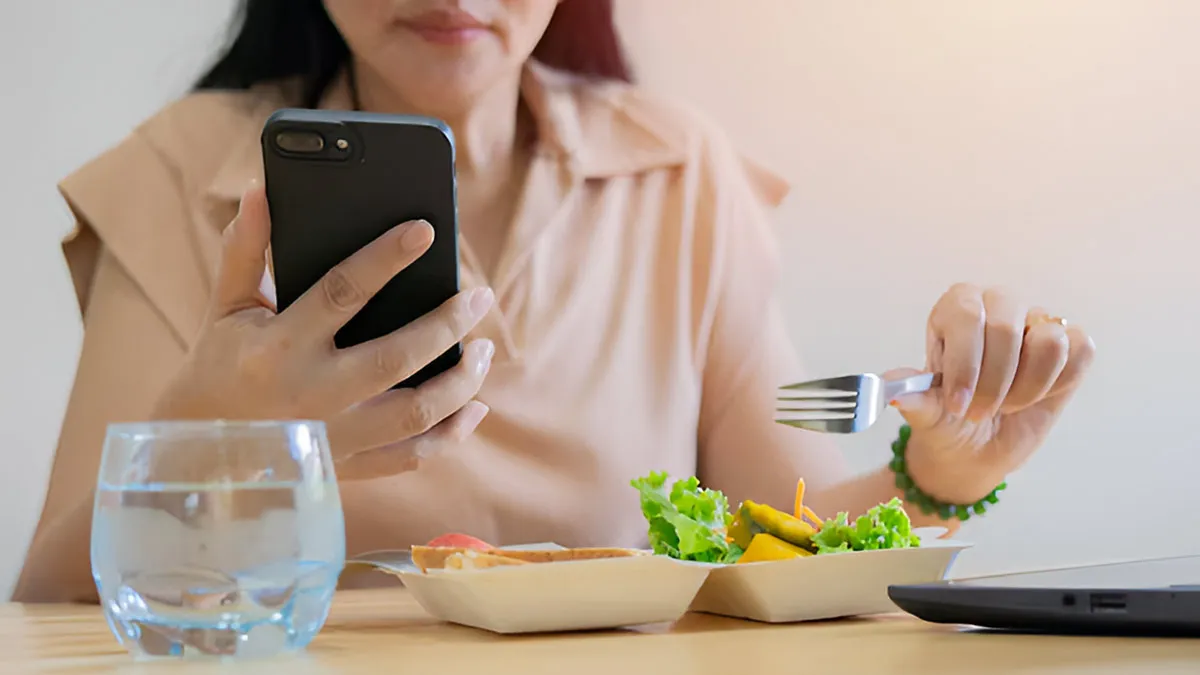
Let us straightaway get to the main point: does the habit of scrolling through phone or watching online content during meals harm your gut health? Answering this, Ms Chitra says, “Using screens while dining may lead to distracted eating habits and affect some aspects that are connected with digestion and the eating process.”
The expert further explains, “When we are looking at our phones or watching television, we may eat our food quickly, chew our food poorly and may not notice signs that we are full; that may lead us to overeating, feeling bloated and heavy after eating. Watching a screen does not directly harm our intestinal tract, but eating habits that relate to our screen usage may affect our digestive tract. It is better to avoid using any screens while eating; eat slowly, chew food properly and pay attention to the cues of hunger and fullness. Being more mindful while having meals might help in eating less and improving eating habits.”
 screen time gut 1
A 2024 study, published in the journal Life, explored another aspect of how screen time can affect gut health. It explored how our daily screen time and sitting habits may impact the microscopic bacteria in our digestive system.
The researchers found out that spending excessive hours in front of screens can significantly minimise the healthy diversity of a person's gut microbiome. When this heavy screen time takes place during meals, the side effects on gut health become even more pronounced. This is because distracted eating can severely harm your natural digestion.
The findings further adds that staring at phones or televisions while eating can make us ignore essential fullness cues. This can often cause overeating and further upset the gut's delicate microbial balance. To conclude, the findings suggest that stepping away from our screens, particularly when eating, is a crucial step towards maintaining a healthy gut.
How Screen Time Affects Eating Behaviours and Gut Health
Ms Apte shares that watching videos, scrolling social media or working on a phone during meals may seem harmless, but it can change how consciously and quickly we eat. She explains, “The concern is less about the screen itself directly damaging the gut and more about the eating behaviours that can accompany prolonged screen use.” On this note, the expert shares in detail the factors related to screen time that impacts one’s eating behaviours, and subsequently, their gut health:
Distraction
When people are distracted during meals, they may pay less attention to hunger and fullness signals. This can make it easier to eat beyond satiety or continue eating simply because the content is engaging. Screen-based eating can also encourage faster or more automatic eating, with less awareness of chewing and portion sizes.
 screen time gut 2
Meal Timing and Food Choice
Another issue is meal timing and food choice. Someone absorbed in a programme or work may eat at irregular times, skip a balanced meal and later snack on highly processed foods. Over time, an eating pattern low in fibre and high in refined carbohydrates, sugar and ultra-processed foods can be less supportive of a healthy gut environment.
Behavioural Connection
There is also a behavioural connection with digestion. Eating in a relaxed environment may help people focus on their meal and recognise discomfort or fullness earlier.
Tips To Practice Mindful Eating Without Screen Time
On this note, Ms Apte shares some tips to protect your gut health and lessen screen time:
- A simple approach is to make at least one meal a day screen-free.
- Sit down, eat slowly, and chew thoroughly.
- Pay attention to hunger and fullness.
- Keep phones away from the dining table where possible.
- Avoid eating directly from packets while watching something.
“For people experiencing persistent bloating, acidity, abdominal pain, diarrhoea or constipation, changing screen habits alone is not enough; the underlying cause should be evaluated,” concludes Ms Apte.
 screen skin 3
Adding to this, the aforementioned study states that practicing mindful eating is a powerful, straightforward way to counter the side effects of too much screen time on gut health. It shares the following tips in this regard:
- It adds that you can start by officially designating your dining area as a completely screen-free zone to remove all digital distractions.
- Before you take your very first bite, take a few deep breaths to calm your nervous system. This can help you prepare your stomach for digestion.
- Try to pay close attention to your food by noticing the vibrant colors, rich aromas, and unique textures on your plate.
- Make a conscious effort to chew every single bite slowly and thoroughly. This can help you physically break down the food and make it much easier for your gut to process. Putting your fork or spoon down between bites is also a great strategy to prevent mindless eating.
- It is important to tune into your body's internal physical hunger and fullness signals, instead of just eating until your plate is completely empty.
- Expressing gratitude for your meal can also help shift your mind into a more relaxed, digestion-friendly state.
- You can further stay mentally engaged by attempting to identify the different subtle ingredients and spices used in your dish.
The study concludes that you can deeply enjoy your food and support your long-term gut health by fully focusing on the simple act of eating without the presence of screens.
ALSO READ- Feeling Foggy After Scrolling For Hours? Expert Tips To Deal With Digital Overload
Conclusion
Screen time during meals does not directly attack the digestive tract. However, the distracted eating habits can severely hamper natural digestion and harm your gut's delicate microbiome. You can deal with this by intentionally stepping away from digital devices during meals and practicing mindful eating. By following this, you can easily reconnect with your body's natural fullness cues and create a healthier digestive environment. However, if you are consistently experiencing uncomfortable symptoms such as severe bloating, acidity, or abdominal pain, it is important to consult a healthcare professional to rule out any underlying health conditions.
FAQ
How does screen time affect eating?
Screen time causes mindless eating and disrupts natural hunger cues, which often leads to overeating and poorer food choices.What is mindful eating?
Mindful eating is an approach to food that focuses on being fully present and engaged while you eat.
All possible measures have been taken to ensure accuracy, reliability, timeliness and authenticity of the information; however Onlymyhealth.com does not take any liability for the same. Using any information provided by the website is solely at the viewers’ discretion. In case of any medical exigencies/ persistent health issues, we advise you to seek a qualified medical practitioner before putting to use any advice/tips given by our team or any third party in form of answers/comments on the above mentioned website.
How we keep this article up to date:
We work with experts and keep a close eye on the latest in health and wellness. Whenever there is a new research or helpful information, we update our articles with accurate and useful advice.
-
Current Version
Sep 30, 2026 18:47 IST
Published By : Shruti Das
Reviewed By : Ms Chitra B K