-1790771733812_m.webp)
We know that food and exercise are interrelated. However, when it comes to “what to eat,” the question isn't always on the plate. The time of day you eat can also impact how you feel while and after exercising. The needs of a person taking a short walk, compared to one engaging in strength training or a long run exercise are going to be very different.
So, is it best to eat before or after workouts? Both of them can be advantageous but they serve different functions. Eating before exercise is primarily to get fuel into the body, and eating afterwards to help recovery. It will vary depending on the workout, how long since the last meal and fitness objective.
The Role Of Pre-Workout Nutrition In Maximising Energy Output
Veena V, Chief Clinical Dietician and Head of Department, Clinical Nutrition and Dietetics at Aster Whitefield, Bangalore explains, “Both matter, but they serve different purposes. Eating before a workout is mainly about fuelling performance, while eating after is about recovery.”
A pre-workout snack may be beneficial for long, strenuous or delayed exercise, for example after a few hours without food. A small dose of carbohydrate (snack) 30-60 minutes before exercise can help to make energy easily accessible.

It can also:
- Minimise risk of fatigue.
- Help prevent dizziness in some people.
- Support exercise performance.
- Allow for longer sessions to be completed.
- A banana, toast or fruit or a little bowl of Oats will be suitable.
- But extra food isn't always a good thing. Food can be heavy when eaten near the workout and lead to bloating and upset stomach.
A 2024 Frontiers in Nutrition review analysed nutrient demands for athletic performance and recovery. The results indicate that consuming carbohydrate before physical activity is effective in sustaining energy levels during intense physical activity. Post-exercise protein boosts muscle repair and reconstruction. Timing meals to exercise can help with short-term performance but daily food intake is more important for overall fitness gains.
How Post-Workout Meals Support Muscle Repair
After exercise, the body shifts towards recovery. “Eating after a workout supports muscle recovery and repair, particularly when protein is included within a reasonable window after training,” says Veena V.
Post-workout nutrition can help:
- Provide protein for muscle repair.
- Replenish glycogen after demanding exercise.
- Support recovery after strength training.
- Manage hunger later in the day.
- A practical post-workout meal could include eggs and toast, yoghurt with fruit, dal and rice, paneer with roti or chicken with rice.
Eating Before Vs After Workout: What Changes Based On Your Goal?
Eating Before Workout |
Eating After Workout |
Mainly supports energy and performance |
Mainly supports muscle recovery |
Useful before long or intense workouts |
More important after demanding strength or endurance sessions |
Carbohydrates can provide quick fuel |
Protein supports muscle repair |
Helps prevent fatigue during longer sessions |
Carbohydrates help with glycogen replenishment |
Example: banana, toast or oats |
Example: eggs with toast, yoghurt with fruit or dal with rice |
There is no single answer for everyone.
For Strength Training
If your goal is muscle growth, protein becomes especially important.
Veena V recommends including protein after strength training within a reasonable period to support muscle repair and adaptation.
You should also consider your total protein intake across the day rather than focusing only on one shake or meal.

For Running And Cycling
Both pre- and post-workout nutrition can matter more during prolonged endurance exercise.
Carbohydrates before exercise provide fuel. After exercise, carbohydrates support glycogen replenishment after exercise.
This becomes particularly important when another demanding session is planned soon.
For Walking Or Yoga
Short, low-intensity workouts usually do not require a dedicated pre-workout meal.
If you have eaten regular meals, you may be able to exercise comfortably without an additional snack.
Veena V says that for shorter, lower-intensity workouts, “pre-workout eating is less critical”.
What About Early Morning Workouts On An Empty Stomach?
Fast exercise is not automatically harmful. Veena adds, “Some people feel perfectly comfortable exercising before breakfast. Others experience weakness, dizziness or reduced performance. The difference often comes down to workout intensity and individual tolerance.”
- If you are doing a light walk or short yoga session, you may not need food beforehand.
- But high-intensity or prolonged training after an overnight fast can be harder for some people.
- So, there is no need to force yourself to train fasted if your body performs better with some food.
Common Pitfalls Of Fasting Before Or After Intense Exercise
Training on an empty stomach is not necessarily better for fat loss or fitness. Similarly, avoiding food after exercise can leave some people excessively hungry later.
Veena V recommends adjusting the amount and timing of food according to how the body responds. Common mistakes include:
- Starting a hard workout after many hours without food despite feeling weak.
- Eating a heavy meal immediately before exercise.
- Ignoring protein after regular strength sessions.
- Focusing on supplements while neglecting regular meals.
- Forgetting hydration.
The aim is not to eat more simply because you exercised. It is to provide the nutrients your body actually needs.
Optimising Your Meal Schedule Based On Workout Intensity
A simple approach works for most people.
- Before exercise: If exercising on an empty stomach or without eating for a while, eat a small snack of carbohydrates 30-60 minutes before exercise.
- Post exercise: Eat a well-balanced meal of protein and carbohydrates within a reasonable period of time, especially after strenuous training sessions.
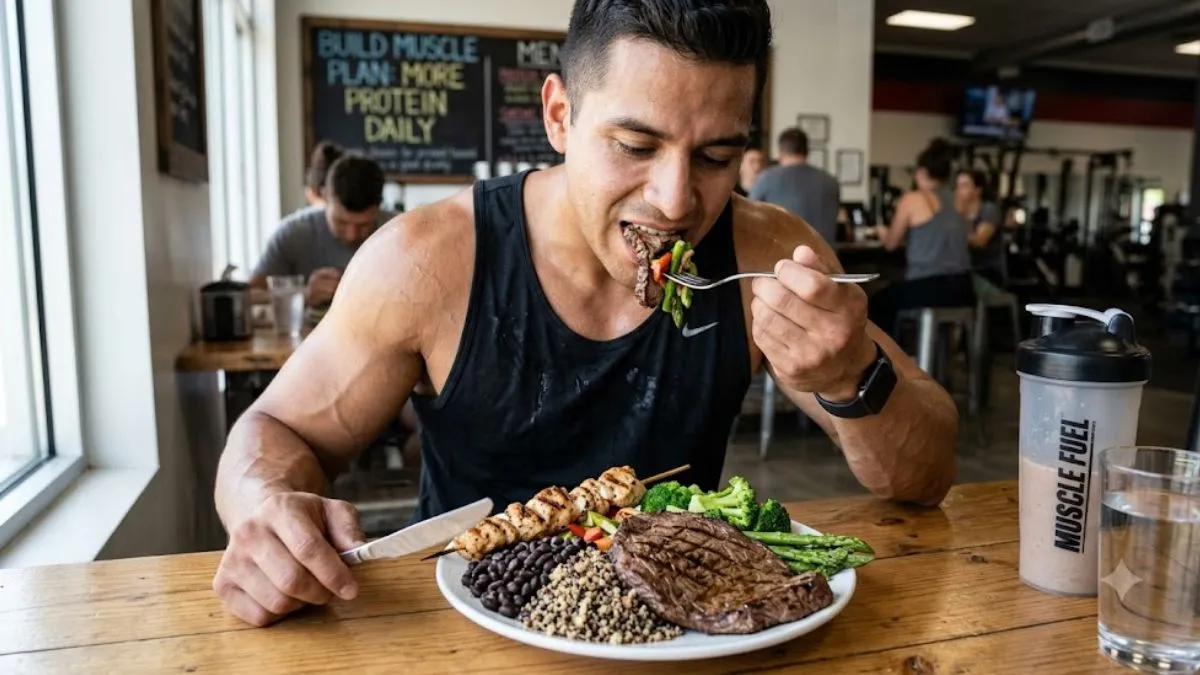
For shorter workouts: Your normal meals may be enough. “More helpful than a firm rule is adjusting portion size and timing based upon how the body reacts,” says Veena V.
Studies also indicate that ideally there is no best time of day to exercise. The 2023 systematic review revealed insufficient evidence on whether exercising at a specific time consistently leads to greater health and performance benefits.
ALSO READ- 7 Benefits Of Eating A Banana Every Day For Better Health And Fitness
Conclusion
There is no one right or wrong answer to the eating before and after workout controversy. Eating before work-outs can help give your body the fuel it needs for high-intensity training and eating after you exercise can help your body recover. A balanced diet, adequate protein and carbohydrates, hydration and consistency are the greater issues for most.
You don't have to worry about fixing the time to eat. Align your meal times with your training times, your appetite and your desired fitness objective.
FAQ
Can I consume a full meal prior to exercise?
Yes, but allow adequate time to absorb it. A big meal just before strenuous activity can lead to discomfort. A smaller snack is likely to be more tolerable if you have just 30-60 minutes to eat.Should you not eat after exercise?
Not necessarily. If you have consumed an adequate amount of food throughout the day and another meal is going to be available shortly, you don't have to eat right away. Failing to adequately fuel the body after workouts, however, can make recovery and nutrition difficult.
All possible measures have been taken to ensure accuracy, reliability, timeliness and authenticity of the information; however Onlymyhealth.com does not take any liability for the same. Using any information provided by the website is solely at the viewers’ discretion. In case of any medical exigencies/ persistent health issues, we advise you to seek a qualified medical practitioner before putting to use any advice/tips given by our team or any third party in form of answers/comments on the above mentioned website.
How we keep this article up to date:
We work with experts and keep a close eye on the latest in health and wellness. Whenever there is a new research or helpful information, we update our articles with accurate and useful advice.
-
Current Version
Sep 30, 2026 18:19 IST
Published By : Vivek Kumar
Reviewed By : Ms Veena V