
Getting piles treated can bring a lot of relief. The bleeding stops, bowel movements become easier, and the discomfort finally settles. So when the same symptoms appear again months later, the first question is often: How did the piles come back?
The answer is not always that the earlier treatment failed. Dr Neeraj Dhamija and Dr Ashwin Porwal explain that recurrence can have several reasons. Constipation, straining, and toilet habits can continue to put pressure on the area even after treatment. In some cases, the symptoms may also be from another anorectal condition and not piles at all.
Why Do Piles Return After Treatment?
Piles, also called haemorrhoids, can return even after treatment. Dr Neeraj Dhamija, Senior Consultant – Laparoscopic, Laser & General Surgery, Sir Ganga Ram Hospital, Delhi, says, “Treatment removes or shrinks the piles themselves, but if the root cause is still active, whether that's chronic constipation, prolonged straining, or an untreated contributing condition, recurrence is genuinely common.”
Dr Ashwin Porwal, Founder & Colorectal Surgeon, Healing Hands Clinic, Pune, explains: It has been reported that recurrence after haemorrhoid treatment can vary considerably. He cites an Advances in Therapy systematic review that found recurrence rates varied widely between studies, from 0% to 56.5%, although most studies reported recurrence rates of 20% or less. The review also found that factors linked with recurrence were similar to those linked with haemorrhoids in general, including constipation and sedentary behaviour.
5 Possible Reasons for Piles Returning
Here are five possible reasons according to Dr Porwal and Dr Dhamija.
1. The Original Cause Was Never Fully Addressed
Treating piles does not automatically fix the bowel habits that contributed to them. For example, someone may have chronic constipation and regularly strain to pass hard stools. A procedure can treat the swollen tissue, but if constipation continues afterwards, the same pressure can build again.
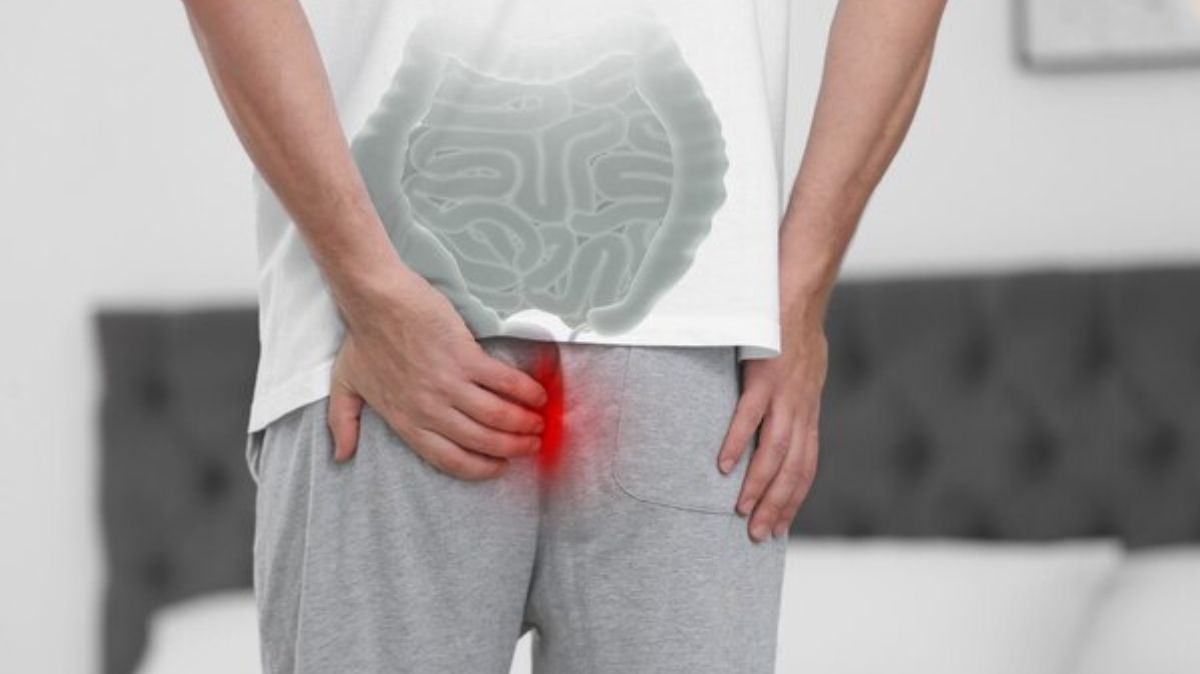
Dr Dhamija explains that “the underlying habits or conditions that caused the piles in the first place were never actually addressed” can be a reason symptoms return.
A 2022 systematic review from PubMed found that functional constipation was significantly more common among people with haemorrhoids than controls. The researchers also found evidence of higher anal pressures and said that treating constipation, particularly problems with pelvic floor coordination, may help improve long-term outcomes.
ALSO READ- Chronic Constipation: Causes, Warning Signs, Diagnosis, and Treatment
2. Old Toilet Habits May Have Returned
Many people change their routine when they are being treated. They drink more water, eat more fibre and spend less time on the toilet.
Once the symptoms disappear, those changes can slowly disappear too. Dr Porwal points to constipation, repeated straining, low fibre intake, inadequate fluid intake and holding back the urge to pass stool as habits that can interfere with normal bowel movements.
Another habit worth looking at is how long you sit on the toilet. Taking a phone into the bathroom and staying there for several minutes may seem harmless. But prolonged toilet sitting can increase pressure around the anal area.
A 2025 Frontiers in Surgery study involving 580 people found that constipation and sitting on the toilet for more than 20 minutes were more common among people with anorectal diseases than healthy controls. The study showed an association, not proof that prolonged sitting directly causes piles.
3. Some Affected Tissue May Still Be Present
A person may assume that treatment has removed every affected area. That is not necessarily how every treatment works. Depending on the procedure and the number or size of haemorrhoids, treatment may sometimes need to be done in stages. Some tissue may remain and later cause symptoms.
Dr Dhamija points out that this “isn't necessarily an error”, as some cases genuinely require staged treatment.
So, if symptoms return relatively soon after treatment, it is worth having the area examined instead of automatically assuming that a completely new pile has developed.
4. Other Factors May Still Be Putting Pressure On The Area
Sometimes the bowel habit itself is not the only issue. Dr Dhamija says factors such as chronic coughing, obesity, pregnancy, heavy lifting and prolonged sitting can continue to increase pressure around the rectal area.
If one of these factors remains, treating the piles alone may not remove everything contributing to the problem. This is also why recurrence can require a different conversation with a doctor. The question is not simply, “Which treatment should I have again?” It may be, “What is still causing the pressure or straining?”
5. The New Symptoms May Not Be Piles
This is an important point that is easy to miss. If someone has had piles before, it is tempting to assume that every episode of bleeding, pain or swelling is another flare-up.
But other anorectal conditions can cause similar symptoms. Dr Porwal says, “The new symptoms may not actually be piles.” He adds that “bleeding, pain, swelling, or discomfort around the anus can occur with several anorectal conditions.”
That means repeatedly treating yourself for piles without getting a new episode checked may delay the correct diagnosis.
Can Piles Be Prevented From Coming Back?
There is no single way to guarantee that piles will never return. But bowel habits are an important part of long-term management.
Another 2022 Frontiers in Surgery study involving 1,162 people who underwent surgery for haemorrhoids found that patients with more severe defecation disorders had much higher recurrence rates during 12 months of follow-up. Recurrence occurred in 5.51% of those with mild defecation disorders, compared with 38.46% in the moderate group and 60% in the group with obstructive defecation syndrome.
The study does not mean that every person with poor bowel habits will develop recurrent piles. But it highlights why bowel function deserves attention after treatment.
Long-term habits to discuss with a doctor include:
- Getting enough fibre in the diet.
- Drinking adequate fluids.
- Avoiding repeated straining.
- Not sitting on the toilet for longer than necessary.
- Treating constipation rather than repeatedly ignoring it.
- Getting persistent straining assessed, including possible pelvic floor problems.
- Maintaining a healthy level of physical activity.
Does Recurrence Mean The First Treatment Failed?
Not necessarily. Dr Porwal says, “Not every recurrence calls for another procedure.”
- Sometimes correcting constipation and changing bowel habits may be enough to manage the symptoms. In other cases, further treatment may be needed.
- It is particularly important to see a doctor if symptoms return within weeks or a few months of treatment, keep coming back despite genuine lifestyle changes, or feel different from the previous episode.
- Bleeding should also be properly assessed, especially if its pattern has changed or it is accompanied by other symptoms.
Dr Porwal sums it up well: “If piles keep returning, the question should be, ‘What is making them return?’ Finding that answer is often the more important part of preventing the same cycle from repeating.”
ALSO READ- Piles (Haemorrhoids) Treatment by Burning Metallic Rod: The Brutal History Before Modern Surgery
Conclusion
If your piles return after treatment, it does not necessarily mean the first procedure failed. Recurrence often happens because underlying issues, such as chronic constipation, straining, or poor toilet habits, remain unaddressed.
Sometimes, new symptoms might also be caused by a different condition entirely. The best approach is to focus on long-term lifestyle changes, such as increasing fiber and fluid intake, and to see a doctor if symptoms persist. Understanding what is causing the recurrence is the most effective way to prevent the cycle from repeating.
FAQ
Can piles come back because of constipation?
Yes, constipation can contribute to recurrent symptoms because hard stools and repeated straining put additional pressure on the anal area. Managing constipation is therefore an important part of long-term care.Can bleeding after piles treatment be caused by something else?
Yes. Bleeding can have several causes, including other anorectal conditions. New, persistent or unusual bleeding should not automatically be assumed to be recurrent piles and should be evaluated by a doctor.
All possible measures have been taken to ensure accuracy, reliability, timeliness and authenticity of the information; however Onlymyhealth.com does not take any liability for the same. Using any information provided by the website is solely at the viewers’ discretion. In case of any medical exigencies/ persistent health issues, we advise you to seek a qualified medical practitioner before putting to use any advice/tips given by our team or any third party in form of answers/comments on the above mentioned website.
How we keep this article up to date:
We work with experts and keep a close eye on the latest in health and wellness. Whenever there is a new research or helpful information, we update our articles with accurate and useful advice.
-
Current Version
Sep 08, 2026 17:49 IST
Modified By : Vivek Kumar Sep 08, 2026 17:49 IST
Modified By : Vivek KumarSep 08, 2026 17:49 IST
Published By : Vivek Kumar
Reviewed By : Dr Neeraj Dhamija