
For many people, cancer is thought of as a disease that stays confined to one part of the body. However, some cancers have the ability to spread beyond where they first began. When cancer cells travel to the bones and start growing there, the condition is known as bone metastasis or secondary bone cancer.
Although this is a serious stage of cancer, it is not without hope. Advances in cancer treatment now allow many patients with bone metastasis to live longer, remain mobile, and enjoy a better quality of life than was possible even a decade ago.
What Is Bone Metastasis?
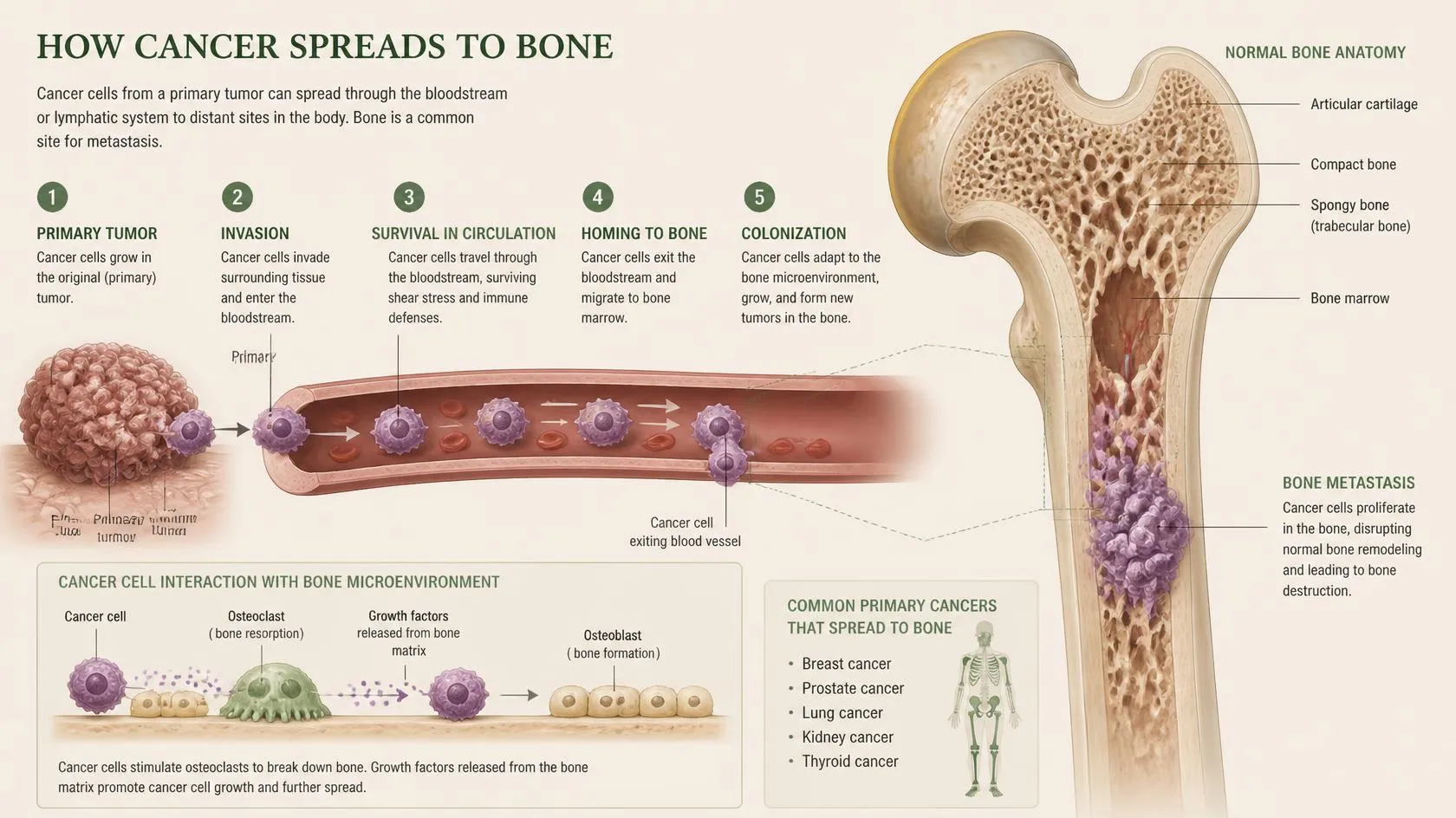
Bone metastasis occurs when cancer cells break away from the original, or primary, tumour and spread to the bones through the bloodstream or lymphatic system. These cells then settle in the bone, multiply and form new tumours, according to a review article published in the journal 'Frontiers in Oncology'.
Importantly, bone metastasis is not the same as bone cancer that starts in the bone itself. Instead, the cancer cells in the bone still belong to the original cancer. For example, if breast cancer spreads to the bones, it is still considered breast cancer and is treated accordingly.
According to Dr Mandeep Singh Malhotra, Surgical and Molecular Oncologist, Founder and Chief Mentor at Art of Healing Cancer, Gurugram, “Bone metastasis means cancer cells from another organ have travelled to the bone and started growing there. Breast, prostate, lung, kidney and thyroid cancers are among those most likely to spread to the skeleton. Breast and prostate cancers account for a large proportion of bone metastasis worldwide.”
Why Cancer Cells Spread To Bones
Scientists have been trying to answer this question for well over a century.
In 1889, English surgeon Stephen Paget introduced the famous 'Seed and Soil Theory', which remains one of the most widely accepted explanations for why certain cancers spread to specific organs.
According to this theory, cancer cells act like tiny seeds that break away from the original tumour and travel through the bloodstream. However, these seeds cannot grow just anywhere. They need the right soil, an environment that provides nutrients and conditions suitable for survival.
Bones offer exactly that environment for several cancers.
According to the US National Cancer Institute, metastasis begins when cancer cells escape from the primary tumour, enter the blood or lymphatic system and eventually establish new tumours in distant parts of the body. Whether these cells survive depends largely on the environment they reach.
 Why Cancer Cells Spread To Bones
Why Are Bones An Attractive Place For Cancer Cells?
Many people think of bones as hard, lifeless structures, but they are actually living tissues that are constantly changing.
Throughout life, specialised cells continuously remove old bone while new bone is formed. This process, known as bone remodelling, keeps the skeleton healthy and strong.
Dr Malhotra explained, "Our skeleton is not a dead part. It actually constantly renews itself. Specialised cells continuously remove old bone while another group of cells builds new bone. Cancer cells hijack the body's own repair system. They release chemical signals that overstimulate the cells responsible for breaking down bone."
As bone is broken down, naturally stored growth factors are released. Instead of helping repair the skeleton, these substances end up feeding cancer cells.
Dr Malhotra added, "As bone is destroyed, it releases naturally stored growth factors that can further nourish the cancer. Then it makes a 'vicious cycle', where bone destruction promotes tumour growth and tumour growth accelerates further bone damage."
This cycle weakens the bones, making them more vulnerable to pain, fractures and other complications.
Which Cancers Most Commonly Spread To Bone?
Although almost any cancer can spread to the skeleton, some cancers are far more likely to do so than others. The cancers most commonly linked to bone metastasis include:
- Breast cancer
- Prostate cancer
- Lung cancer
- Kidney cancer
- Thyroid cancer
Among these, breast and prostate cancers account for a large proportion of bone metastasis cases worldwide. A study published in the journal 'BMJ Open' involving 89782 patients with bone metastases showed that it is more prevalent in lung cancer, followed by liver cancer and kidney cancer. Researchers found that bone metastasis significantly increases mortality risk.
Doctors monitor patients with these cancers closely, particularly if they develop persistent bone pain or other unexplained symptoms.
Which Bones Are Usually Affected?
Bone metastasis can occur in almost any bone, but it most commonly affects areas that contain large amounts of active bone marrow. These include:
- The spine
- The pelvis
- The ribs
- The upper arms
- The thighs
- The skull in some cases
The spine is one of the most frequently affected sites because it contains abundant bone marrow and receives a rich blood supply. Cancer spreading to the spine can sometimes compress the spinal cord, making early diagnosis especially important.
Here is a table for better understanding about bone metastasis in different cancers.
| Primary Cancer Type | Chances of Bone Metastasis | Common Target Sites in the Skeleton |
| Breast Cancer | Very High | Spine, pelvis, ribs, upper arm, and thigh bones |
| Prostate Cancer | Very High | Spine, hips, pelvis, and ribs |
| Lung Cancer | High | Spine, ribs, and long bones of the limbs |
| Kidney and Thyroid Cancers | Moderate to High | Spine, skull, and pelvis |
Early Warning Signs That Shouldn't Be Ignored
Persistent bone pain is often the earliest and most common symptom of bone metastasis.
Patients with bone metastases often experience symptoms beyond ordinary body pain.
Persistent or worsening bone pain is usually the first warning sign.
Unlike pain caused by exercise or ageing, bone pain related to metastasis usually becomes progressively worse. It may be more noticeable at night, disturb sleep or fail to improve with rest or painkillers.
Other warning signs include:
- Pain that keeps returning or becomes more severe
- Swelling around a bone
- Difficulty moving a limb
- Unexplained weakness
- Fractures after a minor fall or even routine daily activities
When cancer affects the spine, symptoms may include numbness, tingling, weakness in the legs or difficulty walking.
These signs should never be ignored, particularly in someone who has previously been diagnosed with cancer.
Can Bone Metastasis Be The First Sign Of Cancer
Yes. Although many people develop bone metastasis after already being diagnosed with cancer, this is not always the case.
For some patients, persistent bone pain, an unexplained fracture or abnormal findings on imaging may be the first indication that cancer exists elsewhere in the body.
Doctors may then carry out further investigations to identify the primary tumour.
This is why ongoing bone pain should never be dismissed as simply arthritis, ageing or a pulled muscle, especially if it continues for several weeks, worsens over time or is accompanied by unexplained weight loss or fatigue.
How Is Bone Metastasis Diagnosed?
If bone metastasis is suspected, doctors use a combination of medical history, physical examination and imaging tests. Depending on the patient's symptoms, investigations may include:
- X-rays
- MRI scans
- CT scans
- Bone scans
- PET-CT scans
Blood tests may also help identify abnormal calcium levels or other signs of bone damage.
In some cases, doctors recommend a biopsy to confirm the diagnosis and identify the type of cancer involved. This helps guide cancer treatment decisions.
Early diagnosis is important because treatment can begin before complications such as fractures or spinal cord compression develop.
Talking about the management and treatment, Dr Malhotra said, "Bone metastasis is today far from a hopeless situation. Modern treatment can protect the skeleton, relieve pain and preserve mobility. One should never ignore persistent bone pain simply because one already has a diagnosis of cancer.”
Early evaluation and timely treatment can reduce the risk of fractures, spinal cord compression and other serious complications. With early diagnosis, evidence-based treatment and comprehensive supportive care, many patients continue to live longer and more comfortably.
Does Bone Metastasis Always Mean Terminal Cancer?
One of the biggest misconceptions surrounding bone metastasis is that it always means a patient is approaching the end of life.
This is not necessarily true.
While bone metastasis does indicate that the cancer has reached an advanced stage, many patients now live for several years with good symptom control thanks to improvements in cancer treatment.
Targeted medicines, newer immunotherapies, precision treatments and better supportive care have transformed the outlook for many cancers.
The prognosis depends on several factors, including the type of primary cancer, how far it has spread, how well it responds to treatment and the patient's overall health.
Rather than seeing bone metastasis as the end of treatment, doctors increasingly view it as a condition that can often be managed for extended periods.
When To See a Doctor
Anyone with cancer who develops persistent or worsening bone pain should speak to their doctor promptly. However, some symptoms require immediate medical care because they may indicate serious complications, including:
- Sudden, severe bone pain
- A fracture after a minor fall or everyday activity
- Severe back pain with weakness in the legs
- Numbness around the legs or groin
- Difficulty walking
- Loss of bladder or bowel control
Dr Malhotra warned, "As the disease progresses, bones may become so weak that they fracture after a minor fall or even routine daily activities. It can cause difficulty controlling bladder and bowel function. Such symptoms require urgent medical attention."
Final Word
Early diagnosis remains one of the most effective ways to prevent these complications. Persistent bone pain should never be ignored, particularly in people with a history of cancer. Prompt medical assessment and timely treatment can help preserve mobility, reduce pain, and allow many patients to continue living active and meaningful lives despite their diagnosis.
FAQ
How long can you live with bone metastasis?
The life expectancy of a person diagnosed with bone metastasis depends on the type of cancer. It can be from a few months to a few years.Is metastatic bone cancer painful?
Yes, this cancer is often painful. The symptoms of its spread is characterised by pain that worsens over time.
All possible measures have been taken to ensure accuracy, reliability, timeliness and authenticity of the information; however Onlymyhealth.com does not take any liability for the same. Using any information provided by the website is solely at the viewers’ discretion. In case of any medical exigencies/ persistent health issues, we advise you to seek a qualified medical practitioner before putting to use any advice/tips given by our team or any third party in form of answers/comments on the above mentioned website.

How we keep this article up to date:
We work with experts and keep a close eye on the latest in health and wellness. Whenever there is a new research or helpful information, we update our articles with accurate and useful advice.
-
Current Version
Jul 31, 2026 16:40 IST
Published By : Chanchal Sengar
Reviewed By : Dr Mandeep Singh Malhotra