
Most of us have moles we've never really thought twice about, scattered across our arms, backs, and legs without a second glance. They feel like a permanent, unremarkable part of how our skin looks. But could one of them quietly be trying to tell you something important? Skin cancer often starts small and subtle, which is exactly why so many warning signs go unnoticed for far too long. Here is what an expert wants people to know before brushing off a changing mole as nothing more than a cosmetic quirk.
Why Do Mole Changes Matter?
"Most moles are harmless and stay the same throughout life, but certain changes can signal melanoma, a serious type of skin cancer, and should never be dismissed as just cosmetic," says Dr Sachin Sekhar Biswal, Consultant, Medical Oncology at Manipal Hospitals, Bhubaneswar. Catching these changes early significantly improves treatment outcomes, which is why regular self checks matter.
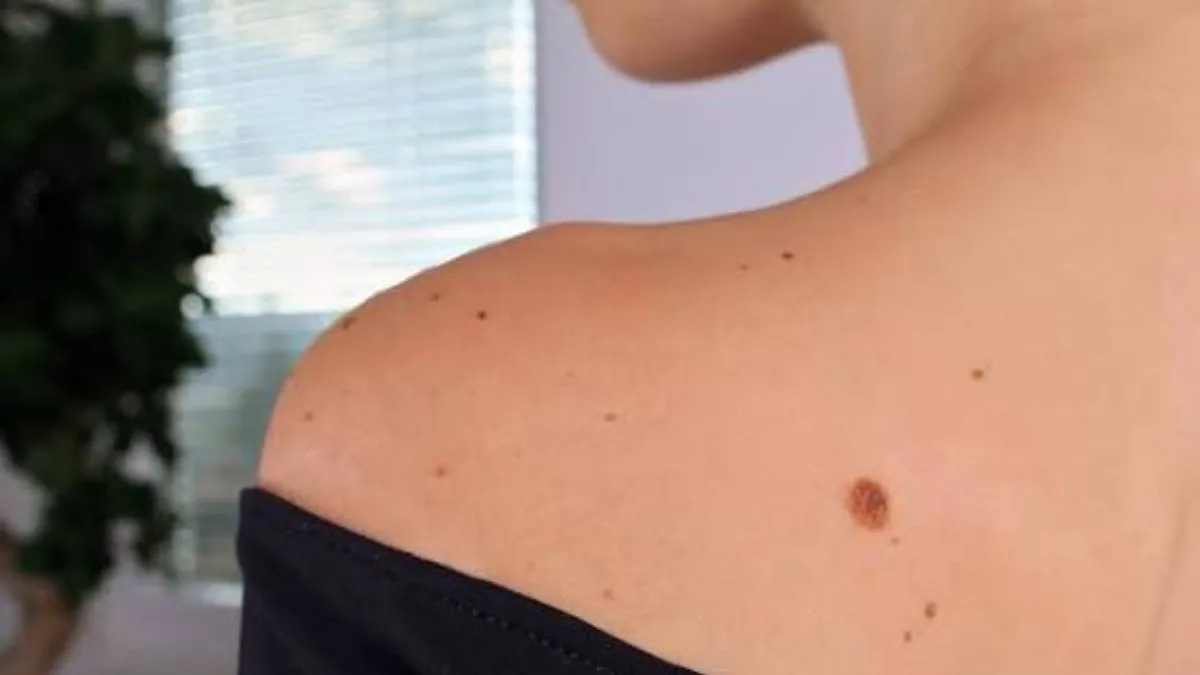 mole on body
Dr Biswal points to a widely used framework for spotting concerning changes, known as the ABCDE rule:
- Asymmetry, where one half of the mole doesn't match the other
- Border irregularity, with edges that are ragged, blurred, or poorly defined rather than smooth
- Colour variation, including multiple shades of brown, black, or patches of red, white, or blue within the same mole
- Diameter larger than about six millimetres, roughly the size of a pencil eraser, though melanomas can sometimes be smaller
- Evolving, meaning any change in size, shape, colour, or texture over time.
According to a 2025 study published in the Journal of the European Academy of Dermatology and Venereology, education on skin self examination remains an essential strategy for detecting melanoma early. The study also points to a related clinical trial that compared two ways of teaching people the ABCDE rule. It is a self read booklet versus the same booklet explained in person by a dermatologist.
Both approaches helped people recognise concerning lesions to some extent. But those who received the guided, in person explanation were more likely to correctly identify a risky mole, apply the ABCDE rule properly, and remember what they'd learned over time.
ALSO READ- Does Cancer Treatment Differ by Age? We Asked an Oncologist
What Other Changes in a Mole Are Worth Noticing?
Beyond the ABCDE criteria, Dr Biswal highlights several other changes that shouldn't be ignored:
- A new mole appearing after the age of thirty, particularly if it looks different from existing moles
- Itching, tenderness, or pain in a mole that was previously symptomless
- Bleeding, oozing, or crusting without an obvious injury causing it
- A mole becoming raised or developing an irregular surface texture when it was previously flat
- Rapid growth over a period of weeks or months rather than gradual change over years
- A mole that looks noticeably different from all the person's other moles, sometimes referred to as the ugly duckling sign.

According to the National Cancer Institute (NCI), most melanomas don't actually start from an existing mole. They typically develop on skin that looked completely normal beforehand. This is an important nuance, since it means skin checks shouldn't focus only on existing moles.
NCI also notes that people with dark skin have a much lower lifetime risk of melanoma than those with fair skin, but their melanomas are often found at a more advanced stage, frequently under the nails, on the palms, or on the soles of the feet, since these areas can be easy to overlook.
When Should You See a Doctor About a Mole?
Dr Biswal outlines specific situations that call for prompt medical evaluation:
- Any mole showing one or more of the ABCDE warning signs
- A new mole that appears unusual or grows quickly, especially in adulthood
- Any mole that bleeds, itches persistently, or won't heal
- A mole that looks distinctly different from the person's other moles
- A family history of melanoma or skin cancer, which warrants more frequent skin checks even without an obviously concerning mole
Anyone with a large number of moles, fair skin, or a history of significant sun exposure or sunburns, who should have periodic professional skin examinations regardless of specific symptoms.
How Are Concerning Moles Diagnosed and Treated?
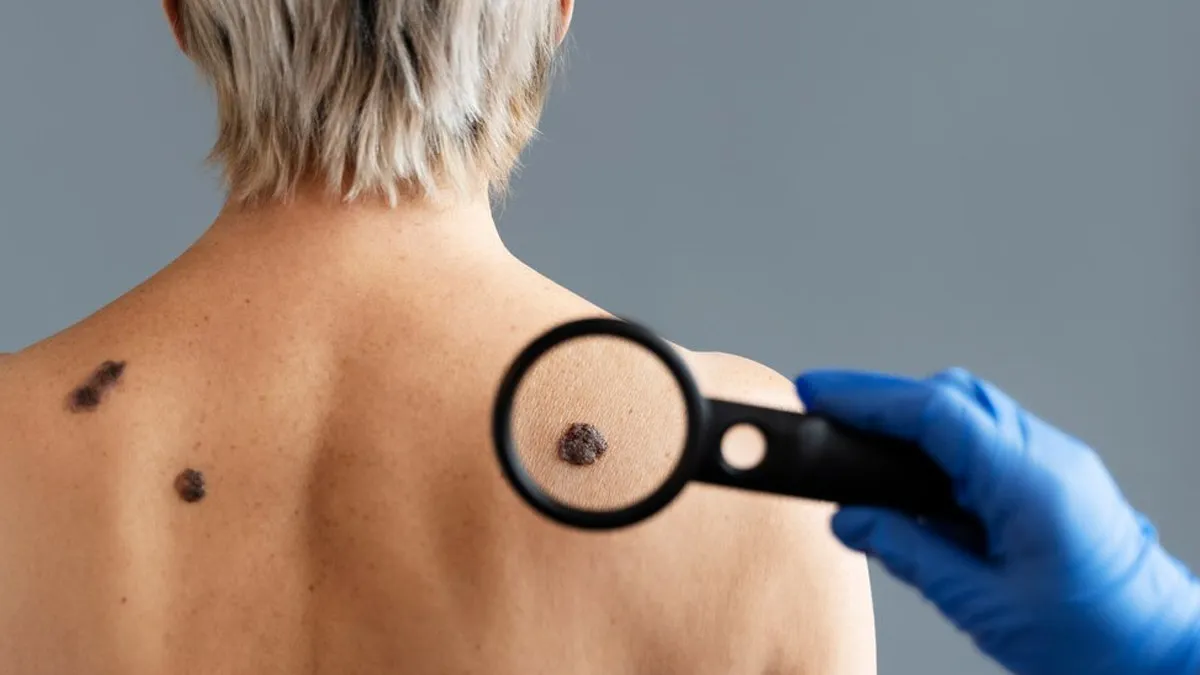
According to Dr Biswal, evaluation typically follows a clear process. A dermatologist usually begins with a visual examination, sometimes using a dermatoscope for a closer look at the mole's structure.
If melanoma is suspected, a biopsy is performed, removing all or part of the mole for laboratory testing to confirm diagnosis. If confirmed as melanoma, surgical removal of the mole along with a margin of surrounding tissue is the standard first treatment, with the extent depending on how deep the melanoma has grown.
In more advanced cases, Dr Biswal notes that further treatment may include lymph node evaluation, immunotherapy, targeted therapy, or radiotherapy, depending on how far the cancer has spread.
What Happens After Treatment, and How Can Future Risk Be Reduced?
Dr Biswal emphasises that ongoing care doesn't stop once treatment ends. Regular follow up skin checks are recommended after treatment, along with ongoing sun protection, since individuals who've had melanoma have a higher risk of developing another skin cancer.
For general prevention, he recommends routine self skin checks and periodic professional screening, which help catch changes early, particularly for those with higher risk factors.
ALSO READ- When Cancer Spreads to the Bone: Early Signs, Treatments and Why It Doesn't Always Mean the End
Conclusion
Most moles never cause any trouble, but knowing the ABCDE warning signs and other red flags, like new growth, bleeding, or a mole that looks unlike your others, can make all the difference in catching melanoma early. Regular self checks, combined with professional screening for those at higher risk, remain the most reliable way to stay ahead of any concerning changes.
FAQ
1. Can moles on parts of the body that rarely see sun, like the soles of the feet, also turn into melanoma?
Yes, melanoma can develop in areas with little sun exposure, including the palms, soles, and even under nails, though this is less common than sun-exposed areas. These less visible spots are sometimes overlooked during self checks, so it's worth including them when examining your skin regularly.2. How often should someone with several moles get a professional skin check, even without noticing any changes?
This varies based on individual risk factors, but people with many moles, fair skin, or a family history of melanoma are often advised to have a professional skin examination roughly once a year. A dermatologist can recommend a more personalised schedule based on your specific risk profile.
All possible measures have been taken to ensure accuracy, reliability, timeliness and authenticity of the information; however Onlymyhealth.com does not take any liability for the same. Using any information provided by the website is solely at the viewers’ discretion. In case of any medical exigencies/ persistent health issues, we advise you to seek a qualified medical practitioner before putting to use any advice/tips given by our team or any third party in form of answers/comments on the above mentioned website.

How we keep this article up to date:
We work with experts and keep a close eye on the latest in health and wellness. Whenever there is a new research or helpful information, we update our articles with accurate and useful advice.
-
Current Version
Aug 12, 2026 12:45 IST
Published By : Vivek Kumar
Reviewed By : Dr Sachin Sekhar Biswal