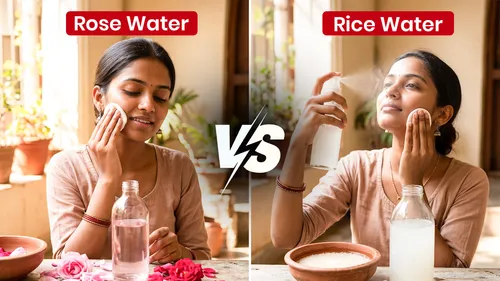
Korean rice water is a nutrient-rich, traditional skincare remedy. It is said to brighten, hydrate, and soothe the skin for a glass skin glow. While it has become a popular hack in the skincare world, one question remains: is rice water suitable for Indian skin and climate? Moreover, people often get confused whether they should choose the good old rose water as toner, or opt for rice water. Today, this article will answer the question for you.
Let us take a look at what Dr Ruben Bhasin Passi, Senior Consultant, Dermatology, CK Birla Hospital, Gurgaon, has to say about this.
Rice Water vs Rose Water: Which Toner Is Better for Indian Skin?
Dr Passi says that rice water and rose water have become familiar names in Indian skincare routines. She adds, “Social media often presents both as natural toners capable of brightening the skin, shrinking pores and controlling acne. A dermatologist, however, would separate traditional use and personal preference from claims that are supported by strong evidence.”
Now let us address the main question: is rose or rice water better for Indian skin? The expert answers, “There is no universal winner. Indian skin includes a wide range of skin types, tones and conditions, and the climate also varies considerably. Hot and humid weather may make oily or acne-prone skin feel uncomfortable with heavy products, while dry winters or prolonged air-conditioning can increase dryness.”
Dr Passi continues, “For someone who enjoys using a toner, a simple, commercially formulated and preferably fragrance-free hydrating product may be more predictable than homemade preparations. Ingredients such as glycerine or panthenol can help support hydration. Neither rice water nor rose water should replace a moisturiser when the skin is dry; nor should they replace sunscreen during daytime.”
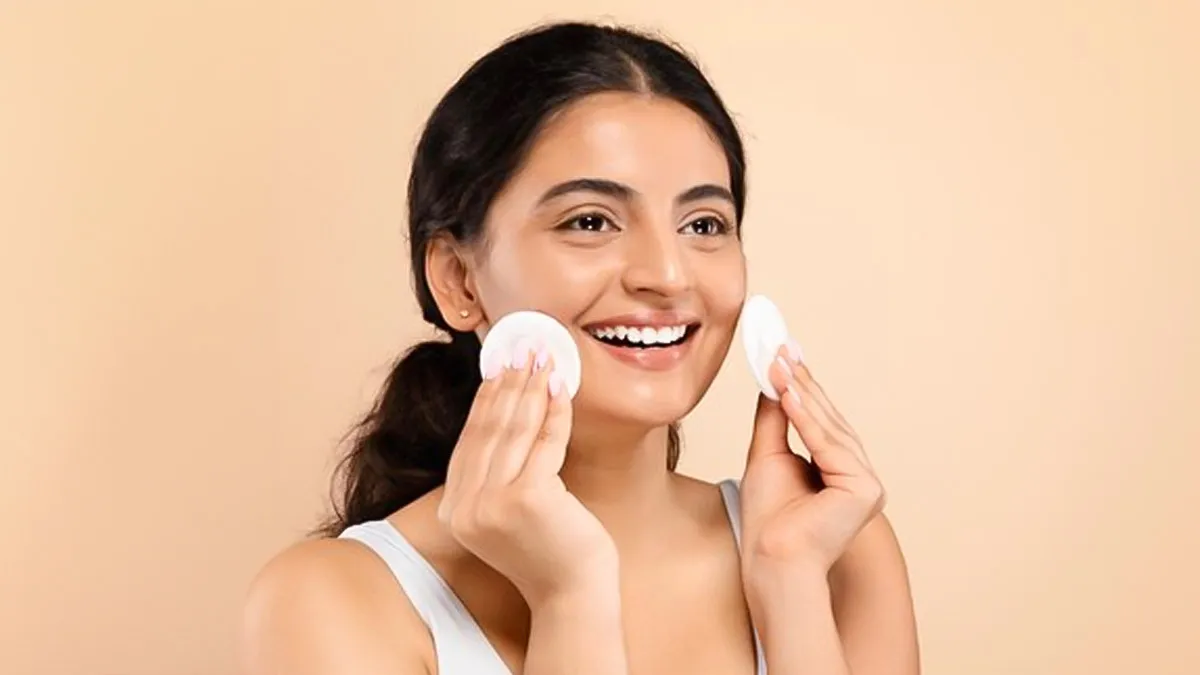
But does the skin actually need a toner? The expert answers, “Not necessarily. A toner is an optional step rather than a basic requirement for healthy skin. A simple routine containing a gentle cleanser, moisturiser and broad-spectrum sunscreen can be sufficient for many people. If a toner is added, it should ideally provide a specific benefit without causing irritation.”
 rose vs rice water 1
Rice Water As Toner: Things To Keep in Mind
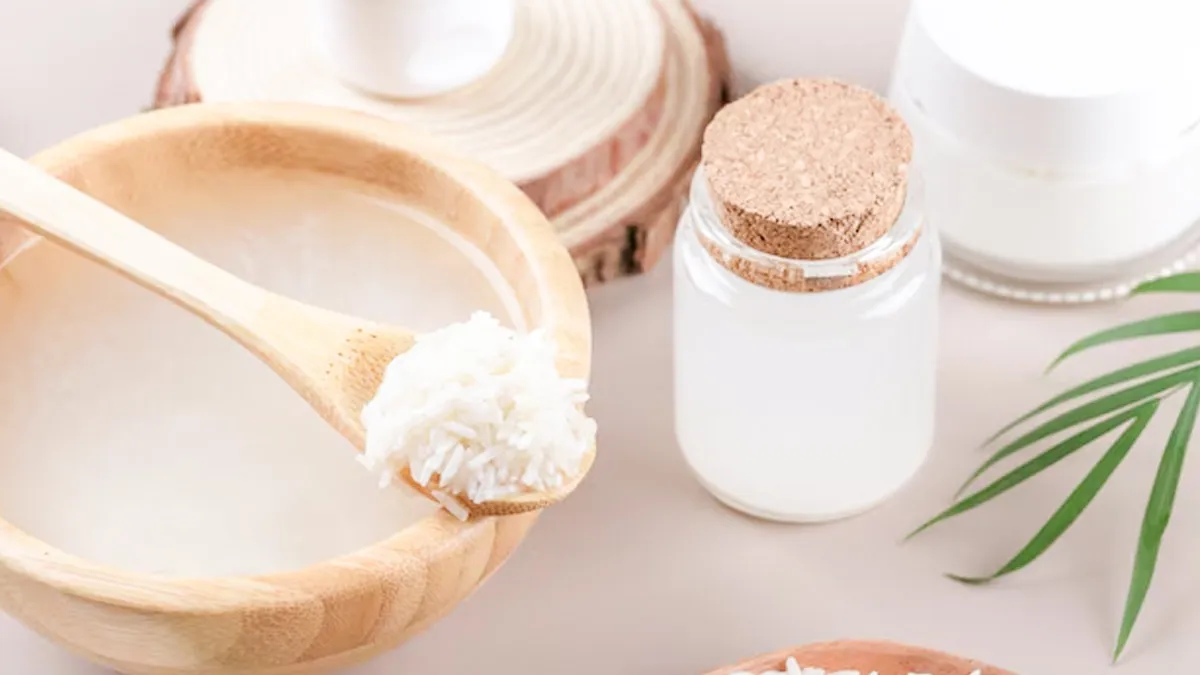
Dr Passi says that rice water is the liquid produced by soaking, rinsing or cooking rice. She adds, “It contains starch and other rice-derived compounds, which may leave the skin feeling temporarily smoother or softer. Rice-derived ingredients are also used in professionally formulated cosmetics.”
The expert further explains, “However, homemade rice water is not the same as a tested cosmetic formulation. It does not contain a controlled preservative system, and its hygiene can become a concern if it is stored for several days, handled repeatedly or deliberately fermented at home. The composition can also vary from batch to batch.”
Claims that rice water permanently reduces pores or dramatically lightens pigmentation should therefore be treated cautiously. Pores cannot be permanently ‘closed’ with a toner, and persistent pigmentation requires an appropriate skincare or medical approach.
 rose vs rice water 2
Rose Water As Toner: Things To Keep in Mind
Dr Passi says that rose water is popular because it feels refreshing and has a familiar fragrance. The expert adds, “A well-formulated cosmetic product may provide light hydration or a soothing sensation depending on its ingredients. However, rose-derived aromatic compounds and added fragrance can irritate or sensitise some people.”
She continues, “This is particularly relevant for people with sensitive skin, eczema, rosacea or a damaged skin barrier. The word ‘natural’ does not guarantee that a product will be gentle. A bottle labelled rose water may contain fragrance, alcohol, preservatives or additional botanical ingredients, so the ingredient list matters.”
 rose vs rice water 3
Can Toners Actually Treat Acne and Pigmentation?
Dr Passi says that neither rice water nor rose water should be treated as a proven acne medication. “Likewise, neither should be expected to erase melasma or established pigmentation. For people prone to pigmentation, consistent sun protection is particularly important because ultraviolet and visible light can worsen uneven skin tone,” she adds.
The expert further explains, “A common myth is that burning or tingling means a toner is ‘working’. In reality, these sensations can indicate irritation. Persistent irritation can damage the skin barrier and may worsen redness or pigmentation.”
“If either product is introduced, a dermatologist would recommend using one new product at a time and stopping it if burning, itching, redness or new bumps develop. Homemade preparations should not be stored indefinitely,” concludes Dr Passi.
ALSO READ- What Is a Cortisol Face? Dermatologist Explains All You Need To Know
Conclusion
Ultimately, the best toner is not necessarily the most viral or the most natural one. It is the product the skin tolerates and that serves a genuine purpose. For many people, skipping toner altogether and investing in a gentle cleanser, suitable moisturiser and reliable sunscreen may be the more sensible routine.
FAQ
Can you use rice water as a toner daily?
Yes, you can use rice water as a toner daily, but you should start slowly to see how your skin reacts.Can you mix rose water and rice water for skin?
Yes, you can safely mix rose water and rice water together to make a gentle, hydrating DIY facial toner.
All possible measures have been taken to ensure accuracy, reliability, timeliness and authenticity of the information; however Onlymyhealth.com does not take any liability for the same. Using any information provided by the website is solely at the viewers’ discretion. In case of any medical exigencies/ persistent health issues, we advise you to seek a qualified medical practitioner before putting to use any advice/tips given by our team or any third party in form of answers/comments on the above mentioned website.
How we keep this article up to date:
We work with experts and keep a close eye on the latest in health and wellness. Whenever there is a new research or helpful information, we update our articles with accurate and useful advice.
-
Current Version
Oct 06, 2026 13:52 IST
Published By : Shruti Das
Reviewed By : Dr Ruben Bhasin Passi