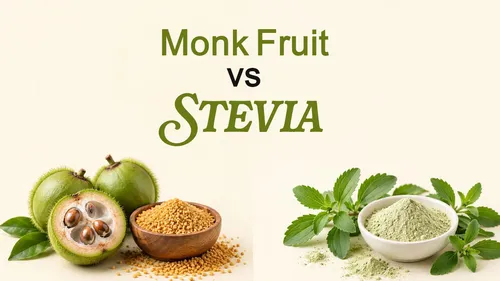
Choosing the right sweetener can be confusing for people living with diabetes, especially when trying to reduce sugar intake without giving up sweetness. Monk fruit and stevia have emerged as popular alternatives to regular sugar because they are plant-derived, contain very few or no calories, and have minimal effects on blood glucose levels.
Both are often marketed as healthier sugar substitutes, but is one better than the other for diabetes management? According to nutrition experts, both can be useful options, but the ingredients in commercially available products and the quantity consumed matter.
Ms Chitra BK, Chief of Dietetics, KIMS Hospitals, Electronic City, Bengaluru, explains that monk fruit and stevia are both natural sweeteners that may benefit people with diabetes because they are almost calorie-free and have an insignificant impact on blood glucose when consumed in their pure forms.
Here is a comparison table to set the context.
| Feature | Monk Fruit Sweetener | Stevia |
Origin |
Extracted from a small round melon native to Southeast Asia |
Extracted from the leaves of the South American Stevia plant |
| Taste Profile | Clean, fruity, and mildly caramelised; no bitter aftertaste | Very sweet with a noticeable licorice-like or bitter aftertaste |
| Sweetness Level | 150-250 times sweeter than regular table sugar | 200-300 times sweeter than regular table sugar |
| Digestive Impact | Very gentle on the stomach and rarely causes bloating | Pure stevia is gentle, though blends with sugar alcohols can cause gas |
| Best Used For | Daily chai/coffee, baking, and desserts where aftertaste ruins flavour | Cold beverages, smoothies, and recipes masked by strong flavors |
| Cost and Availability | More expensive and slightly harder to find in pure form in India | More affordable and widely available across Indian supermarkets |
What Is Monk Fruit Sweetener?
Monk fruit, also known as Luo Han Guo, is a small fruit traditionally used in parts of Asia. Its sweetness comes from naturally occurring compounds called mogrosides.
Unlike regular sugar, mogrosides provide sweetness without adding significant calories or carbohydrates. This makes monk fruit sweetener an option for people who want to reduce their sugar intake without causing a substantial rise in blood glucose.
However, commercially available monk fruit sweeteners may contain other ingredients or bulking agents, so checking the product label is important.
What Is Stevia Sweetener?
Stevia is obtained from the leaves of the Stevia rebaudiana plant. Its sweetness comes from active compounds called steviol glycosides.
These compounds are significantly sweeter than regular sugar, so only a small quantity is needed to provide sweetness. They do not contain calories or carbohydrates in meaningful amounts and generally have little to no effect on blood glucose levels.
Stevia is commonly available in liquid drops, powders, and granulated forms. However, some packaged products contain additional ingredients to improve their taste, texture, and volume.
Monk Fruit vs Stevia: Which Is Better For People With Diabetes?
According to Ms Chitra BK, neither monk fruit nor stevia is a nutritionally better choice for people with diabetes. Both can help reduce added sugar consumption and offer sweetness without the same blood glucose impact as regular sugar.
The choice largely depends on personal taste, availability, and the ingredients used in the product.
Monk fruit has a slightly fruity sweetness, while stevia may leave a bitter or liquorice-like aftertaste in some people. Individuals can choose either based on their preference and how well they tolerate its taste.
However, one important factor to consider is that not all products sold as monk fruit or stevia sweeteners contain only the plant-derived sweetening compounds.
Also Read: Can You Reverse Type 2 Diabetes By Losing Weight?
Can Monk Fruit And Stevia Affect Blood Sugar Levels?
Although pure monk fruit and stevia sweeteners have minimal effects on blood glucose, their commercial formulations may be different.
Some packaged sweeteners contain ingredients such as maltodextrin, dextrose, or other carbohydrates. These are sometimes added to improve texture, provide bulk or make the product easier to measure and use.
Such ingredients can contribute to carbohydrate intake and may affect blood glucose levels, depending on the quantity consumed.
Ms Chitra advises people with diabetes to read product labels carefully before purchasing these sweeteners. Checking the total carbohydrate content and ingredient list can help avoid unwanted sugar or carbohydrate intake.
It is also important to remember that a product labelled 'sugar-free' does not automatically mean it is carbohydrate-free or suitable for unlimited consumption.
Are There Any Side Effects Of Using Monk Fruit And Stevia?
Both sweeteners are generally considered safe when consumed within recommended limits. However, individual tolerance may vary.
- Some commercial sweetener blends contain sugar alcohols or other additives that may cause bloating, gas, or digestive discomfort in some people.
- People should also avoid assuming that replacing sugar with these sweeteners makes an otherwise unhealthy diet suitable for diabetes management.
The overall nutritional quality of meals, portion sizes, and total carbohydrate intake remain important.
How Should Diabetics Use These Sweeteners?
Ms Chitra recommends using either monk fruit or stevia in moderation, preferably in their pure forms. Rather than relying heavily on sugar substitutes, people with diabetes should gradually train their taste buds to accept less sweetness.
Here are some practical ways to reduce dependence on sweeteners:
- Reduce added sugar gradually: Slowly decrease the amount of sugar or sweetener added to tea, coffee, and other beverages.
- Read food labels: Check for maltodextrin, dextrose, and other added carbohydrates in packaged sweeteners.
- Choose balanced meals: Include fibre-rich foods, whole grains, vegetables, and adequate protein in everyday meals.
- Stay physically active: Regular exercise helps improve insulin sensitivity and supports blood glucose management.
- Avoid excessive sweetness: Try to enjoy the natural flavours of foods instead of making every meal or beverage sweet.
Final Word
Monk fruit and stevia can both be useful alternatives to regular sugar for people with diabetes. Neither has a clear nutritional advantage over the other when used in its pure form.
However, the additional ingredients in commercial products, portion sizes, and overall dietary habits deserve attention.
As Ms Chitra points out, diabetes management should not depend on sugar substitutes alone. A balanced diet, regular physical activity, and a gradual shift towards less-sweet foods remain the foundation of long-term blood glucose control.
FAQ
Is monk fruit or stevia better for people with diabetes?
Both monk fruit and stevia are suitable sugar alternatives for people with diabetes, as they contain little to no calories and generally do not raise blood glucose levels significantly.Can monk fruit and stevia be used every day by people with diabetes?
Yes, both can be used as part of a balanced diet when consumed in moderation. However, some commercial products contain added sugar, dextrose, or maltodextrin, which may affect blood glucose levels. People with diabetes should check ingredient labels and choose products without added sugars.
All possible measures have been taken to ensure accuracy, reliability, timeliness and authenticity of the information; however Onlymyhealth.com does not take any liability for the same. Using any information provided by the website is solely at the viewers’ discretion. In case of any medical exigencies/ persistent health issues, we advise you to seek a qualified medical practitioner before putting to use any advice/tips given by our team or any third party in form of answers/comments on the above mentioned website.
How we keep this article up to date:
We work with experts and keep a close eye on the latest in health and wellness. Whenever there is a new research or helpful information, we update our articles with accurate and useful advice.
-
Current Version
Nov 14, 2026 17:39 IST
Published By : Chanchal Sengar
Reviewed By : Ms Chitra B K