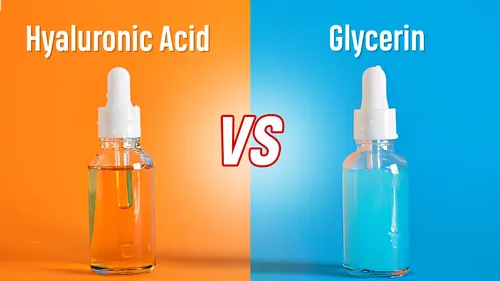
Hyaluronic acid and glycerin are two popular ingredients in skincare products designed to keep the skin hydrated, soft, and smooth. Both help attract water to the skin, making them useful for people dealing with dryness, tightness, or a dull appearance. However, they work slightly differently, and choosing between them depends on your skin type, the climate you live in, and the other ingredients in your skincare routine.
While hyaluronic acid is often highlighted in serums for its water-binding properties, glycerin is a well-established moisturising ingredient found in creams, lotions, and cleansers. So, which one is better for keeping your skin hydrated throughout the day? We asked Dr Chandni Jain Gupta, Dermatologist at Elantis Healthcare, Lajpat Nagar.
What Is Hyaluronic Acid?
Hyaluronic acid is a substance naturally present in the skin that helps retain moisture and maintain its plumpness. It can bind large amounts of water relative to its weight, which is why it is widely used in hydrating serums and moisturisers.
According to a report published in the International Journal of Molecular Sciences, when applied to the skin, hyaluronic acid acts as a humectant, meaning it attracts and holds water. This helps the skin feel softer, smoother, and more supple. It can also temporarily reduce the appearance of fine lines caused by dehydration.
Hyaluronic acid is available in different molecular sizes, which influence how it interacts with the skin. Smaller molecules may penetrate further into the outer layers, while larger molecules mainly work closer to the surface.
It is generally suitable for most skin types, including oily and acne-prone skin, because it can provide hydration without necessarily feeling heavy.
What Is Glycerin?
Glycerin, also known as glycerol, is a naturally occurring compound used widely in skincare because of its ability to attract and retain moisture. It is a humectant that helps draw water into the outer layer of the skin.
Glycerin also supports the skin barrier, which helps protect against moisture loss and external irritants. With regular use, glycerin-containing products can help improve skin softness and reduce roughness associated with dryness.
It is commonly found in moisturisers, body lotions, face creams, and cleansers. Unlike some ingredients used mainly in lightweight serums, glycerin can be incorporated into a wide range of formulations.
Glycerin is generally well tolerated by most skin types, including sensitive and dry skin. However, the overall formulation matters, particularly for people who are sensitive to certain ingredients in a product.
Also Read: Rice Water for Skin: What Happens When You Use It Every Day?
Hyaluronic Acid vs Glycerin: Key Differences
Although both ingredients attract water, there are some differences in how they are used in skincare.
| Feature | Hyaluronic Acid | Glycerin |
What It Is |
A large sugar molecule naturally found in skin joints and connective tissue |
A simple sugar alcohol compound derived from plant oils, animal fats, or synthetics |
| Water-Binding Power | Holds up to 1,000 times its weight in water | Holds up to several times its weight in water (lower capacity, but highly efficient) |
| Primary Benefit | Plumping & Surface Hydration (reduces fine lines instantly by holding surface moisture) | Deep Barrier Repair (softens skin, restores lipids, and prevents moisture loss) |
| Performance in Dry Air | Can draw moisture out of deeper skin layers if used in dry climates without a moisturiser | Performs consistently well across various humid conditions; less prone to drying skin out |
| Texture | Lightweight, watery, gel-like finish; can feel slightly tacky if over-applied | Slightly thicker, slippery, and smooth; leaves a dewier finish |
| Best Used For | Immediate skin plumping, fine lines, and lightweight hydration under makeup | Compromised skin barriers, dry/flaky skin patches, and long-term hydration |
Hydration and Moisture Retention
Hyaluronic acid helps bind water to the skin, giving it a plumper and more hydrated appearance. Glycerin also attracts water but has a particularly well-established role in improving hydration in the outer skin layer and supporting the skin barrier.
Neither ingredient can guarantee all-day hydration on its own. The final result depends on the product formulation, the condition of your skin, and whether moisture is sealed in with suitable moisturising ingredients.
Which is Better for Dry Skin?
Both can benefit dry skin. However, glycerin is an excellent choice for people who experience persistent dryness because it helps hydrate the outer skin layer and supports the skin barrier.
Hyaluronic acid can also help relieve dehydration, especially when used in a moisturiser or alongside ingredients that reduce moisture loss.
For very dry skin, a moisturiser containing humectants along with emollients and occlusives may be more effective than using either ingredient alone.
Which is Better for Oily Skin?
Both ingredients can suit oily skin. A lightweight hyaluronic acid serum may appeal to people who prefer a non-greasy texture.
However, glycerin can also work well in lightweight gels and lotions. The texture and full ingredient list of the product are more important than choosing one ingredient over the other.
Which Works Better in Different Climates?
In hot and humid weather, both ingredients can provide hydration without requiring a heavy formula.
In cold or dry weather, relying on a humectant alone may not be enough to maintain comfortable skin. A moisturiser containing ingredients such as ceramides, oils or petrolatum can help reduce water loss.
Hyaluronic acid is sometimes described as drawing moisture out of the skin in dry weather. This is an oversimplification: its performance depends on the formulation and surrounding conditions. Using a moisturiser over a hydrating serum is a practical way to help maintain hydration.
Also Read: Dry Skin In Your 40s? Dermatologist Explains Why Your Usual Moisturiser May Suddenly Stop Working
Can You Use Hyaluronic Acid and Glycerin Together?
Yes. Hyaluronic acid and glycerin are compatible and can be used together in the same skincare routine. In fact, many moisturisers and serums contain both ingredients to provide hydration through complementary mechanisms.
For a simple routine, apply a hydrating serum to slightly damp skin if recommended by the product instructions. Follow it with a moisturiser to help reduce moisture loss. In the morning, finish with a broad-spectrum sunscreen with SPF 30 or higher.
You do not necessarily need separate products containing each ingredient. A well-formulated moisturiser with glycerin, hyaluronic acid or both may be sufficient for everyday use.
Which Should You Choose?
The best option depends on your skin's needs and the product you prefer.
- For dehydrated skin: Hyaluronic acid can help improve the appearance of plumpness.
- For dry or rough skin: Glycerin is an excellent option for improving hydration and supporting the skin barrier.
- For oily or combination skin: Either ingredient can work well in a lightweight, non-comedogenic formula.
- For long-lasting hydration: Choose a moisturiser that combines humectants with ingredients that help reduce water loss.
Ultimately, neither hyaluronic acid nor glycerin is universally better. Both are effective moisturising ingredients, and their benefits depend on the formulation in which they are used.
Final Word
For hydration that lasts throughout the day, focus on a consistent skincare routine, use a suitable moisturiser, and avoid harsh cleansers that strip the skin of its natural oils. If your skin remains persistently dry, irritated, or flaky despite regular moisturising, consult a dermatologist to identify the underlying cause.
FAQ
What are the disadvantages of hyaluronic acid?
The main disadvantage of using hyaluronic acid is that is makes your skin very dry, particularly if you live in a low-humidity environment.What happens if I use hyaluronic acid daily?
Regular use of hyaluronic acid is believed to hydrate the skin and make it smooth.
All possible measures have been taken to ensure accuracy, reliability, timeliness and authenticity of the information; however Onlymyhealth.com does not take any liability for the same. Using any information provided by the website is solely at the viewers’ discretion. In case of any medical exigencies/ persistent health issues, we advise you to seek a qualified medical practitioner before putting to use any advice/tips given by our team or any third party in form of answers/comments on the above mentioned website.
How we keep this article up to date:
We work with experts and keep a close eye on the latest in health and wellness. Whenever there is a new research or helpful information, we update our articles with accurate and useful advice.
-
Current Version
Oct 18, 2026 21:42 IST
Published By : Chanchal Sengar
Reviewed By : Dr Chandni Jain Gupta