-1790760687955_m.webp)
Coffee can make you feel more alert within minutes. For some people, however, that morning cup can also make the heart feel as if it is racing, pounding or skipping a beat. These sensations are called heart palpitations. They can happen after coffee because caffeine stimulates the nervous system and can temporarily increase heart activity.
But not every episode means there is a heart problem. Brief palpitations after coffee are often harmless, but recurring or severe symptoms should not be ignored. Knowing what triggers them and recognising the warning signs can help you decide when a caffeine reaction is likely and when it needs medical attention.
The Science Behind Caffeine and Your Heart Rate?
Dr Chirag D, Consultant, Interventional Cardiology at Aster Whitefield Hospital, Bangalore explains, “Feeling your heart race or flutter after coffee is common and usually harmless, caused simply by caffeine's stimulant effect on the heart. But there are specific patterns that shift this from a normal response into something worth medical evaluation.”
Caffeine mainly works by blocking adenosine, a chemical messenger that promotes relaxation and sleepiness. This can increase alertness and stimulate the nervous system.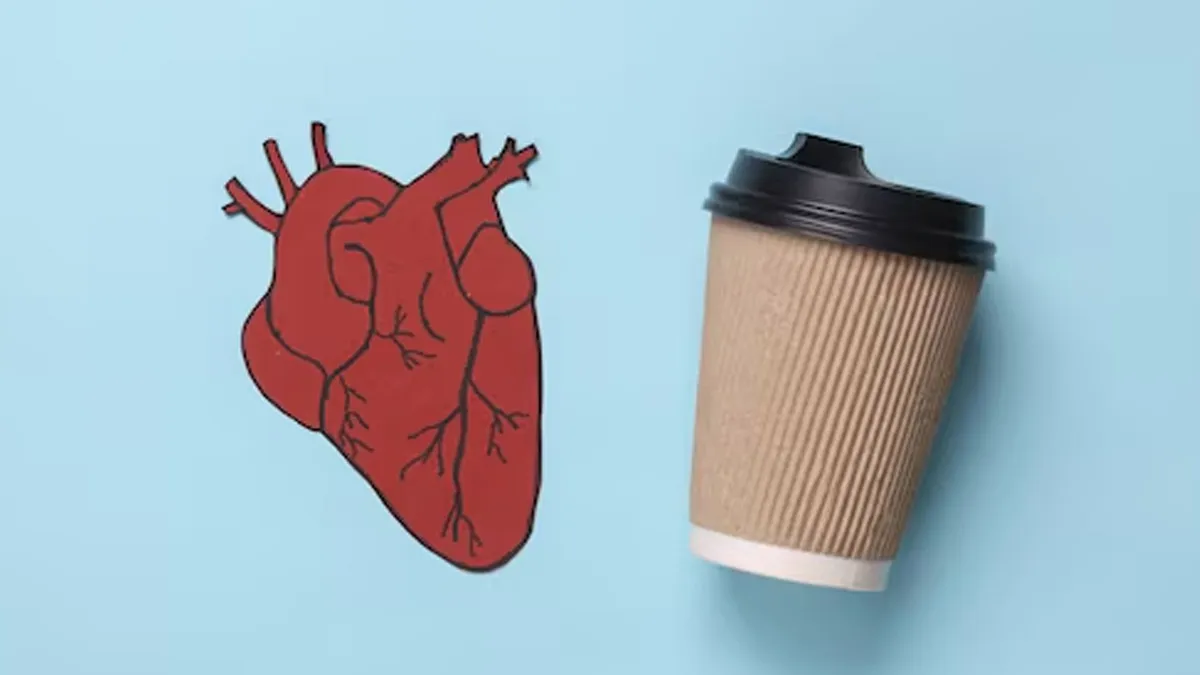 heart and coffee
Caffeine can also increase adrenaline activity. As a result, some people may notice:
- A faster heartbeat
- A stronger or pounding heartbeat
- A fluttering sensation
- A skipped beat followed by a stronger beat
- A temporary feeling of nervousness or shakiness
The response varies widely. Some people can drink several cups without noticing their heartbeat, while others feel palpitations after a small amount.
The relationship between coffee and abnormal heart rhythms is more complicated than the common belief that coffee is always bad for the heart. A 2023 New England Journal of Medicine followed 100 adults using continuous heart monitoring. Coffee consumption was not associated with more premature atrial contractions, although participants who drank coffee had more premature ventricular contractions and slept less.
This is important because feeling a skipped or extra beat does not automatically mean that coffee has caused a dangerous rhythm problem.
ALSO READ- Tea VS Coffee: Which Is Better For Your Heart? Expert Explains
When Are Coffee-Related Palpitations Usually Harmless?
According to Dr Chirag, palpitations are generally less concerning when they:
- Last only a few seconds or a couple of minutes
- Occur after stronger coffee or more caffeine than usual
- Happen when coffee is consumed on an empty stomach
- Settle without treatment
- Do not cause chest pain, dizziness or breathlessness
- Happen occasionally rather than becoming progressively more frequent
However, the absence of serious symptoms does not guarantee that every episode is harmless. People with known heart conditions should discuss recurring palpitations with their doctor.
Underlying Conditions That Make You More Susceptible to Caffeine
It may not always be the coffee alone. Dr Chirag says several factors can make the heart feel more reactive to caffeine:
Poor Sleep
A bad night's sleep can increase fatigue and make stimulant effects feel stronger.
Dehydration
Not drinking enough fluid can increase heart rate and may make palpitations more noticeable.
Other Stimulants
Combining coffee with energy drinks, pre-workout supplements or other caffeine-containing products can significantly increase total caffeine intake.
-1790761072886.webp) 02 (3)
02 (3)
Anxiety
Caffeine can increase nervous-system activity. If someone is already anxious, the sensation of a faster heartbeat may feel much more intense.
Hormonal Changes
Some women may notice greater caffeine sensitivity at certain points in the menstrual cycle.
How Much Coffee Is Too Much?
There is no single amount that causes palpitations in everyone.
The US Food and Drug Administration says up to 400 mg of caffeine a day is an amount not generally associated with negative effects for most healthy adults. However, sensitivity varies based on factors such as medications, health conditions and individual response.
It is also important to remember that caffeine content varies between coffee types and serving sizes. A large café coffee can contain considerably more caffeine than a small home-brewed cup.
If palpitations repeatedly appear after a particular amount, reducing your personal caffeine intake may be more useful than following a fixed cup limit.
Warning Signs: When Heart Racing Requires Medical Attention
Dr Chirag recommends medical evaluation if:
- Palpitations last several minutes or longer
- They are becoming more frequent
- They occur even when you have not had coffee
- You experience chest pain or pressure
- You feel breathless
- You become dizzy or feel close to fainting
- You have a family history of heart rhythm problems or sudden cardiac death
- You already have a heart condition
- Palpitations with chest pain, severe breathlessness, fainting or significant dizziness need urgent medical assessment.
A new pattern of palpitations should not simply be blamed on coffee, particularly if the symptoms are getting stronger or more frequent.
What Tests Can A Doctor Do For Palpitations?
The first step is usually a medical history and examination. Depending on the symptoms, a doctor may recommend:
- ECG: Records the heart's electrical activity.
- Holter monitor: Continuously records the heart rhythm, often for 24–48 hours or longer.
- Blood tests: May check thyroid function and electrolyte levels.
- Echocardiogram: Can assess the structure and function of the heart when needed.
The choice of test depends on how often the palpitations happen and whether there are other symptoms.
How Can You Reduce Palpitations Without Giving Up Coffee?
-1789106804695.webp)
If coffee seems to be the trigger, you may not need to quit immediately.
Try:
- Reducing caffeine gradually.
- Choosing a smaller serving.
- Avoiding coffee on an empty stomach if that worsens symptoms.
- Drinking enough water throughout the day.
- Avoiding coffee alongside energy drinks or pre-workout stimulants.
- Keeping a simple record of how much coffee you drink and when palpitations occur.
- Trying decaffeinated coffee if symptoms continue.
The aim is to identify your tolerance rather than assuming every coffee drinker needs to avoid caffeine.
ALSO READ- How Fit Is Your Heart? Find Out With These 7 Simple Signs
Conclusion
Heart palpitations after coffee are often a temporary response to caffeine, especially when they are brief and occur without other symptoms. But recurring episodes, symptoms such as chest pain or fainting, or palpitations that happen without coffee deserve medical attention. As Dr Chirag explains, the important thing is not simply whether coffee causes your heart to beat faster, but the pattern of the palpitations and what happens alongside them.
FAQ
Can decaf coffee still cause heart palpitations?
It can, although decaffeinated coffee contains much less caffeine. Other factors, including anxiety, dehydration or the act of drinking a hot beverage, may also contribute to the sensation. If palpitations continue even with little or no caffeine, discuss them with a doctor.Can coffee cause palpitations if I have never had them before?
Yes. Changes in caffeine intake, sleep, stress, hydration, medications or overall health can alter how the body responds to coffee. New or persistent palpitations should be assessed if they do not settle or occur with other symptoms.
All possible measures have been taken to ensure accuracy, reliability, timeliness and authenticity of the information; however Onlymyhealth.com does not take any liability for the same. Using any information provided by the website is solely at the viewers’ discretion. In case of any medical exigencies/ persistent health issues, we advise you to seek a qualified medical practitioner before putting to use any advice/tips given by our team or any third party in form of answers/comments on the above mentioned website.
How we keep this article up to date:
We work with experts and keep a close eye on the latest in health and wellness. Whenever there is a new research or helpful information, we update our articles with accurate and useful advice.
-
Current Version
Sep 30, 2026 15:09 IST
Modified By : Vivek Kumar Sep 30, 2026 15:09 IST
Modified By : Vivek Kumar
Reviewed By : Ms Veena VSep 30, 2026 15:09 IST
Published By : Vivek Kumar