
Anxiety or severe stress often causes very fast and deep breathing. Rapid breathing is caused by many other factors as well. The medical term for this rapid breathing is hyperventilation. Let us tell you that hyperventilation is more than just ‘abnormal breathing’. To understand it better, this article will explore its causes, symptoms, diagnosis, treatment, and management tips. Read ahead.
To understand it better, we reached out to Dr Sunil Kumar K, Lead Consultant - Interventional Pulmonology, Aster CMI Hospital, Bengaluru, and Dr Abdul Raouf Wani, Consultant - Pulmonary Critical Care and Sleep Medicine, Fortis Hospital, Jalandhar.
What Is Hyperventilation? Know Its Causes
Before we explore hyperventilation, let us tell you what it is. “Hyperventilation means breathing very fast or deeper than normal, which causes too much carbon dioxide to leave the body, and this can disturb the balance of oxygen and carbon dioxide in the blood,” says Dr Sunil. He adds, “Common causes of hyperventilation include anxiety, panic attacks, stress, fear, intense emotions, fever, lung diseases like asthma, infections, head injury, high altitude, or certain medical conditions affecting the heart or brain.”
Is there any misconception about hyperventilation? Explaining this, Dr Wani shares, “The misconception about hyperventilation lies in its common description as simply over-breathing. From a clinical perspective, this condition refers to an imbalance in the body’s oxygen and carbon dioxide levels. The majority of patients suffering from hyperventilation experience a reaction to an acute or chronic psychological disturbance such as anxiety, panic attacks, emotional distress or stress. Nevertheless, hyperventilation may occur as a complication of a certain disease affecting the lungs, heart, metabolic functions or infection.”
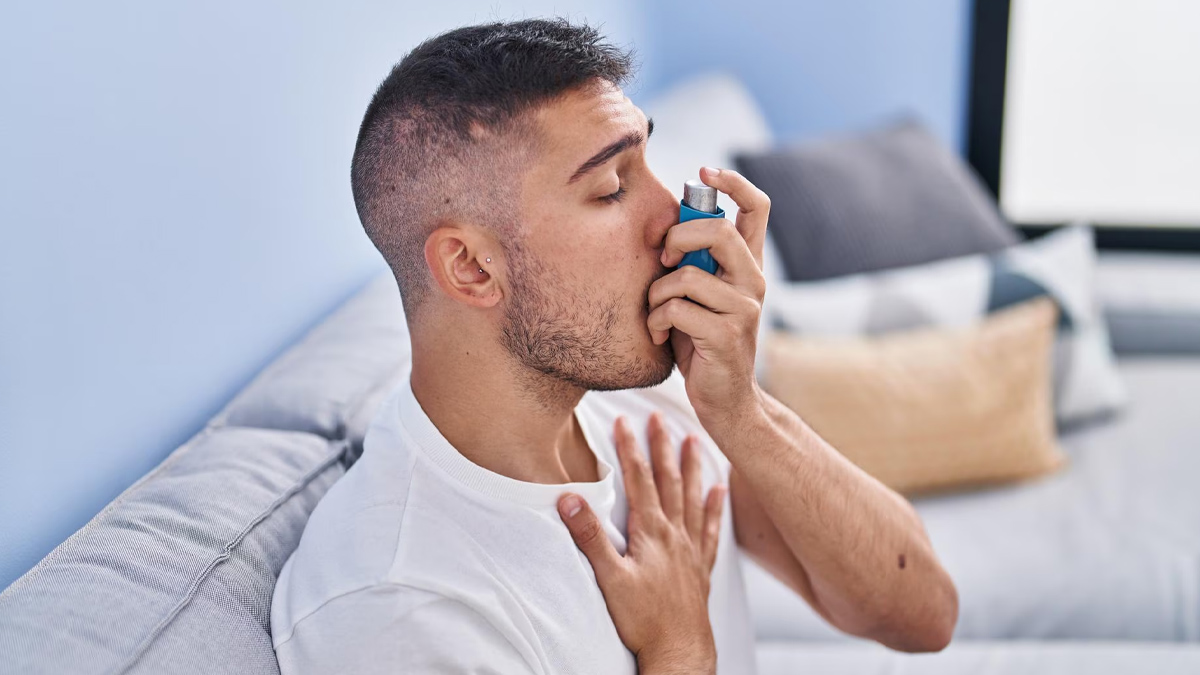 hyperventilation 1
In a 2025 study, published in the Brain Research Bulletin, researchers measured the Electroencephalogram (EEG) of 305 healthy young men before, during, and after a period of hyperventilation. They discovered that the speed and strength of the brain's alpha waves momentarily drop during the heavy breathing period, but recovered once normal breathing resumes. The study noted that hyperventilation has a measurable, negative effect on normal brain wave activity and internal brain connectivity.
ALSO READ - Understanding Dyspnoea: Expert Guide On Its Causes, Symptoms, And Treatment
What Are The Symptoms Of Hyperventilation?
Dr Sunil shares that symptoms of hyperventilation may start suddenly and can include the following:
- Fast breathing.
- Shortness of breath.
- Dizziness.
- Light-headedness.
- Chest pain.
- Rapid heartbeat.
- Sweating.
- Numbness or tingling in the hands, feet, or around the mouth.
- Muscle cramps.
- Feeling of fear or confusion.
“In some people, symptoms may feel like a serious problem such as a heart attack, which can increase panic and make breathing even faster,” adds the expert.
The findings from a 2023 study, published in the Springer Nature journal, showed that hyperventilation delayed the body's involuntary breathing reflexes and extended the average breath-hold time from 111 seconds to 133 seconds. The study noted that hyperventilation also caused blood oxygen levels to drop progressively after each consecutive breath-hold, while natural protective responses such as spleen contraction and slowed heart rate were completely unaffected.
 hyperventilation 2
How To Diagnose Hyperventilation?
There are many ways to diagnose hyperventilation. “Diagnosis usually involves a doctor asking about symptoms, checking breathing rate and doing physical examination, and in some cases, tests like blood tests, chest X-ray, ECG, or lung function tests may be done to rule out other serious conditions,” says Dr Sunil.
Adding to this, Dr Wani explains, “While a thorough clinical history and physical examination remain the cornerstone of diagnosis for this condition, adjunctive tests such as blood investigations and pulse oximetry can aid in determining the underlying causes of hyperventilation. If a particular disease underlies the condition, additional tests may be required, including imaging studies.”
How To Treat And Manage Hyperventilation
Treatment of hyperventilation depends on the cause. “If it is due to anxiety or panic, calming techniques like slow breathing, relaxation exercises, or breathing into cupped hands may help, while medical causes may need medicines, oxygen support, or treatment of the underlying condition,” says Dr Sunil.
Shedding light on how to manage this condition, Dr Wani lists the following lifestyle changes:
- Stress management.
- Regular exercise.
- Avoiding caffeine.
- Practising breathing control techniques.
“You should see a doctor if hyperventilation happens often, lasts long, or is severe, and you should seek urgent care if you have chest pain, fainting, severe breathlessness, confusion, blueish lips, or if symptoms do not improve with rest,” adds the expert.
 hyperventilation 3
Can You Prevent Hyperventilation?
According to the Cleveland Clinic, hyperventilation is not always preventable. If the cause behind it is stress and anxiety, then hyperventilation may be prevented by following stress management and relaxation techniques, such as:
- Frequent physical activity.
- Progressive muscle relaxation.
- Meditation.
- Yoga.
- Practising mindfulness.
Can You Stop Hyperventilating?
If you experience hyperventilation as a result of anxiety, stress, or panic, there are certain ways to stop it. The Cleveland Clinic shared the following techniques that can help stop hyperventilating and prevent future attacks:
- Practise pursed lip breathing. This can help raise the carbon dioxide level in your blood.
- Take it slow. Breathe through your belly, instead of your chest.
- Reach out to your loved ones and inform them about your hyperventilation to get reassurance during an attack. They may be able to help you relax with simple phrases such as ‘you’re safe’ and ‘this is temporary’.
 hyperventilation 4
When To Visit A Doctor For Hyperventilation?
Dr Wani explains when you need to seek medical attention for hyperventilation. “If someone experiences frequent hyperventilation without any obvious reasons or in combination with chest pains, blueish lips, confusion, or even fainting, they should visit their doctor to ensure that their condition isn’t more serious than just hyperventilation. Prompt actions will help cope with symptoms and exclude any serious health problems,” says Dr Wani.
ALSO READ - Nasal Breathing vs. Mouth Breathing During High-Intensity Exercise: Know Which One Is Better
Conclusion
Hyperventilation refers to very fast or deeper than normal breathing. This can disturb the balance of oxygen and carbon dioxide in the blood. Some of the common causes of hyperventilation include anxiety, panic attacks, stress, fear, intense emotions, fever, lung diseases, and infections, among others. Its treatment and management depend on the cause. You must seek medical attention if you experience hyperventilation regularly, coupled with chest pains, blueish lips, confusion or fainting.
FAQ
What causes hyperventilation?
Hyperventilation is usually triggered by anxiety, panic attacks, or stress.What is a common symptom of hyperventilation?
Some of the most common symptoms of hyperventilation are chest pain or pressure, shortness of breath, tiredness, nausea, and back or jaw pain.Is hyperventilating harmful?
In rare cases, severe hyperventilation can lead to fainting, which can lead to injury.What does hyperventilation look like?
Someone who is hyperventilating breathes quickly and has a high respiratory rate (number of breaths per minute).How long does hyperventilation last?
Hyperventilation usually lasts for a short period or up to 20-30 minutes during an acute episode.
All possible measures have been taken to ensure accuracy, reliability, timeliness and authenticity of the information; however Onlymyhealth.com does not take any liability for the same. Using any information provided by the website is solely at the viewers’ discretion. In case of any medical exigencies/ persistent health issues, we advise you to seek a qualified medical practitioner before putting to use any advice/tips given by our team or any third party in form of answers/comments on the above mentioned website.
How we keep this article up to date:
We work with experts and keep a close eye on the latest in health and wellness. Whenever there is a new research or helpful information, we update our articles with accurate and useful advice.
-
Current Version
Apr 09, 2026 19:30 IST
Modified By : Shruti Das Apr 09, 2026 19:30 IST
Modified By : Shruti DasApr 09, 2026 19:30 IST
Published By : Shruti Das
Reviewed By : Dr Sunil Kumar K