
Have you ever wondered how health scans for pregnancy and biopsies were done before ultrasound was invented? Medical ultrasound is no doubt an essential tool today, but its fascinating history actually dates back in the early nineteenth century.
The fundamental science of sound waves was initially explored long before it was ever used for medical purposes. Today, this article will revisit the historical timeline of the discovery of ultrasound.
Timeline: A Look Into The Discovery of Ultrasound
A 1998 study, published in the Surgical Clinics of North America, shares a brief history on how medical ultrasound was discovered.
Inspiration From Military and Submarine
In its early days, the military was behind the technological advancement in sound wave technology. For instance, the military originally developed sonar to detect enemy submarines exploring deep underwater.
The scientists eventually realised that these same high-frequency sound waves could be used to safely analyse biological tissues. The earliest medical pioneers began by using bulky ultrasound machines to analyse pathologic tissue specimens in a laboratory setting. As the technology gradually improved, doctors started adapting these military tools for direct use on living patients. The shift from military sonar to medicine officially began in 1942 when an Austrian doctor named Karl Dussik tried to use sound waves to locate brain tumors. This ambitious experiment was one of the first times when ultrasound was explicitly applied to the human body for medical diagnosis.
Ultrasound in Pregnancy Care
One of the most famous and widespread applications started the routine evaluation of the growing foetus during pregnancy. Expectant parents and doctors were elated at the ability to see a baby safely inside the womb without any harmful radiation.
A monumental shift happened in 1958 when Scottish physician Ian Donald introduced ultrasound technology to the fields of obstetrics and gynaecology. As a result, by 1963, medical experts were finally able to safely detect early pregnancies and observe a growing foetus inside the womb.
 ultrasound history 1
Ultrasound Beyond Maternity Care
Apart from obstetrics, emergency room doctors also found out that ultrasound was incredibly useful for quickly assessing injured patients. It also allowed trauma teams to rapidly detect internal bleeding or organ damage without waiting for a surgical procedure.
Throughout the 1970s, the technology expanded further as trauma doctors began using it to rapidly check for internal bleeding in severely injured patients.
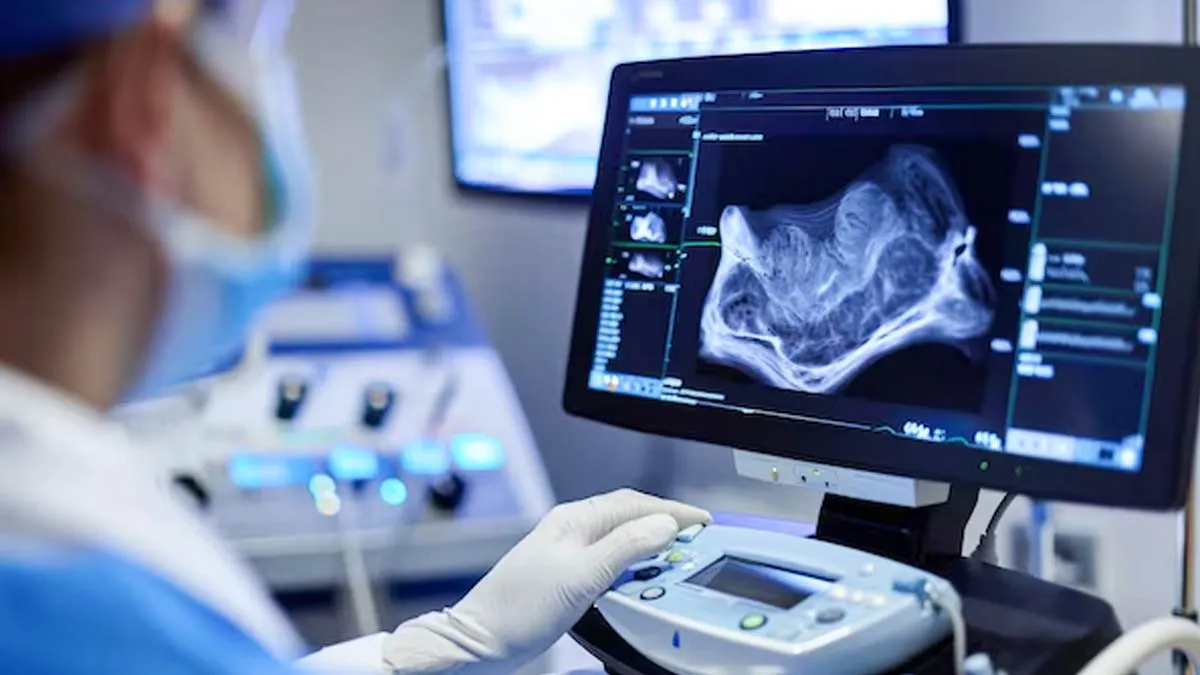
Ultrasound also revolutionised how doctors examined patients suffering from complex cerebrovascular diseases and blood flow issues. In the realm of cardiology, it became a game-changer for diagnosing valvular and congenital heart diseases. Because echocardiograms could visualise the heart so clearly, it drastically minimised the need for risky, invasive cardiac angiography procedures.
 ultrasound history 2
Ultrasound Changing Medical Landscape
By the 1990s, ultrasound technology emerged as a standard diagnostic tool integrated into virtually every single medical specialty. The invention of specialised probes also expanded a doctor's ability to safely look inside the human body. Techniques such as transvaginal, transrectal, and transesophageal ultrasounds allowed for much closer and more detailed images of internal organs. These internal scanning methods offered a completely new level of diagnostic power that was previously unimaginable.
Today, ultrasound remains one of the safest and most widely utilized medical imaging techniques across nearly every medical specialty. Despite all of these incredible historical advancements, modern researchers are still actively pushing the boundaries of what this technology can do. Ultimately, the ongoing evolution of ultrasound guarantees that the innovative ideas being tested today will become the standard medical technology of tomorrow.
ALSO READ- When Was First Sunscreen Invented? Know Its Journey From the World War 2 Battlefield to the Beach
Conclusion
From a naval military tool to an essential part of modern medicine, the journey of ultrasound has been a remarkable testament to scientific invention. It provides a safe and non-invasive method to peer inside the body. By doing so, ultrasound has completely changed everything, from routine prenatal care to emergency trauma diagnostics. As technology advancements continue, highly portable digital devices, ultrasound will undoubtedly remain a crucial asset in saving lives and improving patient care worldwide.
FAQ
When was ultrasound first used in India?
Medical ultrasound was first introduced and systematically established in clinical practice in India during the early to mid-1980s.What are the other names for ultrasound?
Other names for an ultrasound include sonography, ultrasonography, and an ultrasonic scan.
All possible measures have been taken to ensure accuracy, reliability, timeliness and authenticity of the information; however Onlymyhealth.com does not take any liability for the same. Using any information provided by the website is solely at the viewers’ discretion. In case of any medical exigencies/ persistent health issues, we advise you to seek a qualified medical practitioner before putting to use any advice/tips given by our team or any third party in form of answers/comments on the above mentioned website.
How we keep this article up to date:
We work with experts and keep a close eye on the latest in health and wellness. Whenever there is a new research or helpful information, we update our articles with accurate and useful advice.
-
Current Version
Aug 19, 2026 18:51 IST
Published By : Shruti Das