
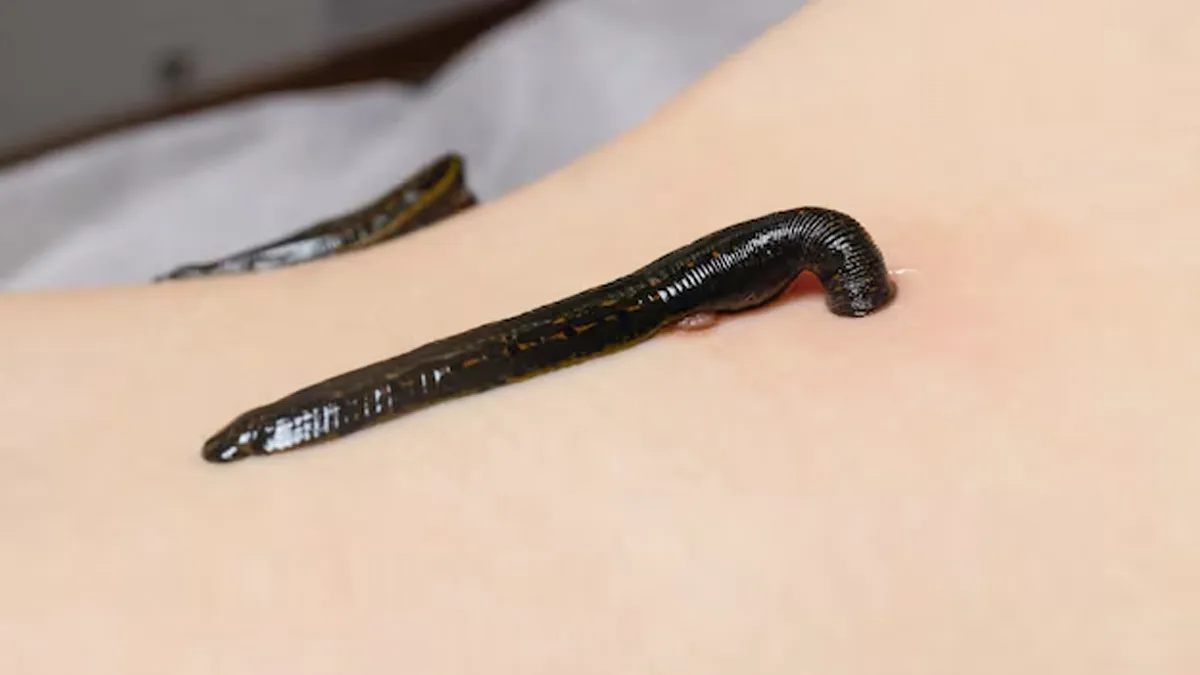
In the ancient times, there were various bizarre practices that were dominating the medical world. One such practice was that of using leeches to suck patients’ blood to cure their diseases. This risky practice, also known as bloodletting, was surprisingly in high demand among people.
To delve deeper into the history of leech therapy in ancient medicine, along with its comeback in modern treatment, we examined the journals, British Columbia Medical Journal (BCMJ), Indian Journal of Pharmaceutical Sciences, and Encyclopedia Britannica. Let’s take a look at it.
What is The Origin of Leech Therapy?
The medical practice of using leeches to draw blood has its source thousands of years ago in ancent Egypt, Greece, and Rome. Early physicians had this belief that the human body was governed by four vital fluids called humors: blood, phlegm, black bile, and yellow bile.
According to this ancient medical philosophy, diseases occurred when there was an imbalance between these fluids, which often happened to an excess of blood. To restore harmony and cure sickness, medical experts turned to bloodletting. They used leeches to gently remove the supposedly tainted blood. This painless, natural method was believed to cure almost every conceivable ailment, ranging from severe fevers to emotional heartbreak.
 leech history 1
When The Bizarre Leech Therapy Reached Its Peak
The popularity of medicinal leeches reached its peak during the eighteenth and nineteenth centuries. It completely dominated European medical practices. A French physician named François-Joseph-Victor Broussais heavily promoted the idea. He noted that all diseases stemmed from inflammation and could only be cured by aggressive bloodletting.
His immense influence almost sparked a massive medical craze. This led doctors across Europe and America to prescribe leeches to every patient. The demand was so high that millions of leeches were harvested annually, driving several European species to the brink of extinction. During this period, it was common for a single patient to have dozens of these bloodsucking worms applied to their body at one time, all in the name of treatment.
How This Dangerous Practice Came To An End
As the 19th century progressed, the medical community finally understood and welcomed scientific methods and properly evaluated the actual outcomes of bloodletting.
The researchers and early statisticians found out that draining a patient's blood did not cure their diseases. Rather, this actually severely weakened them and accelerated death. Moreover, the groundbreaking discovery of germ theory proved that microscopic bacteria and viruses caused infections, completely challenging the ancient theory of bodily humors.
The once-revered practice of applying leeches was then dismissed as a barbaric, harmful, and ignorant practice. By the 20th century, the medical use of leeches had almost entirely vanished from mainstream hospitals and clinics.
The Modern Revival of Leech Therapy in Microsurgery
Surprisingly, the medicinal leech made a remarkable comeback in modern medicine, starting in the late 20th century. Today, doctors do not use them to balance bodily humors, instead they are used to surgically re-attached body parts such as fingers, toes, and ears.
Leeches naturally secrete a powerful chemical called hirudin in their saliva. This acts as a local anesthetic and prevents blood from clotting. When a surgeon reattaches a delicate appendage, leeches are temporarily applied to relieve pooled, congested blood until normal, healthy circulation safely resumes. Due to this unique and highly effective ability, the United States Food and Drug Administration (FDA) has officially classified medicinal leeches as modern medical devices.
ALSO READ- History’s Weirdest Weight Loss Diet – When People Ate Tapeworm To Stay in Shape
Conclusion
From an ancient, misguided cure-all to a dangerous medical fad, the bizarre journey of the medicinal leech is one of the most fascinating chapters in healthcare history. Today, modern medicine has finally made use of their true potential, transforming these humble bloodsuckers into FDA-approved, life-saving tools in reconstructive microsurgery.
FAQ
Who should not undergo leech therapy?
People with bleeding disorders, severe anaemia, compromised circulation, or weakened immune systems should not undergo leech therapy.Are medical leeches killed after use?
Yes, medical leeches are killed after a single use.
All possible measures have been taken to ensure accuracy, reliability, timeliness and authenticity of the information; however Onlymyhealth.com does not take any liability for the same. Using any information provided by the website is solely at the viewers’ discretion. In case of any medical exigencies/ persistent health issues, we advise you to seek a qualified medical practitioner before putting to use any advice/tips given by our team or any third party in form of answers/comments on the above mentioned website.
How we keep this article up to date:
We work with experts and keep a close eye on the latest in health and wellness. Whenever there is a new research or helpful information, we update our articles with accurate and useful advice.
-
Current Version
Sep 10, 2026 18:54 IST
Published By : Shruti Das