
This is one thing that many people ponder, particularly after indulging in takeout or late-night snacks during the weekend. Can one make up for all the crap food by working out a little more? It's so easy to see the benefit of this idea, as it would be to have your cake and eat it too, in this case, literally. However, real-world system operation is more complex than this simple exchange. So we turned to a clinical nutrition expert to find out what exercise can and can't do in managing an unhealthy diet.
Can Exercise Really Compensate For An Unhealthy Diet?
The short answer is no, not completely. Veena V, Chief Clinical Dietician and Head of Department, Clinical Nutrition and Dietetics at Aster Whitefield, is straightforward about this: "Exercise can burn calories, improve your cardiovascular fitness and help maintain muscle mass, but it can't correct the damage that comes from a diet high in sugar, unhealthy fats, refined carbohydrates and sodium.

It's not merely a calorie problem. Eating junk food isn't just about the empty calories. Veena explains that junk food tends to be low in nutrients like vitamins, minerals, fibre and antioxidants, which are crucial for good health.
This is the important difference. The calories in a burger can be reduced by an hour on the treadmill, but it doesn't replace the vitamins and minerals that were missing from your opportunity to eat something healthy.
ALSO READ- Can Unhealthy Diet Cause UTI? Expert Explains How It Is An Increasing Cause Among Youngsters
Can Working Out Help Manage Eating Junk Food?
This is where things get nuanced. “Exercise does help, but it's only to a certain degree. Regular exercise can definitely lessen some of the repercussions of occasional overindulgence,” says Veena. It is because it makes it easier for them to maintain a healthy body weight, it is easier for them to control their blood sugar, it helps their heart to be healthier, and it helps them expend more energy.
If you're active, your body is better able to deal with the occasional slice of pizza or fast food meal, yes. However, Veena points out that "A high-calorie meal takes minutes to eat, but can take an hour or more of moderate to vigorous exercise to burn off.
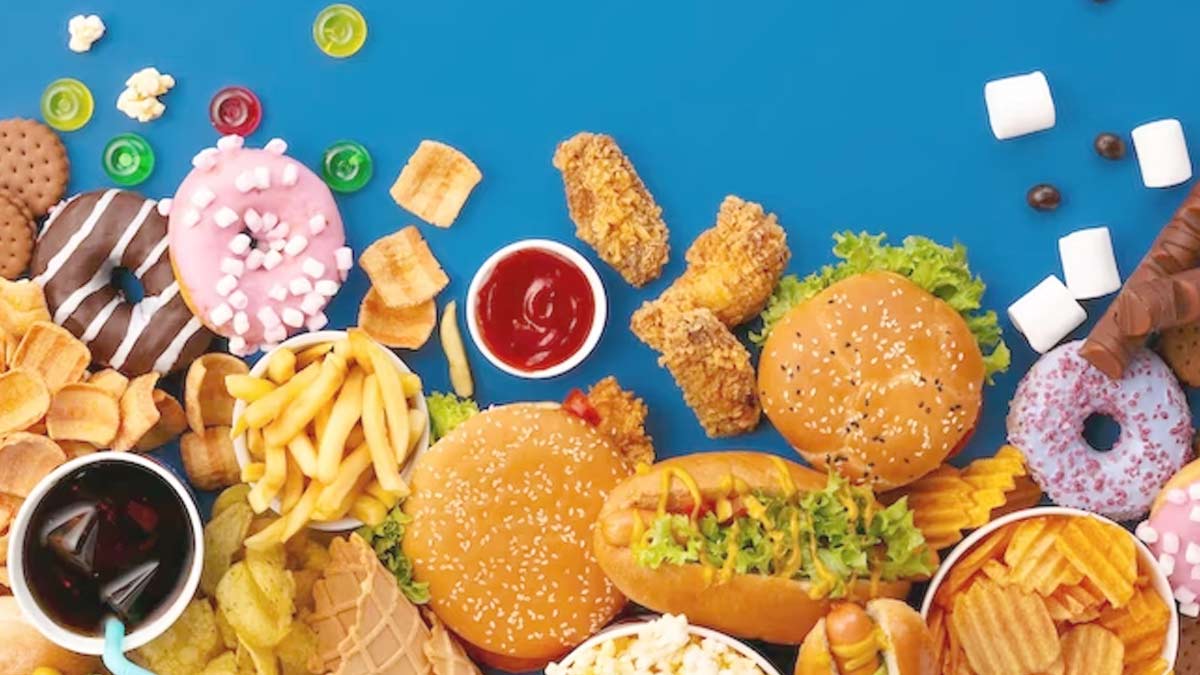
Consider it in the first person. It takes 10 minutes to eat a burger, fries and fizzy drink, but 60-90 minutes to burn off. Most importantly, "Exercise doesn't fix the inflammation, unhealthy gut, high cholesterol or nutritional deficiencies that can be caused by poor eating all the time," she adds.
The takeaway: exercise helps manage some consequences, but it doesn't fix the underlying damage of frequent junk food consumption.
A 2023 review published in Nutrients examined how diet and exercise work together. The research found that while exercise has many health benefits, it cannot protect you from the harmful effects of consistently eating junk food. Eating high-calorie, nutrient-poor food causes metabolic problems like insulin resistance and high cholesterol that exercise alone cannot reverse. The study emphasises that both diet quality and physical activity are equally important for long-term health.
ALSO READ- Tofu vs Paneer After Workout: Which Is Better for Muscle Building?
Can You Really Outrun A Bad Diet?
This is where the popular saying "you can't outrun a bad diet" actually holds true. Veena explains why: "The phrase 'you can't outrun a bad diet' is largely true. While physically active individuals generally have better metabolic health than inactive individuals, poor dietary habits can still increase the risk of obesity, type 2 diabetes, high blood pressure, fatty liver disease, and cardiovascular disease over time."
It may come as a surprise to many of you, but you can look good on the outside and feel bad on the inside. Even though physically fit, a person can have metabolic abnormalities if their diet is mainly made up of processed and nutrient-poor foods, Veena adds.

Long-term health is more than just your calorie deficit or your reflection in the mirror. “It's about what is going on in your body. Long-term health is not only about calorie balance, but also on the quality of the food consumed," she emphasises.
What Should You Actually Keep In Mind?
The goal isn't to become obsessive about food or eliminate all your favourite treats. Veena's advice is refreshingly balanced: "The goal should not be to eliminate all favourite foods but to maintain moderation. Occasional treats can comfortably fit into a healthy eating pattern as long as the majority of meals consist of whole grains, fruits, vegetables, lean proteins, healthy fats, and adequate fluids."
The keywords here are "occasional" and "majority". You don't need to be perfect, but you do need to be honest about the balance. She also flags an important trap many people fall into: "People should avoid using exercise as a justification for frequent overeating, as this often leads to consuming far more calories than can realistically be burned through physical activity."
Who Should Be Extra Careful?
Certain groups need to be particularly mindful about this balance. Veena outlines who should take extra care:
- People with obesity: junk food makes weight management much harder despite exercise
- Those with diabetes: frequent junk food worsens blood sugar control
- People with high cholesterol: poor diet undermines the benefits of exercise
- Those with hypertension or heart disease: the sodium and unhealthy fats in junk food increase risk despite activity
- People with fatty liver disease or kidney disease: these conditions are particularly vulnerable to dietary quality
- Children and adolescents: developing healthy eating habits now sets them up for life
"Individuals with obesity, diabetes, high cholesterol, hypertension, heart disease, fatty liver disease, or kidney disease should be particularly cautious, as regular intake of junk food can worsen these conditions despite exercising," Veena warns.
She also makes a point about children: "Children and adolescents should also avoid developing the misconception that exercise permits unrestricted consumption of processed foods, as healthy eating habits established early in life have lasting benefits."
ALSO READ- Will Eating Less Protein Lower Creatinine Levels? An Expert Explains
Conclusion
Throughout all of this, the expert’s final word is the most significant, as she adds, "Exercise and nutrition should be considered equals, not alternatives, and should work hand-in-hand for long-term health.”
That is, don't consider them as a compromise. They work together.
FAQ
1. Can I eat junk food if I exercise regularly?
Occasional junk food is fine. But frequent eating of it? No, not really, even if you're working out a lot. Exercise helps with some of the damage, but it doesn't fix nutritional deficiencies or the inflammation that comes from consistently eating poorly.2. How much exercise would I actually need to burn off a fast-food meal?
A typical fast-food meal might take 60 to 90 minutes of real, moderate-to-intense exercise to burn the calories. But here's the thing — that's just the calories. It doesn't deal with the nutritional damage or the inflammation from eating it. Better to just eat junk less often than to try and "earn" it through exercise.
All possible measures have been taken to ensure accuracy, reliability, timeliness and authenticity of the information; however Onlymyhealth.com does not take any liability for the same. Using any information provided by the website is solely at the viewers’ discretion. In case of any medical exigencies/ persistent health issues, we advise you to seek a qualified medical practitioner before putting to use any advice/tips given by our team or any third party in form of answers/comments on the above mentioned website.
How we keep this article up to date:
We work with experts and keep a close eye on the latest in health and wellness. Whenever there is a new research or helpful information, we update our articles with accurate and useful advice.
-
Current Version
Jul 01, 2026 19:54 IST
Modified By : Vivek Kumar Jul 01, 2026 19:54 IST
Modified By : Vivek KumarJul 01, 2026 19:54 IST
Published By : Vivek Kumar
Reviewed By : Ms Veena V