If you browse social media, you'll find plenty of people saying how rosemary oil has changed their hairline. Some posts even suggest that it's comparable to the clinically proven hair loss medication, minoxidil. It's a bold claim for a kitchen-cupboard staple.
Dr Sandeep Mahapatra, Director & Senior Consultant Dermatologist at Neo Follicle Hair Transplant and Dermasolutions, Bengaluru, says that there is real science behind rosemary oil's benefits to hair. However, it is not a miracle cure. The effects are mild, take longer to work than medical treatments and are different for everyone. Read on to understand the pros and cons of rosemary oil for hair loss.
How Does Rosemary Oil Work for Hair Growth?

Dr Mahapatra explains that rosemary oil is thought to help promote healthy hair in several ways:
- Better blood circulation to the scalp may help to increase blood supply to hair follicles and encourage better growth.
- Moisturising a less irritated scalp will be a healthier environment for hair growth to occur.
- Antioxidant properties from rosemary can help to ward off oxidative stress that can cause thinning hair.
Some early research indicated rosemary may have a mild effect on 5-alpha-reductase, the enzyme that converts testosterone to DHT, but there has been far less research than when it comes to the actual DHT-blocking medications.
A 2022 study in Scientific African found that a 10% rosemary oil oleogel formulation, using beeswax for sustained release, produces hair growth results in rats statistically similar to 2% minoxidil over six weeks. The research demonstrates that this formulation boasts a 91% oil binding capacity, maximising topical absorption and offering a stable, effective delivery system for hair growth enhancement.
ALSO READ- Hair Breakage vs Hair Loss: Dermatologist Explains the Real Difference and How to Tell Them Apart
Other Ways to Support Hair Regrowth

Rosemary oil doesn't have to work alone. It's often more effective as part of a broader approach, alongside:
- Minoxidil – the most well-established over-the-counter treatment, backed by strong clinical evidence
- Finasteride – a prescription option for pattern hair loss, used under medical supervision
- PRP (platelet-rich plasma) therapy – increasingly used for early-stage hair thinning
- Scalp massage – supports circulation and pairs well with oil application
- Nutritional correction – addressing deficiencies in iron, vitamin D, biotin, or protein that can contribute to hair thinning
- Peppermint oil – another essential oil showing early promise in small studies
- Treating the root cause – hormonal imbalances, chronic stress, or scalp conditions often needs direct treatment rather than being masked with topical remedies alone
How Much Rosemary Oil Should You Use, and How Often?
Dr Mahapatra is adamant that rosemary oil shouldn't be applied directly to the scalp since "it's a concentrated essential oil and can irritate the scalp. He recommends adding 3-5 drops of rosemary essential oil to a tablespoon of a base oil (coconut, jojoba or castor oil) and massaging it into the scalp.
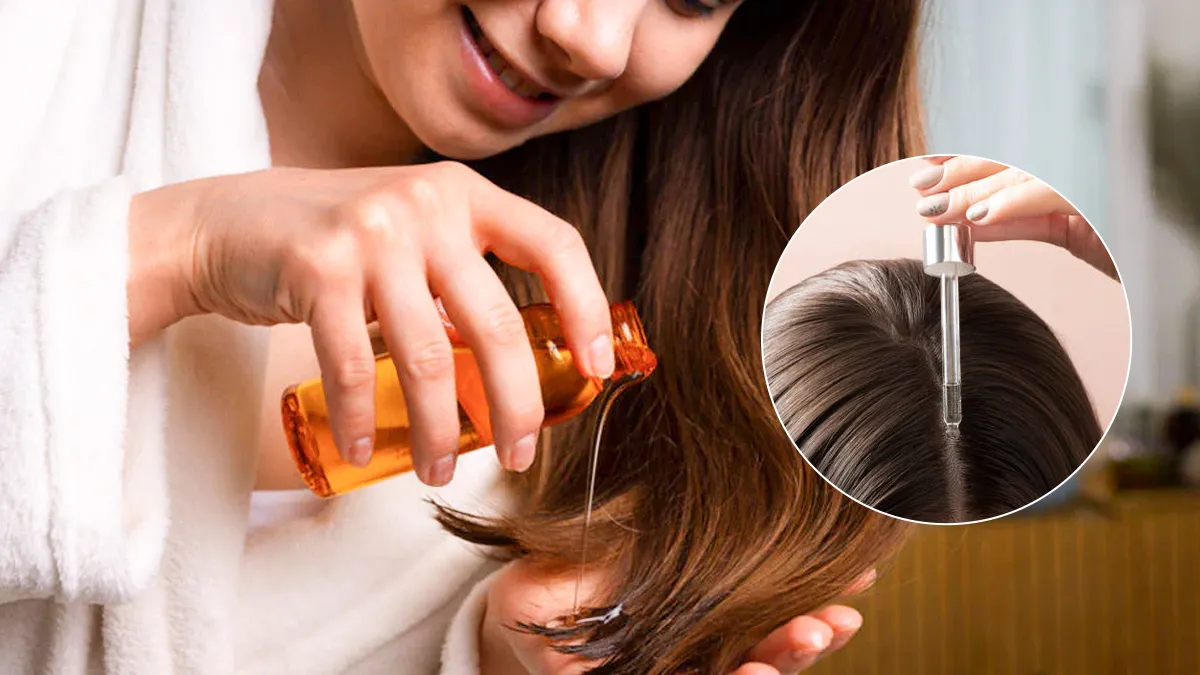
This can be repeated two or three times per week, or left on for 20 to 30 minutes, or overnight before shampooing off with regular shampoos. Remember, he adds, "consistency is more important than quantity" Although there are visible results, they will appear in 3-6 months with regular use.
Who Should Avoid Rosemary Oil?
Rosemary oil isn't suitable for everyone, and a few groups should either avoid it or use it with caution:
- Persons sensitive to rosemary or other plants of the mint family
- Infants and individuals sensitive to essential oils, as essential oils can be very irritating and cause stinging if used on a broken, irritated or inflamed scalp
- For breastfeeding or pregnant women, rosemary oil "hasn't been sufficiently studied for safety in pregnancy
- People who are sensitive to the effects of rosemary oil, as excessive use can trigger seizures in individuals with epilepsy or a history of seizures.
- Persons with very sensitive skin or with a contact dermatitis history, who can be sensitive even to a diluted mix
A patch test on the inner arm 24 hours before applying it to the scalp is a sensible precaution for anyone trying it for the first time.
ALSO READ- Can Oiling Your Hair During Monsoon Harm Your Scalp? Dermatologist Answers
Conclusion
Rosemary oil isn't a myth, but it isn't magic either. Used consistently and correctly, it may offer a gentle, natural boost to scalp health and hair growth, particularly for early or mild thinning. But for more significant or ongoing hair loss, it's best used alongside proven treatments rather than as a replacement for them, and it's always worth getting persistent hair loss checked by a dermatologist rather than relying on home remedies alone.
FAQ
1. How long does it take to see results from rosemary oil for hair loss?
Most people will know the difference after about three to six months of continuous use of the supplement, depending on the cause of hair loss, Dr Mahapatra explains.2. Can rosemary oil replace minoxidil for hair loss treatment?
Not completely, Dr Mahapatra says. One study showed similar results after 6 months, but there is less evidence in support of rosemary oil than there is for minoxidil, the more proven treatment.
All possible measures have been taken to ensure accuracy, reliability, timeliness and authenticity of the information; however Onlymyhealth.com does not take any liability for the same. Using any information provided by the website is solely at the viewers’ discretion. In case of any medical exigencies/ persistent health issues, we advise you to seek a qualified medical practitioner before putting to use any advice/tips given by our team or any third party in form of answers/comments on the above mentioned website.

How we keep this article up to date:
We work with experts and keep a close eye on the latest in health and wellness. Whenever there is a new research or helpful information, we update our articles with accurate and useful advice.
-
Current Version
Jul 30, 2026 12:06 IST
Published By : Vivek Kumar
Reviewed By : Dr Sandeep Mahapatra