-1791812671170_m.webp)
Acne can show up at the most unexpected moments, when your skin would appear to be settling down. Often, it occurs on the days right before a woman's period for many women. Despite a normal skin care regimen, some areas of the chin or jaw can develop into red, painful pimples. Such recurrent breakouts frequently are associated with the natural fluctuation of hormones throughout the menstrual cycle. This kind of acne typically occurs due to hormonal changes, which can cause pores to clog and trigger the production of oil. Knowing when these changes occur can help you to anticipate breakouts and avoid them.
Why Does Acne Show Up Before Your Period?
Dr Lavanya Kiran, Director and Lead Consultant, Obstetrics, Gynaecology, KIMS Hospitals, Electronic City, Bengaluru explains that premenstrual acne is usually linked to hormonal changes rather than poor hygiene.
“Premenstrual acne is common and it is typically caused by the change in hormones, not by poor hygiene. In the days leading up to the period, there is a rapid change in the hormones that results in an increase in skin oiliness and an increase in acne.”-1791812783947.webp) Acne Before Period
Acne Before Period
She says that the menstrual cycle influences oil production by the changes in hormones like oestrogen, progesterone and androgens. Androgens cause the sebaceous glands to make sebum, a natural oil that protects skin. If there is too much sebum and it combines with dead skin cells, it can clog the pores. This can irritate and cause acne.
“As oestrogen falls, the effect of androgens becomes more noticeable. Androgens tell the oil glands in your skin to make more sebum. Extra oil mixes with dead skin cells and blocks pores. Bacteria then grow inside the clogged pore and cause a pimple,” says Dr Kiran.
A 2025 Health Science Reports review examined how hormones, diet, and genetics drive breakouts. The author highlights that androgens play a central role in stimulating oil production, while high-glycemic diets can further trigger acne development.
Why Do Pimples Appear So Suddenly?
“An overnight pimple may be a result of several days of development under the skin. These developing spots may become more obvious just before menstruation, due to hormonal changes,” says Dr Kiran.
Progesterone causes the skin to become a little bit thicker, which clogs the pores, and a pimple does take several days to develop within the skin, so if you see a pimple today it's formed as far back as a week ago or so when your hormones changed.-1791812873401.webp) pimples before periods
pimples before periods
That's why it's important to wait until the pimple has formed sometimes. If you notice breakouts occur on a monthly basis, you might be able to help by starting a suitable skin care program earlier than the month of the breakout.
“Acne commonly occurs in the premenstrual period on the chin, jawline and sometimes on the neck area. These are the areas which may be sensitive to hormonal shifts,” added Dr Kiran. It can also develop in other areas as well, but the pimples may be deep, tender bumps that look more like whiteheads.
ALSO READ- Why Do Period Clots Happen? What Your Heavy Flow May Be Telling You
What Happens To Your Skin During The Menstrual Cycle?
Skin changes can happen a certain way over the course of the menstrual cycle, but it varies from one woman to another, explains Dr Kiran.
- A period of relatively low hormone levels occurs during days 1 - 5. The skin can be dry or flaky and any existing pimples may begin to heal.
- Days 6-13 prior to ovulation: Oestrogen increases. During this period, some women will experience clearer skin.
- Days 14-21 (post-ovulation): The oil production may increase and Progesterone is elevated. Pores may start to clog.
- Days 22-28 (before next period): The hormones decrease and breakouts may become more visible.
These are approximate timings and should be used as a guide only. Cycles can differ in length and/or hormonal patterns, meaning that acne may not be present on the same day each month.
Could It Be A Sign Of PCOS?
Occasional breakouts before menstruation are common and do not automatically indicate a hormonal condition. However, Dr Kiran says persistent or severe acne, especially when accompanied by menstrual changes, should not be ignored.
“Acne that is severe, constant, or comes with other symptoms may point to a hormonal condition such as PCOS, where hormone imbalance affects the ovaries,” she explains.
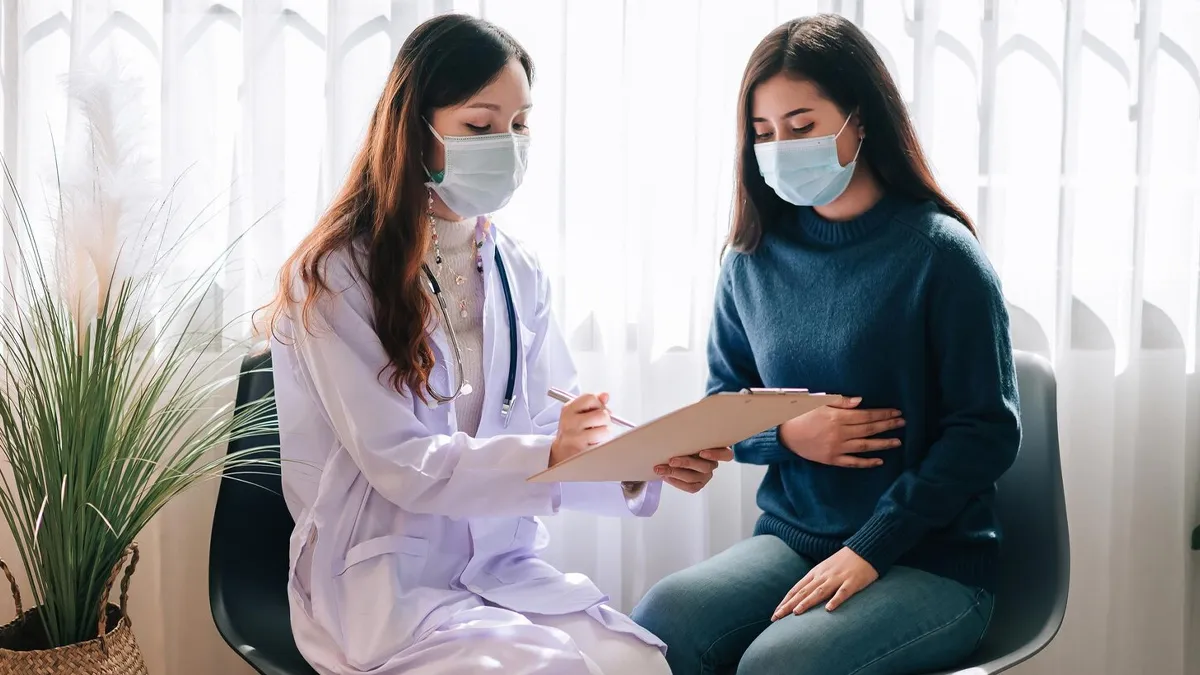 PCOS signs
Other signs to watch for include:
- Irregular, missed or infrequent periods
- Excess hair growth on the face, chest or abdomen
- Thinning hair on the scalp
- Rapid weight gain, particularly around the abdomen
- Dark, velvety patches of skin on the neck or underarms
- Acne that continues throughout the month and does not settle after the period
According to Journal of the Endocrine Society, women with PCOS are 1.6 times more likely to develop adult breakouts. The authors explain that extra androgens alter skin oil production, triggering inflammation. However, they emphasize that acne alone is not enough to confirm PCOS, and doctors should run proper blood tests to check hormone levels.
How Can You Prevent Or Manage Acne Before Your Period?
Dr Kiran recommends a consistent skincare routine and early attention to recurring breakouts.
- “Wash your face twice a day with a gentle, oil-free cleanser, and avoid harsh scrubbing. Use non-comedogenic products, which are made so they do not clog pores. Ingredients such as salicylic acid or benzoyl peroxide may help when used appropriately before your period,” she says.
- She also recommends using sunscreen, avoiding the temptation to squeeze pimples, changing pillowcases regularly and cleaning phone screens.
- “Keep a cycle and skin diary for two to three months. It helps you predict breakouts and start care early. Sleep for seven to eight hours, find a stress outlet that works for you, and eat a balanced diet with fewer sugary and highly processed foods,” Dr Kiran adds.
-1791812815742.webp) Acne Period
Acne Period
If these steps do not help, a dermatologist may recommend prescription creams or hormonal treatment, including certain contraceptive pills or medicines that reduce the effects of androgens. These treatments should only be used under medical supervision.
When Should You See A Doctor?
- “If the acne is painful, deep, leaves scars or dark marks or is not getting better after a few months of basic skincare, you should seek medical help,” Dr Kiran says.
- Sudden acne breakouts in adulthood are also worth paying attention because they may not occur before this age.
- If periods are irregular or if there are other indicators of hormone imbalance, it is advisable to undergo a check-up.
A dermatologist will be able to help determine the cause, suggest appropriate treatment and diminish the risk of permanent scarring.
ALSO READ- Applying Raw Lemon on Face? Why Dermatologist Warns You Against This Viral DIY Trend
Conclusion
Though acne prior to periods frequently is a reaction to normal hormonal changes, this doesn't indicate that it is something to endure. By keeping track of the cycle and adhering to a light skin care regimen and beginning appropriate acne treatment at an early stage can help you to control the pimples. If acne is persistent or severe, or if it occurs in conjunction with irregular periods or other abnormalities in the menstrual cycle, a doctor's evaluation is recommended.
FAQ
1. Can premenstrual acne leave permanent scars?
Absolutely, deep or inflamed pimples can leave scars; particularly if you pop or squeeze them. Treatment early can help minimize inflammation and risk of permanent marks.2. Do you need to alter your skin care regimen every month when you get your period?
Not necessarily. It's generally best to start with a consistent routine. For those with regular acne outbreaks, a dermatologist may be able to determine if it is appropriate to use a suitable acne treatment prior to the onset of menstruation.
All possible measures have been taken to ensure accuracy, reliability, timeliness and authenticity of the information; however Onlymyhealth.com does not take any liability for the same. Using any information provided by the website is solely at the viewers’ discretion. In case of any medical exigencies/ persistent health issues, we advise you to seek a qualified medical practitioner before putting to use any advice/tips given by our team or any third party in form of answers/comments on the above mentioned website.
How we keep this article up to date:
We work with experts and keep a close eye on the latest in health and wellness. Whenever there is a new research or helpful information, we update our articles with accurate and useful advice.
-
Current Version
Oct 12, 2026 19:20 IST
Published By : Vivek Kumar
Reviewed By : Dr Lavanya Kiran