

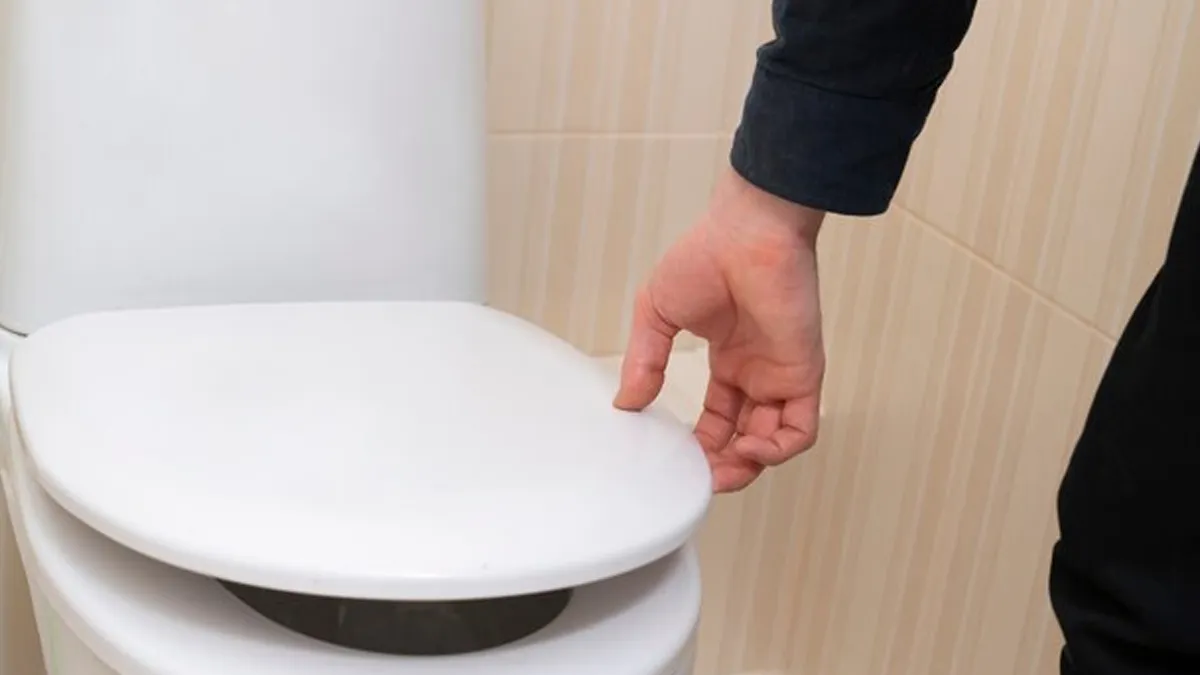
Some bathroom habits may not be as harmless as they seem. One such habit is flushing with the toilet seat lid up. This is a common washroom habit, which is often overlooked. But did you know that it may spread diseases and contaminate your environment? Yes, you read that right.
Table of Content:-
To get a better understanding of this, we reached out to Dr Manish Itolikar, Consultant – Internal Medicine, Fortis Hospital Mulund, Mumbai and Dr Sunil Rana, Associate Director and Head- Internal Medicine (Unit III), Asian Hospital.
Is Flushing With Toilet Seat Up Risky?
Firstly let us tell you whether flushing with the lid of the toilet seat up is harmful for your health or not. Our expert answers it for you.
“Flushing with the lid open creates what we commonly call a toilet plume, a burst of fine droplets that rise almost a metre into the air. These droplets can carry bacteria, viruses, and fecal particles, which then settle on surfaces like the flush button, faucets, toothbrushes, towels, and even your hands and face. Over time, this increases the risk of gastrointestinal infections, stomach flu, and other hygiene-related illnesses, especially in shared or high-use bathrooms,” explains Dr Itolikar.
Dr Rana adds that this aerosol pollution supports the distribution of gastrointestinal and respiratory diseases, such as in communal or under-ventilated washrooms.
Also Read: Gym or Toilet Seat: Which Is Dirtier? A Doctor Explains Which Has More Bacteria
Advantages Of Flushing With Toilet Seat Down
When you flush with the toilet seat down, this simple step can be beneficial for you. “Closing the lid before flushing acts as a simple but extremely effective barrier. It reduces the spread of microbes in the air, keeps surrounding surfaces cleaner, and limits exposure to potentially harmful droplets. For families with children, elderly members, or people with low immunity, this small habit plays a big role in preventing cross-contamination,” shares Dr Itolikar.
On this note, Dr Rana breaks down the benefits of flushing with the lid down:
- It helps greatly with the decrease of aerosolised droplets.
- It avoids the contamination of bathroom surfaces and personal hygiene items.
- This is one easy practice that reduces the spreading of bad microbes in the environment and also contributes to the achievement of cleaner indoor air.
- It also reduces the possibility of spreading bacteria and viruses in communal toilets, which is one of the most effective and disregarded sources of hygiene to protect general health and prevent avoidable infections.
Can Flushing With Toilet Seat Up Spread Diseases?
Now that we already know how risky it is to flush with the seat up, let us identify the diseases that this bathroom habit can spread. Dr Itolikar explains that toilets, especially in public or shared spaces may harbour E coli, Salmonella, Shigella, Norovirus, Rotavirus, and sometimes Staphylococcus. He adds that these can trigger:
- Gastroenteritis
- Food-poisoning
- Diarrhoeal illnesses
- Skin infections (from touching contaminated surfaces and then touching your face or wounds).
“While the risk is not extremely high from casual use, poor hygiene in combination with toilet plume exposure can increase transmission,” says the expert.
Dr Rana seconds this and shares, “Although the risk is not high, flushing with the lid open may disseminate microbes that could lead to gastrointestinal infections such as norovirus, E coli, or salmonella, especially in the situation when the surfaces are infected and hands contact them after flushing. Enclosed washrooms with poor ventilation are also susceptible to respiratory viruses. The bulk of the illness in relation to toilet seats is indirect, that is by way of contaminated surfaces and improper hand hygiene, and not by direct contact with the seat.”
Can You Contract UTIs From Toilet Seats?
If you are wondering whether you can contract Urinary Tract Infections (UTIs) from toilet seats or not, let us explain this for you too.
“The risk is extremely low to almost negligible. UTIs occur when bacteria enter the urinary tract usually from one’s own skin flora and not from external surfaces like toilet seats. Bacteria on a seat cannot penetrate the urethra unless there is direct, prolonged contact with broken skin. For most people, UTIs are caused by dehydration, delayed urination, or poor genital hygiene; not toilet seats,” answers Dr Itolikar.
Speaking on the same issues, Dr Rana shares that the probability of contracting UTIs due to toilet seats is very low given that the bacteria that cause urinary infections are not viable on dry and hard surfaces. He adds, “There is no contact with public toilets and UTIs are usually caused by the entry of their own body bacteria into the urinary tract.”
Can You Contract STIs From Toilet Seats?
What about sexually transmitted diseases? Can you contract them from toilet seats? “No. STIs cannot survive long on cold, dry surfaces like toilet seats. They require direct skin-to-skin or body-fluid contact. In a clinical sense, the probability is virtually zero. This is a persistent myth but scientifically unfounded,” answers Dr Itolikar.
Dr Rana seconds this view and adds, “Toilet seats cannot be infected with STIs as the organisms that cause STIs cannot survive and multiply in the environment without close body contact. Pathogens that are associated with STIs in most cases perish fast outside the human body and will not survive cold, dry toilet surfaces. There are still myths about how a person can contract such infections in a shared toilet, but scientific evidence constantly reveals that there is no realistic threat of infection by use of toilet seats or bathroom surfaces.”
Tips To Avoid Contracting Diseases From Toilet Seats
If you want to be safe from diseases that can spread from unhygienic bathroom habits, especially your toilet seat, then our expert shares some safety tips. Dr Itolikar recommend these simple, high-impact habits:
- Always flush with the lid down to reduce microbial aerosol spread.
- Wash hands thoroughly for 20 seconds with soap — this is the single biggest protective step.
- Clean the seat with a tissue or sanitiser spray in public washrooms before use.
- Avoid touching your face after using the washroom until you’ve washed your hands.
- Keep personal items (toothbrushes, razors, makeup, towels) at a distance from the toilet.
- Disinfect frequently touched surfaces like flush handles, taps, and doorknobs regularly at home.
- Ensure proper ventilation—exhaust fans help reduce moisture and microbial load.
The Final Word
Flushing with the toilet lid open creates what we commonly call a toilet plume, a burst of fine droplets that rise almost a metre into the air. These droplets can carry bacteria, viruses, and fecal particles. This increases the risk of infections and diseases. You can follow some basic washroom hygiene to keep yourself safe.
Also watch this video
FAQ
Can fungal infections spread through a toilet seat?
Yes, fungal infections can spread through a toilet seat.Are toilet seats safe?
Yes, they are generally safe, when certain hygiene practices are followed.How long do toilet bacteria live on surfaces?
Germs like E Coli and salmonella can survive for as long as four hours.
How we keep this article up to date:
We work with experts and keep a close eye on the latest in health and wellness. Whenever there is a new research or helpful information, we update our articles with accurate and useful advice.
Current Version
Dec 18, 2025 18:37 IST
Published By : Shruti Das