
Almost anywhere in the world, when you sit to meditate, you are likely to take the same pose. With your legs folded in more or less the same way. It's the universal thing that most people never ask “why?” because it is the universal image of meditation.
Why is it done? Padmasana, or the cross-legged lotus position, is one of the oldest recorded meditation postures in history. It originates from thousands of years ago in ancient India. However, its story is not just one of comfort and stability, and one academic opinion undermines the widely held belief about its true origins.
The Traditional Reason Meditation Is Done Cross-Legged
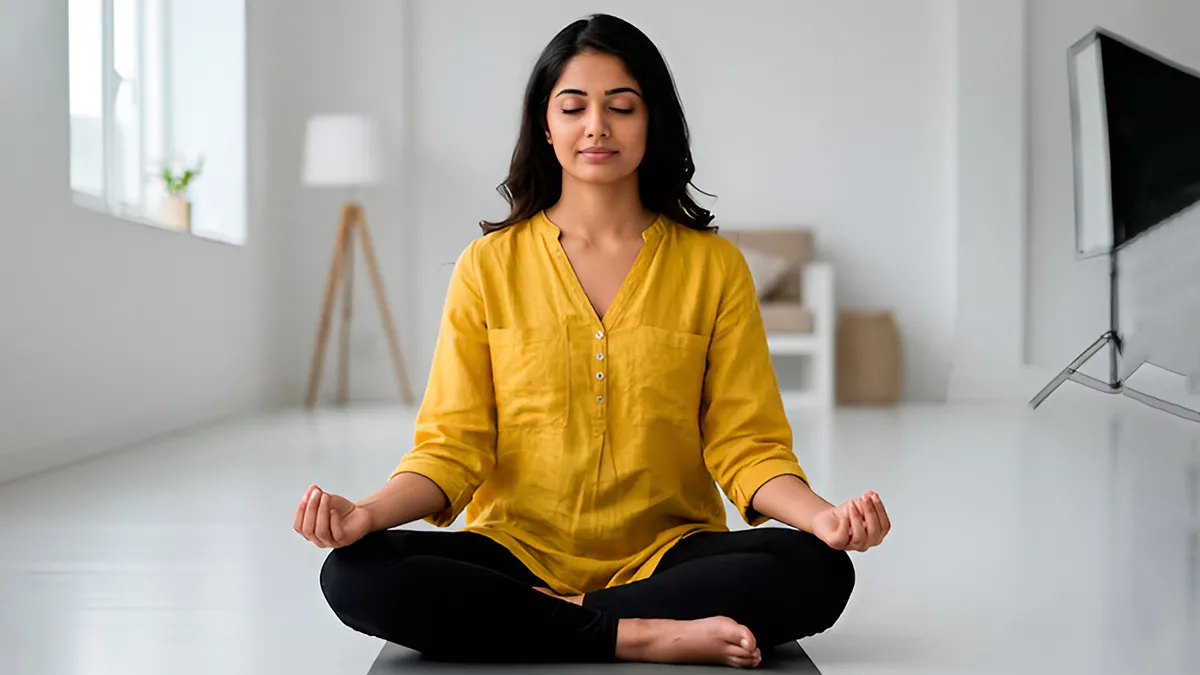
The most common explanation is practical. As per Yogapedia, Patanjali's Yoga Sutras, one of yoga's foundational texts, define asana simply as a "steady, comfortable seat"; the idea being that a stable, balanced position lets the mind settle without the body constantly demanding attention. Sitting cross-legged:
- Creates a wide, stable base, reducing the urge to shift or fidget.
- Keeps the spine naturally upright without external support.
- Grounds the body low to the floor, which many traditions associate with calm and focus.
ALSO READ- Who Invented FOMO? How the 9/11 Attack Gave Modern Anxiety Its Name
What Is the Earliest Evidence of the Lotus Position?
The historical trail dates back further than most people realise. According to Wikipedia, a figure sitting on a lotus flower with its foot on the flower's stem is depicted on the coins of Chandragupta II from roughly 380-415 AD. He was an emperor of the Gupta dynasty in India.
The earliest known text specifically discussing meditation posture, the Nisvasattvasamhita Nayasutra, dated to between the 6th and 10th centuries, directs meditators and mantra practitioners to sit in the lotus pose or a similar posture.
The pose itself is even older as a named asana. It appears in the 8th-century Patanjalayogashastravivarana, making it one of the very first yoga poses ever formally named, according to the same historical documentation.
Why Did Ancient Yogis Choose Lotus Pose for Meditation?
The reasoning wasn't just spiritual. It was practical. Because the legs are essentially locked in place, the pose minimises small physical movements, keeping the body steady during long meditation sessions, according to Yoga Journal.
This stillness allowed the senses to turn inward, supporting the deep, extended meditation sessions ancient practitioners were known for. There's also a physiological explanation gaining attention today. 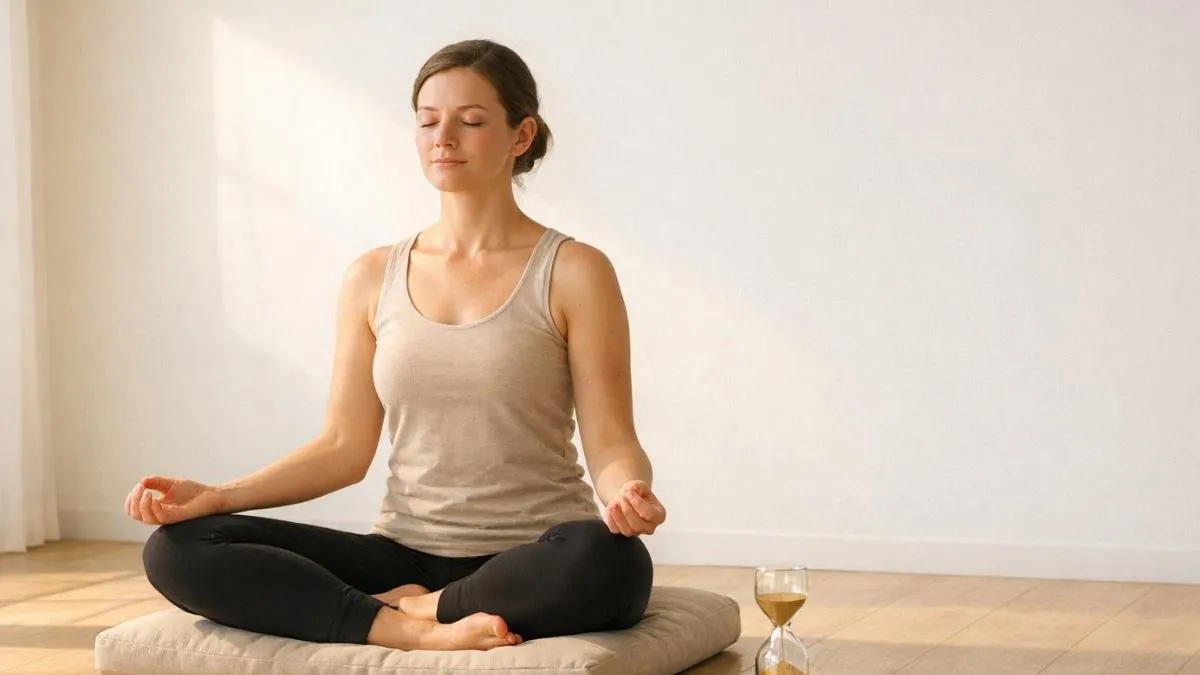 meditation pose
According to the same Yoga Journal source, grounding the pelvis firmly into the floor in this pose stimulates nerves in the sacrum, which activates the parasympathetic nervous system, the body's natural calming response.
What Do Ancient Yoga Texts Actually Say About the Lotus Position?
Several classical yoga texts specifically single out this pose:
- The 15th-century Hatha Yoga Pradipika, one of the oldest surviving texts on classical hatha yoga, calls the pose the "destroyer of all diseases" and states it leads to liberation, according to Wikipedia
- The Hatha Yoga Pradipika features only six poses total, and lists the lotus position first.
- The 17th-century Gheranda Samhita lists it among just four primary seated poses suitable for meditation and breath control
- Padmasana is also one of twelve seated postures mentioned in Vyasa's commentary on the Yoga Sutras of Patanjali
Why Is It Specifically Called the "Lotus" Position?
The name comes directly from the Sanskrit words padma, meaning lotus, and asana, meaning posture or seat, according to Wikipedia. The symbolism runs deep across Hindu, Buddhist, and Jain traditions.
The sacred lotus flower is rooted in the muddy water, and yet it rises to bloom undamaged above the water. It is a metaphor for spiritual growth and enlightenment in spite of the struggles of the world. Hence, gods and ascended masters are often seen sitting in just this position.
ALSO READ- Was OCD Discovered 1,000 Years Ago? How a 9th-Century Polymath, Al-Balkhi, Changed Psychology
Conclusion
Why is it that meditation is performed cross-legged? The lotus position has been recorded for over 1500 years, from coinage to ancient tantric texts, to the classical hatha yoga manuals and has become the standard meditation posture. It provides a sense of stability, a physical, symbolic and true calming effect on the nervous system. All of which have made it the central element of meditation practice in many spiritual traditions over the centuries.
FAQ
1. Do you have to sit in full lotus position to meditate effectively?
No, variations such as Ardha Padmasana or half lotus, are also known for their stability but have less need for hip and knee flexibility, making it more accessible for a majority of modern practitioners.2. Is the lotus position exclusive to Hindu meditation traditions?
No, it's an integral part of Hindu, Buddhist, Jain and Tantric practices and is now widely used as a recognised symbol of meditation and wellbeing in the West.
All possible measures have been taken to ensure accuracy, reliability, timeliness and authenticity of the information; however Onlymyhealth.com does not take any liability for the same. Using any information provided by the website is solely at the viewers’ discretion. In case of any medical exigencies/ persistent health issues, we advise you to seek a qualified medical practitioner before putting to use any advice/tips given by our team or any third party in form of answers/comments on the above mentioned website.
How we keep this article up to date:
We work with experts and keep a close eye on the latest in health and wellness. Whenever there is a new research or helpful information, we update our articles with accurate and useful advice.
-
Current Version
Aug 19, 2026 19:07 IST
Published By : Vivek Kumar