
Every year, as the rains arrive, so does eye flu. Red, itchy, watery eyes seem to spread through offices, schools, and households almost overnight. Why does this pattern repeat so predictably? Monsoon creates the ideal environment for the viruses and bacteria that cause conjunctivitis to spread more easily. Increased humidity, waterlogging, and more time spent in crowded indoor spaces during rain all contribute to faster transmission. Here is what she wants people to understand about this seasonal spike.
What Actually Causes Eye Flu During Monsoon?
Dr Neetu Gagneja Arora, Associate Director and Chief Eye Surgeon at Esskay Ortho & Eye Centre, New Delhi, explains that conjunctivitis during monsoon is usually caused by a highly contagious viral infection, and sometimes by bacteria. It spreads through direct contact with infected discharge, contaminated hands, shared personal items like towels or pillowcases, or contact with surfaces an infected person has touched.
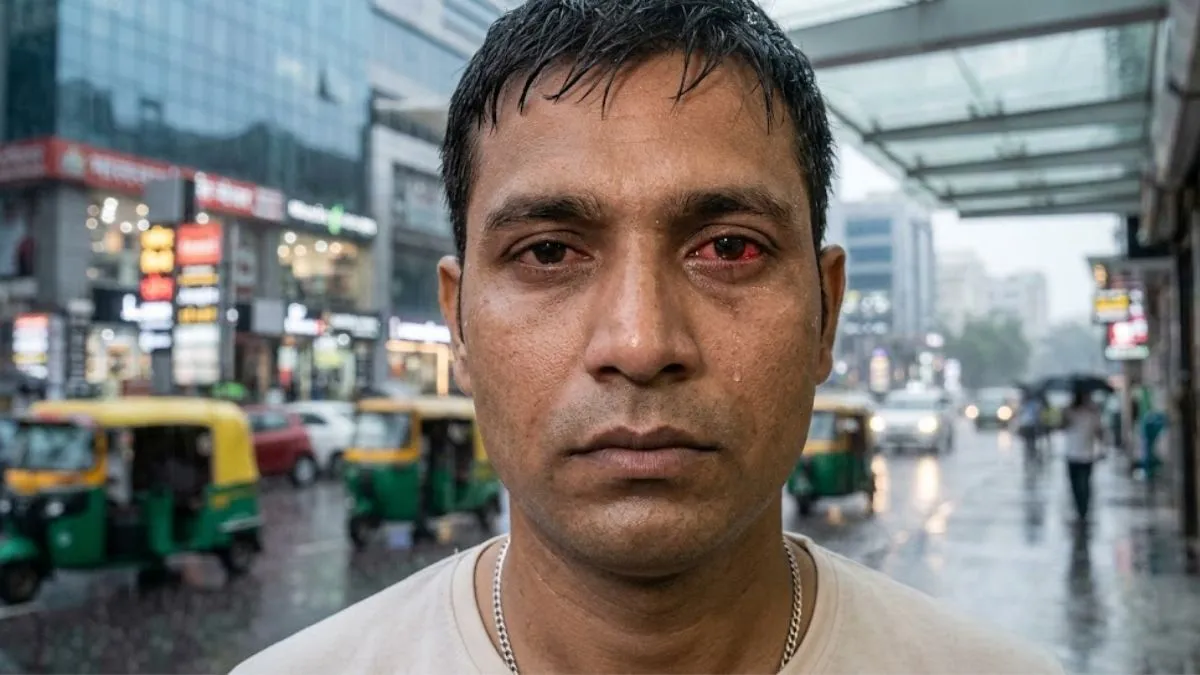 Eye Flu in Monsoon
A 2025 review from Ophthalmology and Therapy finds that heavier rainfall raises rates of conditions like ocular toxoplasmosis, while rising temperatures and humidity are linked to more fungal eye infections and viral reactivations such as herpes zoster ophthalmicus.
Air pollution also worsens dry eye disease, making the eyes more vulnerable to infection, and these effects hit rural, low-income, and tropical communities hardest.
ALSO READ- Does Eating Carrots Actually Improve Your Eyesight? Expert Answers
How Exactly Does the Weather Play a Role?
According to Dr Arora, several weather-related factors combine to make monsoon the perfect storm for conjunctivitis to spread:
- Humidity allows viruses and bacteria to survive longer on surfaces and in the air
- Waterlogging and dirty water increase exposure to contaminants that can enter the eyes
- People tend to gather more in enclosed, poorly ventilated spaces during heavy rain, increasing close-contact transmission
- Frequent hand-to-eye contact increases during monsoon, often unconsciously, due to wiping rain from the face or adjusting wet clothing and umbrellas
Can Both Eyes Be Affected, or Just One?
It can start in one eye and often spreads to the other within a day or two, according to Dr Arora, since it's easy to transfer the infection from one eye to the other through touching or rubbing.
In some cases, only one eye remains affected, but this isn't the norm. Close contact with the infected eye typically leads to both eyes being involved eventually.
A 2026 Delhi Journal of Ophthalmology review looked at over 3,000 conjunctivitis cases seen at a North Indian eye hospital during the July–August 2023 outbreak. It recorded symptoms and testing patients for the bacteria or viruses behind their infection. The researchers pointed to heavy rain, high humidity, waterlogging, and flooding as the main reasons cases surged so fast that monsoon.
These conditions bring more dirt and germs into daily contact, while hygiene tends to slip when streets flood and water gets contaminated. Add crowded spaces and easy hand-to-eye spread, and infection moves quickly through a community.
Does Staying Indoors Actually Protect You From Eye Flu?
Staying indoors reduces exposure to contaminated water and crowded public spaces, which does lower risk, according to Dr Arora. However, it isn't a complete solution, since conjunctivitis spreads easily within households too, especially through shared items or close contact with an infected family member.
As she puts it, good hygiene practices remain important even indoors, regardless of how much time is spent outside.
How Can You Prevent Eye Flu During Monsoon?![Eye Flu in Monsoon (1)]() Eye Flu in Monsoon (1)
Eye Flu in Monsoon (1)
-1786532103052.webp) Eye Flu in Monsoon (1)
Eye Flu in Monsoon (1)Dr Arora shares a practical list of prevention steps worth following during the season:
- Wash hands frequently, especially before touching the face or eyes
- Avoid touching or rubbing the eyes, particularly with unwashed hands
- Avoid sharing towels, pillowcases, handkerchiefs, or eye makeup
- Wear glasses instead of contact lenses if there's an outbreak in the household or community
- Avoid close contact with someone who has visible symptoms like redness or discharge
- Clean commonly touched surfaces regularly if someone at home is infected
- Avoid swimming in pools or other shared water sources during an active outbreak
What Is the Best Way to Treat Eye Flu Once It Happens?
Most cases resolve on their own, according to Dr Arora, but there are ways to ease symptoms and support recovery:
- Most viral conjunctivitis resolves on its own within one to two weeks with supportive care
- Cold compresses can help ease discomfort and swelling
- Artificial tears can relieve dryness and irritation
- Avoid touching or rubbing the eyes throughout the infection to prevent spreading it further or delaying healing
- If bacterial infection is confirmed, a doctor may prescribe antibiotic eye drops
- Discontinue contact lens use until the infection has fully cleared
Dr Arora adds an important caution too. See a doctor if symptoms are severe, involve significant pain, vision changes, or don't improve within the expected timeframe, since this could indicate a more serious eye condition needing specific treatment.
ALSO READ- Chemical Conjunctivitis: Know Its Symptoms, Risks, Causes and Prevention Tips
Conclusion
Eye flu spikes every monsoon because the season creates near-perfect conditions for viruses and bacteria. It spreads through humidity, contaminated water, crowded indoor spaces, and increased hand-to-eye contact. Simple hygiene habits, avoiding shared items, and prompt care if symptoms appear can go a long way in reducing your risk during this time of year.
FAQ
1. Can wearing sunglasses help reduce the risk of catching eye flu during monsoon?
Sunglasses or protective eyewear can offer some physical barrier against splashes of contaminated water or airborne particles, though they aren't a guaranteed prevention method on their own. They're most useful as an additional layer of protection alongside good hand hygiene and avoiding touching the eyes.2. Is it safe to return to work or school once symptoms start improving, even if not fully gone?
It's generally advisable to wait until symptoms have fully resolved, or at least until discharge and redness have significantly settled, before returning to shared spaces, since the infection can still be contagious during the improving phase. Checking with a doctor about when it's safe to return is a sensible precaution, particularly in settings with close contact like schools or offices.
All possible measures have been taken to ensure accuracy, reliability, timeliness and authenticity of the information; however Onlymyhealth.com does not take any liability for the same. Using any information provided by the website is solely at the viewers’ discretion. In case of any medical exigencies/ persistent health issues, we advise you to seek a qualified medical practitioner before putting to use any advice/tips given by our team or any third party in form of answers/comments on the above mentioned website.

How we keep this article up to date:
We work with experts and keep a close eye on the latest in health and wellness. Whenever there is a new research or helpful information, we update our articles with accurate and useful advice.
-
Current Version
Aug 12, 2026 18:04 IST
Published By : Vivek Kumar
Reviewed By : Dr Neetu Gagneja Arora