
Many people struggle to get a good night's sleep. Blame it on stress, anxiety or underlying health conditions. One breathing hack, called the 4-7-8 technique, has gone viral. It claims to help with the improvement of sleep quality. Does this technique actually work? We asked our mental health expert to explain.
Let us take a look at what Dr Sharadhi C, Consultant, Psychiatry, Aster CMI Hospital, Bangalore, has to say about this.
Can the 4-7-8 Breathing Hack Trick Your Brain into Sleeping?
Dr Sharadhi says that the 4-7-8 breathing technique is a relaxation exercise that may help people calm their mind and prepare for sleep. The expert further explains, “It was popularised by Dr Andrew Weil and uses slow, controlled breathing. It does not literally ‘trick’ the brain into sleeping, but it may reduce tension and shift attention away from racing thoughts.”
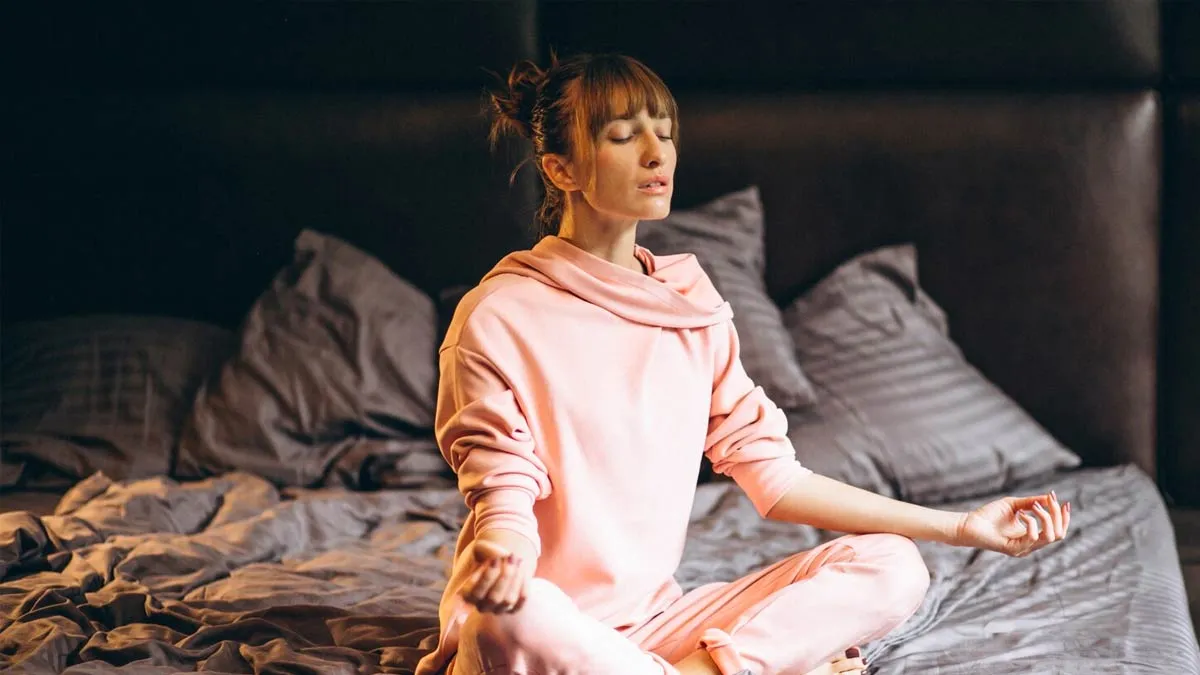
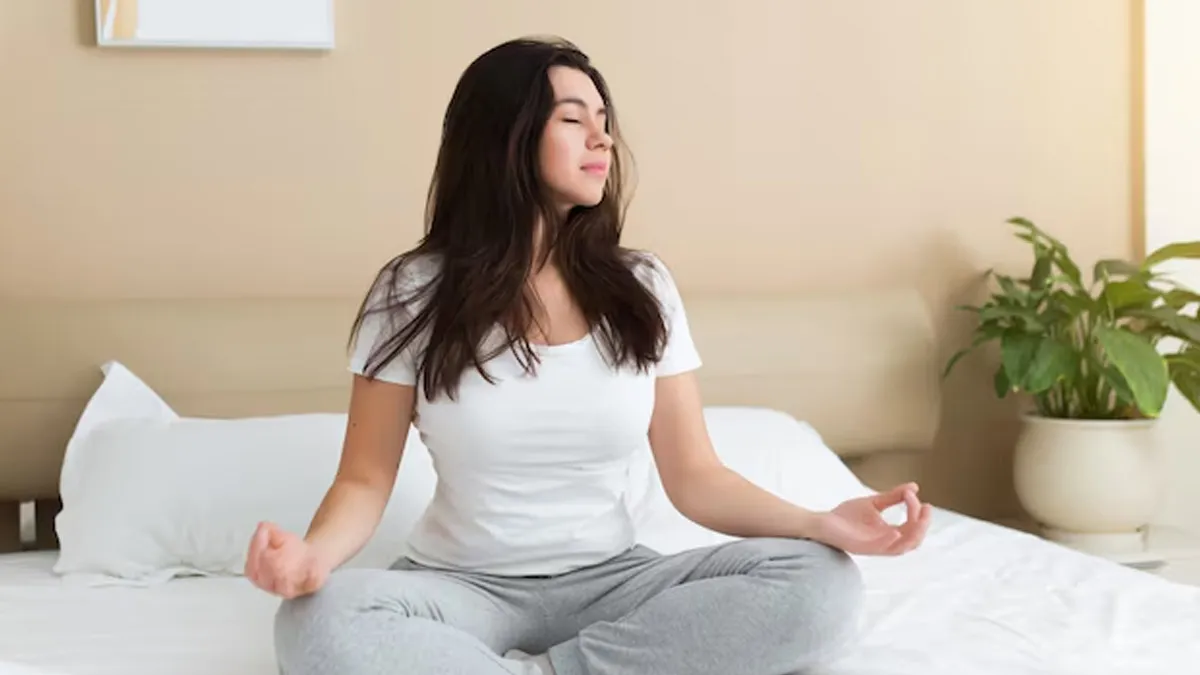
Shedding light on how to practice it, she says, “To practice it, lie down or sit comfortably. Place the tip of your tongue behind your upper front teeth and keep it there during the exercise. Close your mouth and breathe in through your nose for four seconds. Hold your breath for seven seconds. Then breathe out slowly through your mouth for eight seconds, making a whooshing sound. This completes one cycle. Beginners can start with four cycles and practice more, if comfortable.”
 breathing hack sleep 1
Tips To Practice The 4-7-8 Breathing Hack The Right Way
Dr Sharadhi shares some tips that can help you practice the breathing technique the right way:
- The important part is to keep the breathing slow and relaxed, rather than forcing yourself to hold your breath.
- The benefit comes mainly from slower breathing. It can encourage relaxation, reduce tension and give the mind something simple to focus on.
- However, scientific evidence proving that the 4-7-8 technique treats insomnia is limited. It should be viewed as a relaxation tool rather than a guaranteed sleep treatment.
- For better results, practise it in a quiet environment.
- Keep your bedroom dark and comfortable, follow a sleep schedule, reduce caffeine late in the day and limit screen use before bedtime.
- Some people may feel light-headed when they first try the technique, especially if they breathe too deeply or hold their breath too long.
- Stop if you feel uncomfortable and return to normal breathing.
“People with breathing or heart conditions should ask their doctor before trying breath-holding exercises. Overall, 4-7-8 breathing may help your body and mind relax, making it easier to settle into sleep, but it is not a cure for sleep problems,” concludes the expert.
 breathing hack sleep 2
How Breathing Exercises Affect Sleep Quality
A 2025 study, published in the journal Frontiers in Sleep, shares that breathing is a fundamental part of life that strongly impacts our physical well-being, mental health, and sleep quality. This review examined studies from the past two decades to understand how practicing various breathing exercises can affect adult sleep quality.
The study focused on specific techniques such as deep breathing, diaphragmatic breathing, mindful breathing, pursed-lip breathing, and respiratory muscle training. The results consistently showed that completing a structured breathing program can successfully improve your sleep quality; and this is valid across diverse groups of people.
For example, the findings noted that breast cancer patients practicing deep breathing for 10 minutes after radiation therapy experienced better sleep and less fatigue. Similarly, patients struggling with chronic lower back pain discovered that adding diaphragmatic breathing to their physical therapy showed improved rest. Those battling insomnia, when they added thirty minutes of mindful breathing into their daily routine, also showed significant, long-term sleep improvements.
 breathing hack sleep 3
The research added those diagnosed with obstructive sleep apnoea, who went through 5 weeks of targeted respiratory muscle training, witnessed a reduction in their apnoea symptoms and experienced better sleep. By calming the nervous system and minimising psychological stress, these breathing techniques naturally helped the body shift into a restful state. To conclude, this research confirmed that regularly practicing simple breathing exercises is a highly effective way for achieving better sleep. Taking just a few minutes daily to focus on mindful, controlled breathing can help with meaningful, long-lasting improvements to your sleep.
ALSO READ- Is 6 Hours Of Sleep Enough? Here’s How Much Sleep You Need By Age
Conclusion
The 4-7-8 breathing technique acts as a powerful, natural relaxation tool. It helps calm the nervous system and racing thoughts before bed. While it may not be a magical cure for chronic insomnia, there is scientific evidence that shows how practicing this structured breathing exercise at night can significantly improve your overall sleep quality. You can improve your sleep quality by pairing these simple, mindful breathing cycles with good sleep habits.
All possible measures have been taken to ensure accuracy, reliability, timeliness and authenticity of the information; however Onlymyhealth.com does not take any liability for the same. Using any information provided by the website is solely at the viewers’ discretion. In case of any medical exigencies/ persistent health issues, we advise you to seek a qualified medical practitioner before putting to use any advice/tips given by our team or any third party in form of answers/comments on the above mentioned website.

How we keep this article up to date:
We work with experts and keep a close eye on the latest in health and wellness. Whenever there is a new research or helpful information, we update our articles with accurate and useful advice.
-
Current Version
Sep 25, 2026 18:45 IST
Published By : Shruti Das
Reviewed By : Dr Sharadhi C