
We often blame hair thinning on pollution, poor nutrition, or genetics. However, did you know that stress is the real culprit behind hair thinning? Chronic stress is now almost inevitable in the world around us, and though most of us know the effects of it on sleep, weight, and mental health, not evryone is aware of the extent to which it influences hair health. According to experts, rising stress levels and the hormone cortisol could be silently contributing to excessive hair fall.
What is the Cortisol-Hair Connection
Cortisol is commonly known as the stress hormone. It is released in the body when a person encounters a stressful situation, where the body gets into the fight-or-flight mode. While it is normal to feel stressed here and there, the problem begins when stress becomes chronic.
In an exclusive interaction with the editorial team of Onlymyhealth, Dr Ruben Bhasin Passi, Consultant Dermatologist at CK Birla Hospital, Gurugram, explained that hair growth is interfered with by persistent high cortisol. Hair grows in three phases, which are anagen (growth), catagen (transition), and telogen (resting). High stress levels can prematurely push hair follicles from the growth phase into the resting phase, leading to a condition called telogen effluvium.
In simpler terms, this means that more than a normal number of hair strands are shed. As a result, there is noticeable thinning, excessive hair fall while combing or washing, and a reduced ponytail volume.
ALSO READ- Rice Water vs. Rosemary Oil: Which Viral Growth Remedy Is Better For You? Know Here
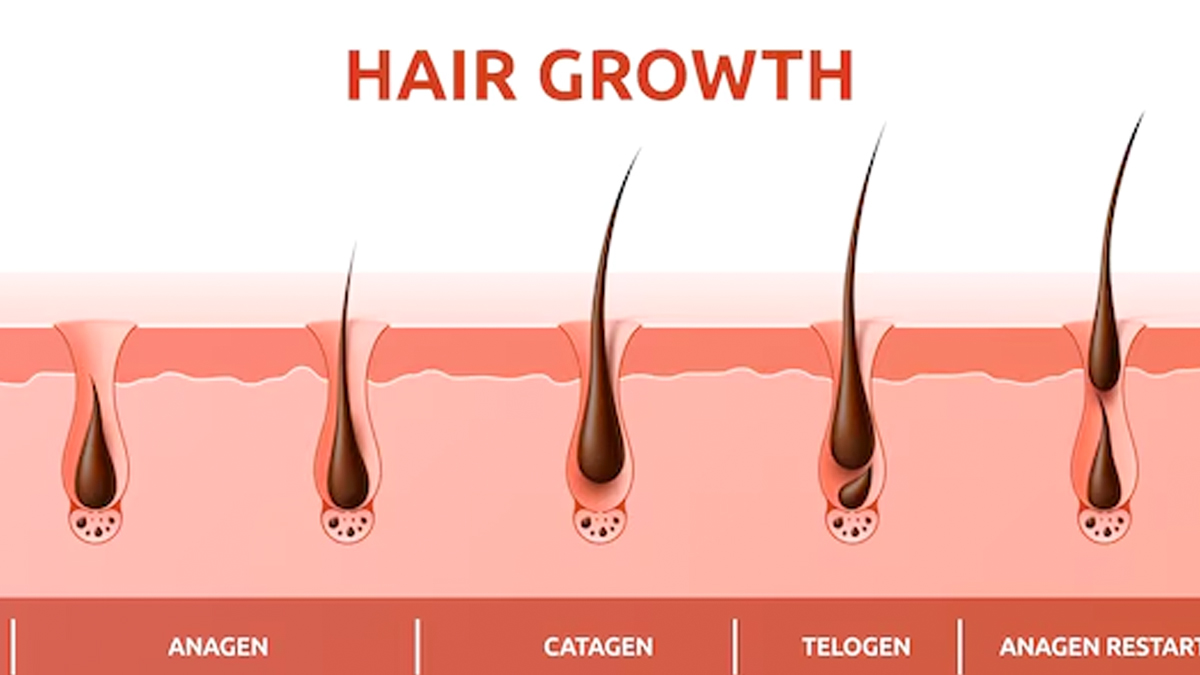 phases
Why Stress-Related Hair Loss Feels Sudden
Stress-induced hair fall doesn’t happen instantly. It is caused by several stressful events and may take two to three months before shedding is noticeable.
Dr Passi shared that patients can be left to connect the dots. “They might have gone through work pressure, illness, emotional turmoil, or sleep deprivation weeks earlier, and by the time hair fall starts, the stress trigger is already forgotten,” she noted. Additionally, other than telogen effluvium, high cortisol may also:
- Slow down the blood supply to the head
- Initiate inflammation on hair follicles
- Interfere with the uptake of nutrients.
- Aggravates an already present condition, such as androgenetic alopecia.
In the long run, hair shafts may become brittle due to chronic stress, which may lead to their breakage.
Signs Stress May Be Thinning Your Hair
Hair fall is not always stress-related. However, Dr Passi said you should consider cortisol as the cause when you notice any of the following signs:
- Streaky baldness throughout the head as opposed to spot baldness
- More shedding following emotional or physical stress
- Hair loss along with exhaustion, insomnia, or anxiety
- No strong family history of early hair loss
 stress
How To Reduce Cortisol and Protect Your Hair
Affirming with good news, Dr Passi shared that hair thinning related to stress can be reversible after the person has a stabilised cortisol level. The multi-pronged approach suggested by her includes:
1. Improve Sleep Hygiene
Aim for seven to eight hours of restful sleep. Deep sleep is beneficial in controlling cortisol and repairing the cells, such as hair follicles.
2. Emphasise Protein and Micronutrients
Hair is primarily made of keratin, which is known as the hair protein. Dr Passi recommended making sure that you take enough protein, iron, zinc, and vitamin D. Nutritional deficiencies may enhance stress-induced shedding, and consuming enough protein and micronutrients can do the opposite.
3. Incorporate Stress-Reduction Techniques
Meditation, deep breathing, yoga and physical exercise are some of the practices that reduce cortisol levels naturally. “Even 20 minutes a day can make a difference,” she noted.
4. Scalp Care and Professional Guidance
“Do not use violent chemical treatments and hairstyles. When the hair fall continues after three to six months, consult a qualified professional who would examine and administer personalised treatments,” she noted.
5. Avoid Crash Dieting
Sudden loss of weight may also cause stress hormones to skyrocket and push more hair into the shedding phase.
Bottomline
Stress does not only come and rest on your mind, and it can also thin your hair. Managing cortisol through sleep, nutrition, and stress reduction may be just as important as any hair serum in restoring volume and confidence.
FAQ
Is it possible to lose hair due to stress alone?
Yes. When endured over a long period of time, chronic stress may lead to hair follicles to the shed and result in noticeable thinning.Is stress-related hair loss permanent?
In most cases, no. When the level of stress is kept low, hair will grow slowly.How long does it take for hair to recover after stress?
Hair growth can start in three to six months, when cortisol values are normalised, whereas complete restoration will require more time based on the personal factors.
All possible measures have been taken to ensure accuracy, reliability, timeliness and authenticity of the information; however Onlymyhealth.com does not take any liability for the same. Using any information provided by the website is solely at the viewers’ discretion. In case of any medical exigencies/ persistent health issues, we advise you to seek a qualified medical practitioner before putting to use any advice/tips given by our team or any third party in form of answers/comments on the above mentioned website.
How we keep this article up to date:
We work with experts and keep a close eye on the latest in health and wellness. Whenever there is a new research or helpful information, we update our articles with accurate and useful advice.
-
Current Version
Feb 21, 2026 12:10 IST
Modified By : Tanya Srivastava Feb 21, 2026 12:10 IST
Modified By : Tanya SrivastavaFeb 21, 2026 12:10 IST
Published By : Tanya Srivastava