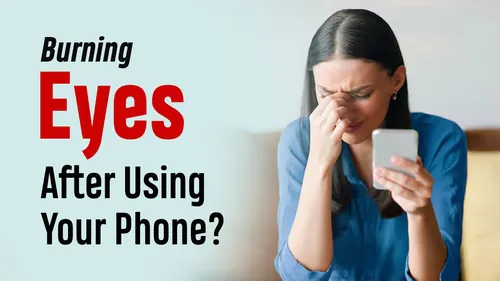
From scrolling through social media before bedtime to replying to messages and watching videos, smartphones have become a part of everyday life. However, spending hours looking at a screen can leave your eyes feeling hot, dry, gritty, or uncomfortable. Some people may also experience watering, stinging, and temporary blurred vision.
While these symptoms are commonly blamed on screen strain or blue light, the actual problem may be dry eye. Although digital eye strain and dry eye can occur together, they are two different problems and need to be understood separately. To understand the fine lines between these two, we spoke to Dr Shibal Bhartiya, Clinical Director - Ophthalmology, Marengo Asia Hospitals, Gurugram and Dr Vijayabhaskar Gajjala, General Ophthalmology, Sankara Eye Hospital, Guntur.
Why Do Your Eyes Burn After Using Your Phone?
One of the biggest reasons for burning eyes during prolonged phone use is reduced blinking.
"Many of my patients scroll in bed late at night and wake up with burning, gritty eyes. They blame the light from the screen. The real cause is usually simpler. You stop blinking," says Dr Bhartiya.
Normally, people blink around 15 to 20 times a minute. Each blink spreads a thin layer of tears and oil across the eye's surface, keeping it lubricated and protected.
- However, when concentrating on a phone screen, the blinking rate can fall by more than half.
- People may also blink incompletely, leaving parts of the eye exposed.
- This causes the tear film to become unstable, allowing moisture to evaporate faster and irritating the eye surface.
Dr Bhartiya adds that direct airflow from fans or air-conditioning vents can make the problem worse.
Digital Eye Strain vs Dry Eye: How Are They Different?
Although both conditions can cause eye discomfort after prolonged screen use, their symptoms are slightly different.
Digital eye strain: Also known as computer vision syndrome, it occurs when the eyes work continuously to focus on nearby objects. Symptoms include:
- A dull ache around the eyes or eyebrows
- Heavy or tired eyelids
- Headaches
- Difficulty focusing
- Blurred vision that improves after resting
Dry eye: This occurs when the eyes do not produce enough tears or when tears evaporate too quickly. Common symptoms include:
- Burning or stinging sensations
- A gritty feeling, as if something is stuck in the eye
- Redness and irritation
- Excessive watering
- Temporary blurred vision that may clear after blinking
Also Read: Eyes Burning on Smoggy Days? Why Staying Indoors May Not Protect You Completely
Dr Gajjala explains that prolonged screen use can trigger both conditions because reduced blinking affects tear distribution, while continuous close-up focusing causes visual fatigue.
Other factors, including allergies, eyelid inflammation, contact lens use, dust, and certain medications, can also contribute to eye discomfort, according to a report published in the journal 'Ophthalmology and Therapy'.
Can Blue Light from Your Phone Damage Your Eyes?
Blue light is often blamed for burning eyes and other screen-related problems. However, there is no concrete evidence that the amount of blue light emitted by ordinary smartphones causes permanent eye damage.
According to Dr Bhartiya, reduced blinking and prolonged close-up focusing are more common reasons for discomfort during phone use.
Reducing screen brightness, adjusting glare, and using night mode in the evening may improve viewing comfort. However, blue-light filters cannot replace healthy screen habits or proper eye care.
How Can You Prevent Burning Eyes After Screen Time?
A few simple changes can help reduce discomfort and protect the eye surface.
- Follow the 20-20-20 rule: Every 20 minutes, look at something around 20 feet away for at least 20 seconds. This gives your focusing muscles a break.
- Blink consciously: Make an effort to blink fully while reading or scrolling. Complete blinking helps spread tears evenly.
- Keep your phone slightly below eye level: Looking slightly down exposes less of the eye surface, reducing tear evaporation.
- Avoid direct airflow: Keep fans and air-conditioning vents away from your face.
- Use artificial tears when needed: Lubricating eye drops may help relieve dryness. Preservative-free formulations may be suitable if you need them frequently. Seek medical advice about the right option.
- Take regular breaks: Avoid long periods of uninterrupted screen use and give your eyes time to rest.
Also Read: What Causes Pain In Only One Eye? Ophthalmologists Share 5 Warning Signs of Unilateral Eye Pain
When Should You See an Eye Doctor?
Occasional discomfort that improves after taking a break may be related to screen use. However, persistent or recurring burning should not be ignored.
Dr Bhartiya advises consulting an ophthalmologist if you need lubricating drops every day for more than a few weeks, or if redness and pain persist or your vision remains blurred.
One possible reason why artificial tears may not provide enough relief is Meibomian gland dysfunction. These oil-producing glands in the eyelids help prevent tears from evaporating too quickly. If they become blocked, the tear film can become unstable and may require specific treatment.
Dr Gajjala also recommends an eye examination if symptoms continue despite changes in screen habits. An ophthalmologist can assess the tear film, examine the eyelids and check for other underlying problems.
Seek prompt medical attention if burning is accompanied by significant pain, marked redness, light sensitivity, or discharge. Sudden changes in vision and a painful red eye, particularly in contact lens users, require urgent assessment.
Avoid using steroid, antibiotic, or redness-relieving eye drops without medical advice.
Final Word
Burning eyes after hours on your phone are not necessarily caused by screen light. Reduced blinking, tear evaporation, and prolonged close-up focusing are often responsible. Taking regular breaks and blinking fully can help, but persistent symptoms deserve an eye examination.
FAQ
Is 3 hours of screen time bad for your eyes?
Yes, three hours of uninterrupted screen time is bad for your eyes. It starts as discomfort and worsens into digital eye strain.How can I heal my eyes from too much screen time?
Blinking more often, giving rest to your eyes, applying a warm compress, and using lubricating eye drops are some remedies to soothe your eyes and prevent potential damage.
All possible measures have been taken to ensure accuracy, reliability, timeliness and authenticity of the information; however Onlymyhealth.com does not take any liability for the same. Using any information provided by the website is solely at the viewers’ discretion. In case of any medical exigencies/ persistent health issues, we advise you to seek a qualified medical practitioner before putting to use any advice/tips given by our team or any third party in form of answers/comments on the above mentioned website.
How we keep this article up to date:
We work with experts and keep a close eye on the latest in health and wellness. Whenever there is a new research or helpful information, we update our articles with accurate and useful advice.
-
Current Version
Oct 31, 2026 12:47 IST
Published By : Chanchal Sengar
Reviewed By : Dr Shibal Bhartiya