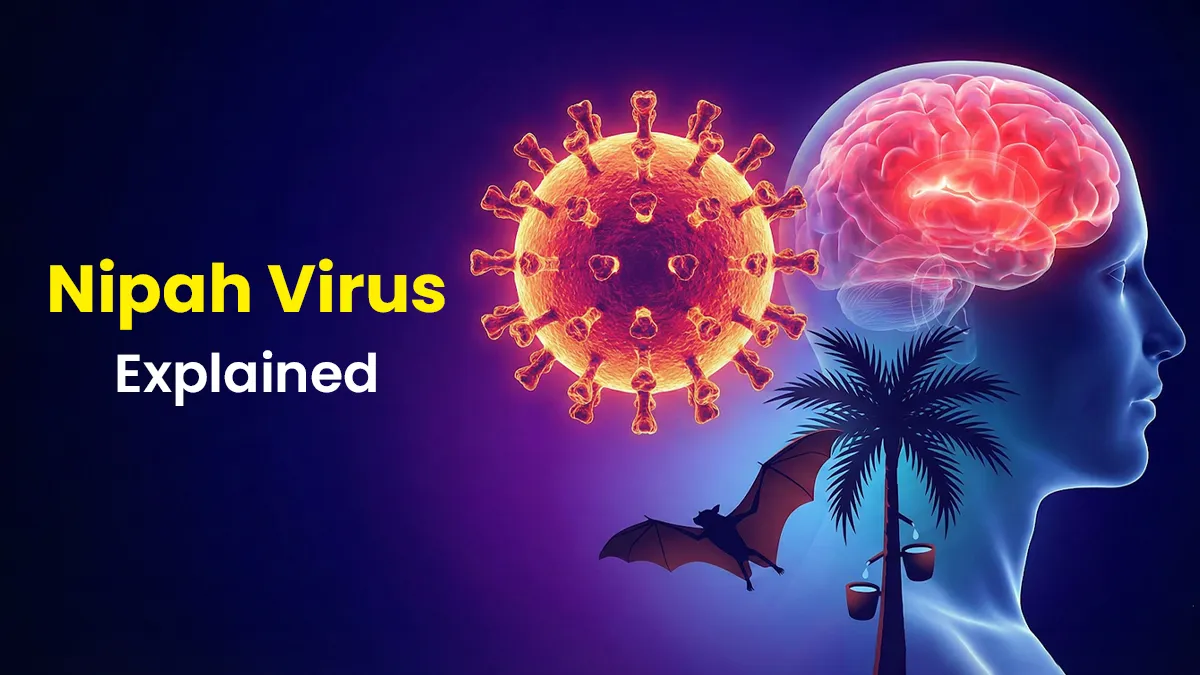
The horrors of Covid-19 pandemic are still fresh in our minds, even though a few years have passed ever since. One lesson which the world has learnt from the 2020-2021 pandemic is that precaution is always better than cure. It is always best to nip a deadly virus in the bud. Thus, when only two cases of Nipah virus were reported in West Bengal, it has heightened concerns in several Asian countries. This even led to tightened health screening operations at airports. What makes the Nipah virus so deadly? And what happens inside the body when the virus attacks? Today, we will answer all this for you.
To get an expert view on this, we reached out to Dr Shrey Srivastav, Senior Consultant-Internal Medicine, Sharda Hospital,Greater Noida. Read on.
What Are The Early Signs Of Nipah Virus?
Before we dive deep into the signs, symptoms of Nipah virus, let us understand what it actually is. Nipah virus is a zoonotic virus. It is usually transmitted from animals to humans. But it can also be transferred via contaminated food or directly between people. Now, a little bit about its history. This virus was first identified in 1998 during an outbreak among pig farmers in Malaysia.
An outbreak was reported in Singapore in 1999, following the importation of sick pigs from Malaysia. Since 1999, no new outbreaks have been reported from Malaysia or Singapore. Thereafter, Nipah virus infection outbreaks were detected in India and Bangladesh in 2001. Outbreaks have been reported in Bangladesh almost every year ever since. In India, outbreaks are periodically being reported in different parts of the country, including the latest one this year.
 nipah explained 1
But how to identify the virus? We ask our expert to shed more light on its signs and symptoms. “The onset of symptoms from the Nipah virus infection takes 5-14 days to occur. The symptoms include fever, headache, muscle ache, sore throat, vomiting, and weakness. Some patients also experience dizziness and confusion, which can quickly progress to severe neurological symptoms,” explains Dr Srivastav.
Also Read: Nipah Virus Outbreak Puts Asia on High Alert: Health Risks, Symptoms, and Treatment Explained
How Is The Nipah Virus Transmitted?
Now that we know how to identify the virus, let us get to the root of it. How is Nipah transmitted? You must have heard that fruit bats from the Pteropodidae family are said to be the natural host of Nipah virus. They are present in different parts of Asia and in Australia.
Nipah virus’ transmission to humans can also occur from direct contact with infected animals like bats, pigs or horses, or by consuming fruits or fruit products, such as raw date palm juice, contaminated by infected fruit bats. The virus causes severe disease in farming animals, such as pigs, as well.
Summarising its transmission, Dr Srivastav said, “The Nipah virus can be transmitted from animals to humans and from human to human. The virus can be transmitted through direct contact with infected fruit bats, pigs, or their bodily fluids. Human-to-human transmission can occur through close contact with the respiratory droplets, saliva, urine, or blood of an infected individual.”
 nipah explained 2
How Nipah Virus Affects Brain And Respiratory System
The Nipah virus has severe consequences on the brain. “The virus can cause encephalitis, which causes inflammation of the brain tissue. This leads to confusion, changes in consciousness, seizures, coma, and death. In some instances, the virus can also lead to permanent neurological damage, such as memory loss and personality changes,” explains Dr Srivastav.
Can Nipah virus affect our respiratory system as well? Explaining this, the expert says, “The Nipah virus can significantly affect our respiratory system. The affected individual can suffer from coughing, sore throat, breathing difficulties, and pneumonia. Severe breathing difficulties can also be caused, which can lead to the spread of the virus through coughing and breathing.”
How Body Reacts When Attacked By Nipah Virus
So what happens when the Nipah virus gets inside the body? “When the body is attacked by the Nipah virus, it multiplies rapidly in the body and spreads through the bloodstream. The virus attacks the blood vessels, which get swollen and damaged, especially in the brain and lungs,” explains Dr Srivastav.
The virus’ incubation period – that is the time from infection to the appearance of symptoms – ranges from 3 to 14 days. In some rare cases, incubation periods of up to 45 days have been reported. Nipah virus infection may be asymptomatic for some. However, most people experience fever, and symptoms involving the brain like headache or confusion, and/or that of the lungs like difficulty breathing or cough. Other organs get affected as well. Other symptoms consist of chills, fatigue, drowsiness, dizziness, vomiting and diarrhoea.
 nipah explained 3
Tips To Stay Safe From Nipah Virus
Several countries, such as Thailand, Malaysia, and Singapore, are taking precautions against the Nipah virus. They have started new screening and testing measures. Individual safety measures are also very important to curb the spread of Nipa virus. On this note, let us take a look at some of the safety tips shared by CDC:
- Wash your hands frequently with soap and water.
- Avoid contact with flying fox bats or sick pigs.
- Avoid areas where bats roost.
- Avoid touching anything that could be soiled by bats.
- Avoid eating raw date palm sap or fruit that could be soiled by bats.
Also Read: Nipah Virus Vs Common Flu – How To Differentiate?
The Final Word
When the body is affected by the Nipah virus, it multiplies rapidly in the body and spreads through the bloodstream. The virus attacks the blood vessels, which get swollen and damaged, especially in the brain and lungs. It can cause encephalitis, which can lead to confusion, changes in consciousness, seizures, coma, and death.
FAQ
What does the Nipah virus do to humans?
Nipah virus causes fever, headache, respiratory issues and neurological problems like confusion, drowsiness, seizures, and coma, leading to potential death due to severe brain inflammation (encephalitis) or respiratory failure.How serious is the Nipah virus now?
It is estimated that between 40 and 75% of people infected with Nipah virus will die.Is the Nipah virus curable?
No, there is currently no specific cure or licensed treatment for Nipah virus.
All possible measures have been taken to ensure accuracy, reliability, timeliness and authenticity of the information; however Onlymyhealth.com does not take any liability for the same. Using any information provided by the website is solely at the viewers’ discretion. In case of any medical exigencies/ persistent health issues, we advise you to seek a qualified medical practitioner before putting to use any advice/tips given by our team or any third party in form of answers/comments on the above mentioned website.
How we keep this article up to date:
We work with experts and keep a close eye on the latest in health and wellness. Whenever there is a new research or helpful information, we update our articles with accurate and useful advice.
-
Current Version
Feb 05, 2026 13:17 IST
Modified By : Shruti Das Feb 05, 2026 13:17 IST
Modified By : Shruti DasFeb 05, 2026 13:17 IST
Published By : Shruti Das
Reviewed By : Dr Shrey Kumar Srivastav